
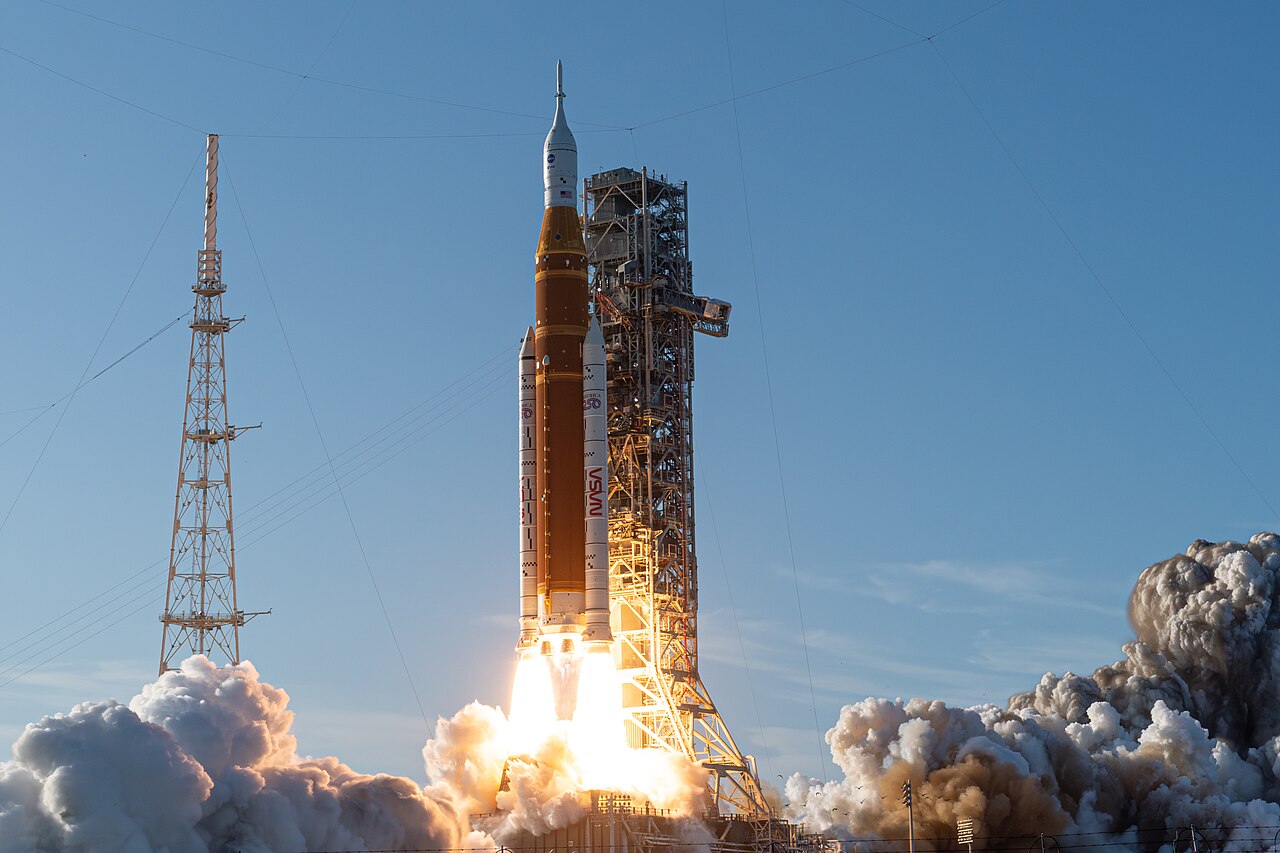
NASA's crewed Artemis II lunar fly-by mission flew April 1, 2026 — the first crewed flight under the Artemis program and the most significant validation to date of NASA's multi-tier procurement architecture. Behind the launch sits a supplier base of more than 2,700 companies across 47 states feeding 11 prime contractors. Coverage from Procurement Magazine and NASA Artemis Partners.
Who the primes are
Per NASA's official partner list, the major Artemis primes include:
- Aerojet Rocketdyne, Bechtel, Boeing, Lockheed Martin, Northrop Grumman, SpaceX (large primes)
- Axiom Space, Blue Origin, Maxar Space Systems (commercial space partners)
- Amentum, Jacobs (services / engineering primes)
Below them sits a tiered supply base with thousands of small and mid-sized firms — manufacturing, propellants, electronics, software, ground support equipment, and specialty materials.
What the successful flight unlocks
Three things, in order of timeline:
- Artemis III hardware acceleration. NASA's lunar landing mission depends on hardware development continuing in parallel with crew certification. Successful Artemis II validates the crew certification path and removes a key risk from the Artemis III procurement plan.
- SBIR/STTR pipeline activation. NASA's Small Business Innovation Research / STTR program is adopting a Broad Agency Announcement framework with 2026–2027 BAA appendices closing May 21. Firms developing technologies relevant to lunar surface operations, life support, or in-space manufacturing have a clear funding window.
- The $1.8B engineering support recompete. NASA opened bidding on a $1.8B engineering services contract in February 2026. With Artemis II validated, expect agency willingness to commit to longer-term services contracts to grow.
How small firms get in
Three realistic paths:
- Subcontract to a prime. Each Artemis prime has a small-business liaison and a subcontracting plan with quotas under FAR Part 19. Cold outreach to liaison officers with specific capability statements works.
- SBIR/STTR direct. NASA's BAA-driven SBIR is one of the most accessible federal R&D funding sources for new entrants. Phase I awards run $125k–$150k; Phase II up to $850k.
- Mentor-Protégé Program. NASA's MPP pairs eligible small businesses with mentors among the primes. Approval comes with concrete subcontracting expectations.
What to do this week
- If you have any technology relevant to lunar surface operations, life support, in-space manufacturing, or radiation hardening: pull the current SBIR topic list at SBIR.gov and identify proposal windows.
- If you're a services firm: monitor SAM.gov for the $1.8B engineering recompete plus follow-on Artemis program support contracts.
- Consider the broader pattern: a successful Artemis II hard-codes NASA budget commitment to the program through at least 2030. Long-tail subcontracting opportunity will outlast multiple administrations.