
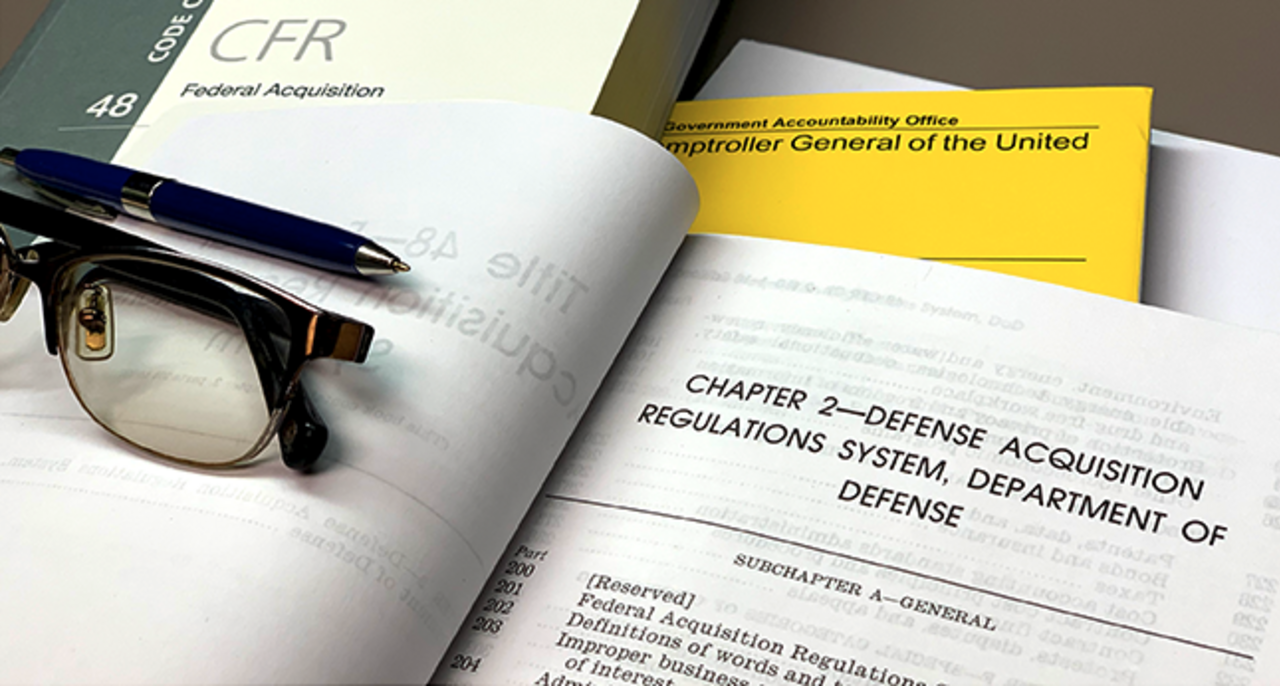
The Revolutionary FAR Overhaul (RFO) is the largest rewrite of the Federal Acquisition Regulation since the FAR's adoption in 1984. Initiated under Executive Order 14275 and led by the Office of Federal Procurement Policy and the FAR Council, the overhaul is being implemented through a phased rollout of agency class deviations through 2026, with formal rulemaking ongoing. Official tracking at Acquisition.gov; analysis from Wolters Kluwer and Costello College of Business.
What's actually changing
Three structural changes worth understanding:
- Plain-language rewrite. Every part of the FAR is being rewritten in plain English. Non-statutory and duplicative provisions are being removed. The rule book is shorter and substantially more readable.
- Permissive language replaces directive language. The old FAR was full of "shalls." The new FAR uses "mays" and "shoulds" wherever statute doesn't require otherwise. Contracting officers get explicit discretion that previously required deviations or workarounds.
- Four-year sunset on non-statutory provisions. Under the new FAR 1.109, any FAR provision that isn't explicitly required by statute expires after four years unless renewed by the FAR Council. The intent: the FAR can no longer accumulate cruft indefinitely.
Why small firms benefit most
The RFO disproportionately reduces compliance overhead for firms without dedicated compliance teams — i.e., almost every small business. Specifically:
- Plain-language clauses are readable without retaining counsel for every solicitation review.
- Fewer mandatory representations and certifications during proposal preparation.
- Simpler past-performance evaluation criteria, with explicit guidance for small businesses without extensive federal track records.
- The Department of Energy and other agencies have already issued class deviations adopting RFO-style Part 19 (Small Business Programs) — see DoE PF 2026-10.
What stays the same
Statutory requirements don't go away. CMMC, Section 889, the SBA size standards, limitations on subcontracting — all still apply. The RFO can simplify implementation language but can't override what Congress has written into law.
Watch for a transition period of confusion: agencies are issuing class deviations at their own pace, meaning two contracts at two agencies in the same NAICS code may operate under noticeably different rules until formal rulemaking catches up.
The skeptical read
Per Fed Contract Pros, some practitioners argue Phase I went too far in removing protections that small businesses relied on. Concerns:
- More CO discretion can mean less consistency for small firms competing across agencies.
- Removed mandatory reps and certs sometimes provided documentation that helped small businesses defend against scope creep.
- Sunset clauses introduce uncertainty about which protections will renew.
What to do this week
- Read the current acquisition.gov landing page for RFO. The summary doc takes about 30 minutes and changes will affect your next 10 proposals.
- Check whether the agencies you bid into have issued class deviations yet — Energy, GSA, and DoD are leading; some smaller agencies will lag.
- For firms with internal compliance functions, this is the moment to prune internal procedure documents that referenced now-removed FAR provisions.