
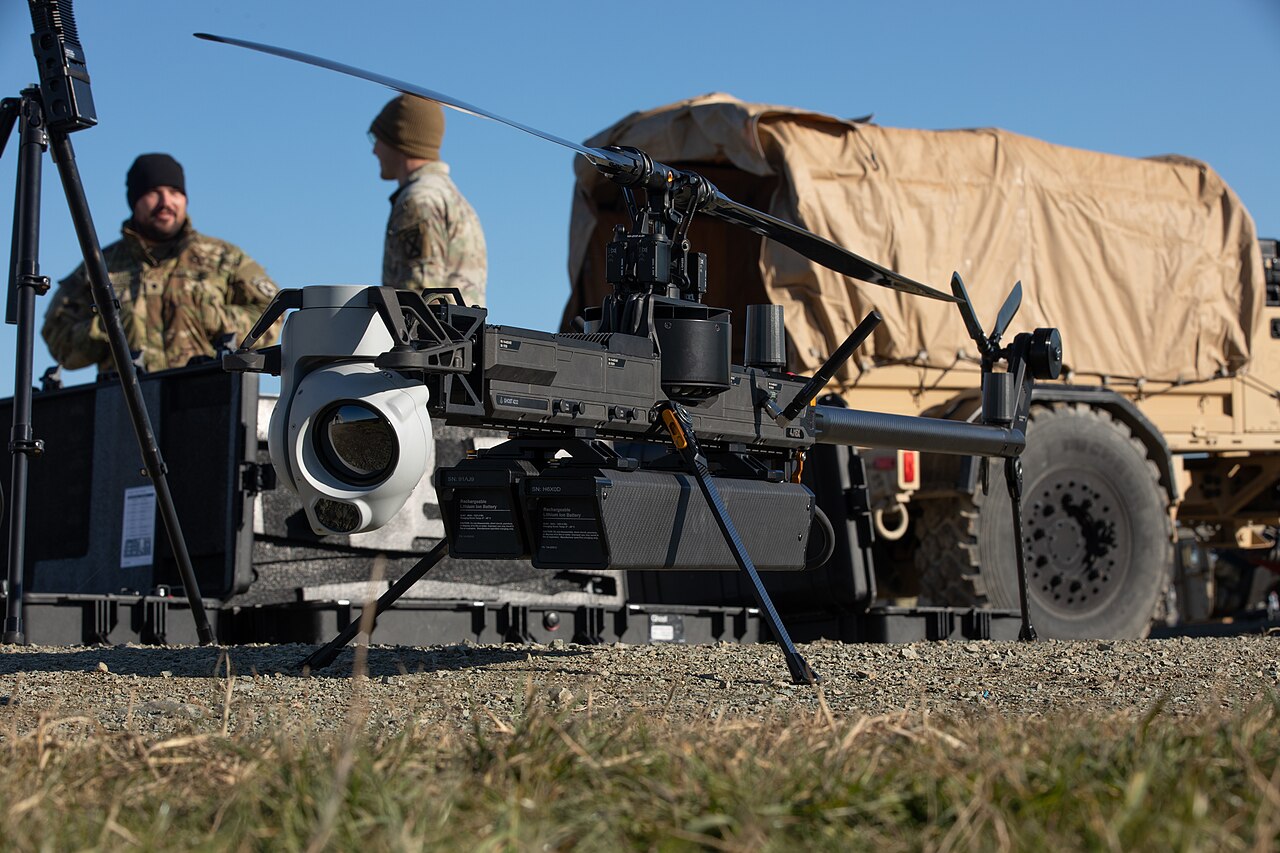
The Air Force's Collaborative Combat Aircraft (CCA) program is in production-decision year. Two prototypes are flying: Anduril's YFQ-44A and General Atomics' YFQ-42A. The Air Force is integrating a government-owned Autonomy Government Reference Architecture (A-GRA) on both. Coverage from Breaking Defense, DefenseScoop, and Air & Space Forces Magazine.
The competition history
- 2024: 5 firms got initial CCA design contracts (Anduril, Boeing, GA-ASI, Lockheed, Northrop)
- April 2024: Air Force selected Anduril and GA-ASI for Increment 1 (detailed design + prototype build)
- Aug-Oct 2025: First live flight tests of Anduril and GA-ASI prototypes
- 2026: Production decision targeted
The mission autonomy story
The autonomy package — the software brain of the loyal-wingman drone — is government-owned (the A-GRA, Autonomy Government Reference Architecture). Both prototypes use it. This is unusual: the government keeps the autonomy IP and licenses it to whichever airframe wins. Future variants and additional CCA programs can swap autonomy without renegotiation.
The Marine Corps angle
The Marine Corps brought GA-ASI into a separate CCA-program autonomy effort in February 2026. Multi-service interest in CCA suggests a sustained program through 2030+.
What this means for industry
- Non-traditional defense vendors (Anduril) are competing head-to-head with established primes (GA-ASI) at the airframe level
- The A-GRA approach reduces vendor lock-in — autonomy software firms have an opening regardless of which airframe wins
- If Anduril wins, expect rapid Lattice-platform integration with CCA — see our Anduril $20B Lattice coverage