
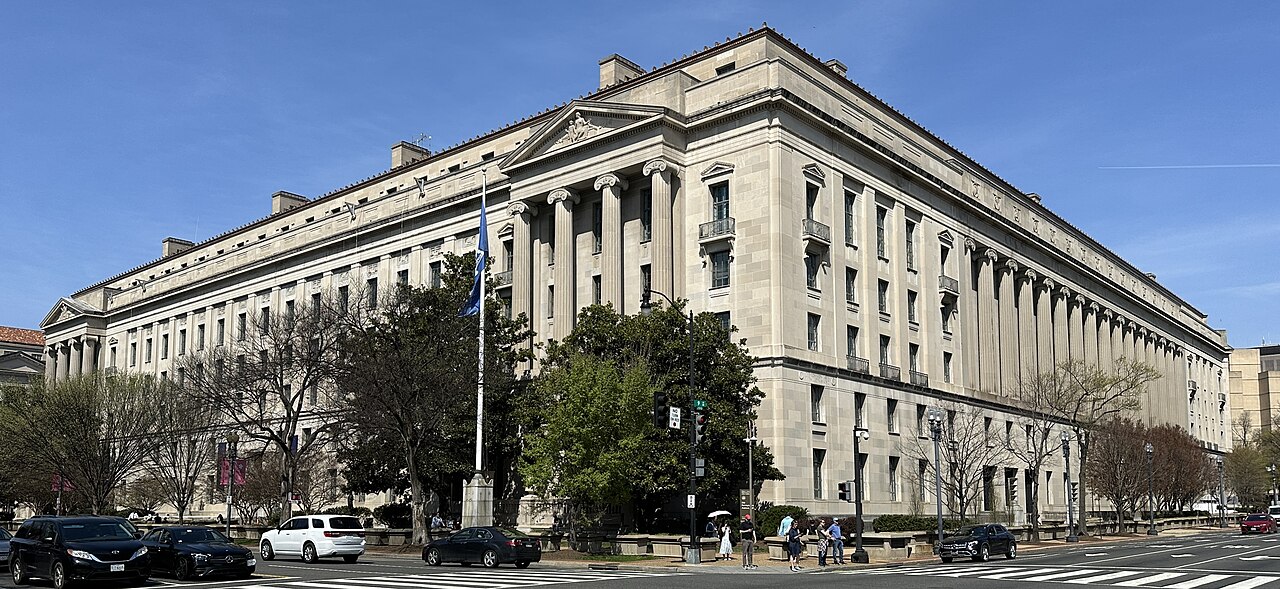
The U.S. Department of Justice announced on April 10 that IBM agreed to pay $17,077,043 to resolve allegations that it violated the False Claims Act by certifying compliance with federal anti-discrimination requirements while maintaining employment practices the government contends discriminated on the basis of race, sex, color, or national origin. The settlement is the first resolution secured under DOJ's Civil Rights Fraud Initiative, launched in May 2025 to use the False Claims Act as an enforcement mechanism against contractors that submit false certifications of equal opportunity compliance. IBM did not admit wrongdoing and the settlement is not a concession that DOJ's claims were meritorious; DOJ acknowledged that IBM cooperated with the investigation, made early factual disclosures, and took steps entitling it to cooperation credit that reduced the settlement amount.
What DOJ Alleged
The settlement covers conduct from January 1, 2019 through the effective date of the agreement. During that period, IBM entered into federal contracts that required certification of compliance with Executive Order 11246, which prohibits federal contractors from discriminating against employees and applicants based on race, color, religion, sex, sexual orientation, gender identity, or national origin, and from taking affirmative steps to ensure equal opportunity in employment. DOJ alleged that IBM, despite certifying compliance with these requirements, maintained employment practices that considered race or sex in hiring, promotion, compensation, and development decisions.
Specifically, the government alleged that IBM tied manager bonus compensation to achieving demographic targets and made adjustments to pay or bonuses that caused managers to take protected demographic characteristics into account. The government also cited the use of diverse recruitment slates and mentorship program structures that directed resources along demographic lines. IBM countered that its programs were lawful diversity initiatives consistent with then-prevailing equal opportunity legal standards, and the settlement's cooperation credit reflects DOJ's acknowledgment that IBM's self-disclosure and cooperation were genuine. The settlement period's January 2019 start date predates the second Trump administration's executive orders on DEI by more than five years, signaling DOJ's willingness to scrutinize historical practices retroactively rather than only conduct occurring after the new administration's policy pronouncements.
The Civil Rights Fraud Initiative
DOJ's Civil Rights Fraud Initiative, announced in May 2025 alongside a broader set of executive order-driven enforcement priorities, directs the Civil Division's Commercial Litigation Branch to identify federal contractors and grant recipients whose civil rights certifications may be false because of illegal DEI practices. The IBM settlement establishes several important precedents. It demonstrates that DOJ views the FCA — with its treble damages exposure and statutory penalties of up to $27,804 per false claim — as a viable tool for DEI enforcement even where the underlying conduct did not involve procurement fraud in the traditional sense of billing the government for services not rendered. It also confirms that DOJ will pursue cases under the initiative even where the contractor cooperated fully and made early disclosures, though cooperation does reduce settlement amounts.
Multiple law firms that advise federal contractors — including Foley Hoag, Latham & Watkins, Ropes & Gray, and Mayer Brown — published client alerts in April 2026 calling the IBM settlement a "cautionary tale" and urging contractors to audit existing DEI programs for practices that link compensation, hiring, or promotion decisions to demographic outcomes. TechCrunch reported that IBM continues to deny wrongdoing and views the settlement as a resolution that avoids protracted litigation.
What It Means for Contractors
The IBM settlement should be read as a signal that DOJ intends the Civil Rights Fraud Initiative to generate multiple enforcement actions, not serve as a one-time demonstration. Federal contractors of all sizes who certify compliance with EO 11246 and related anti-discrimination requirements face exposure if their employment practices include demographic-based compensation adjustments, mandatory diverse-slate requirements with demographic outcome expectations, or mentorship and development programs structured around protected characteristics.
- Conduct a privileged review of current and recent DEI program structures with legal counsel — specifically, any program element that uses demographic outcomes as a metric for manager performance evaluation, compensation, or bonus eligibility is high-risk under the theory of liability DOJ applied to IBM.
- Review your OFCCP Affirmative Action Plan and the accompanying certifications; the FCA case does not require a prior OFCCP finding of violation — DOJ can bring an FCA case independently based on evidence that certifications were false when made.
- Document the legal basis for any remaining diversity-related programs, including the specific equal opportunity rationale, and ensure that program outcomes are not tied to numerical demographic targets in ways that could be characterized as preferential treatment.
- The settlement's retroactive reach to January 2019 means that firms cannot rely on the argument that pre-2025 DEI practices were safe from enforcement; document steps taken to bring programs into compliance as evidence of good-faith remediation.
- Small businesses below the FAR 52.222-26 threshold (contracts and subcontracts of $10,000 or more trigger EO 11246 clauses) are technically covered; the practical enforcement risk is substantially lower, but firms growing toward mid-size should audit programs before reaching OFCCP's more intensive compliance review thresholds.
DOJ's Stated Pipeline and What Comes Next
Department of Justice officials have indicated publicly that the IBM settlement is intended as a signal about enforcement direction rather than a one-time action. The Civil Rights Fraud Initiative was structured with dedicated staffing in the Civil Division's Commercial Litigation Branch, suggesting an institutional commitment to building a docket of cases rather than resolving the program with a single high-profile settlement. Multiple firms with large federal contracts — particularly in information technology, management consulting, and professional services where DEI programs have historically been most extensive — have reportedly received civil investigation demands or informal inquiries related to their DEI practices since the initiative launched in May 2025. None of those inquiries has resulted in a publicly announced case as of the IBM settlement, but the 14-month gap between initiative launch and first settlement is consistent with the timeline for a thorough FCA investigation rather than evidence that the pipeline is empty. Federal contractors that have already audited and restructured their DEI programs should document that remediation effort comprehensively; contractors that have not yet conducted such a review should treat the IBM settlement as the definitive signal that the window for proactive action is narrowing.
Sources
- IBM Pays $17 Million to Resolve Allegations of Discrimination Through Illegal DEI Practices — U.S. Department of Justice (April 10, 2026)
- IBM to Pay $17 Million in Anti-DEI Settlement — CNN Business (April 10, 2026)
- DOJ Announces First FCA Settlement Under Civil Rights Fraud Initiative — Foley Hoag LLP (April 2026)
- IBM Pays $17 Million in First DEI-Related False Claims Act Resolution — Latham & Watkins (April 2026)