
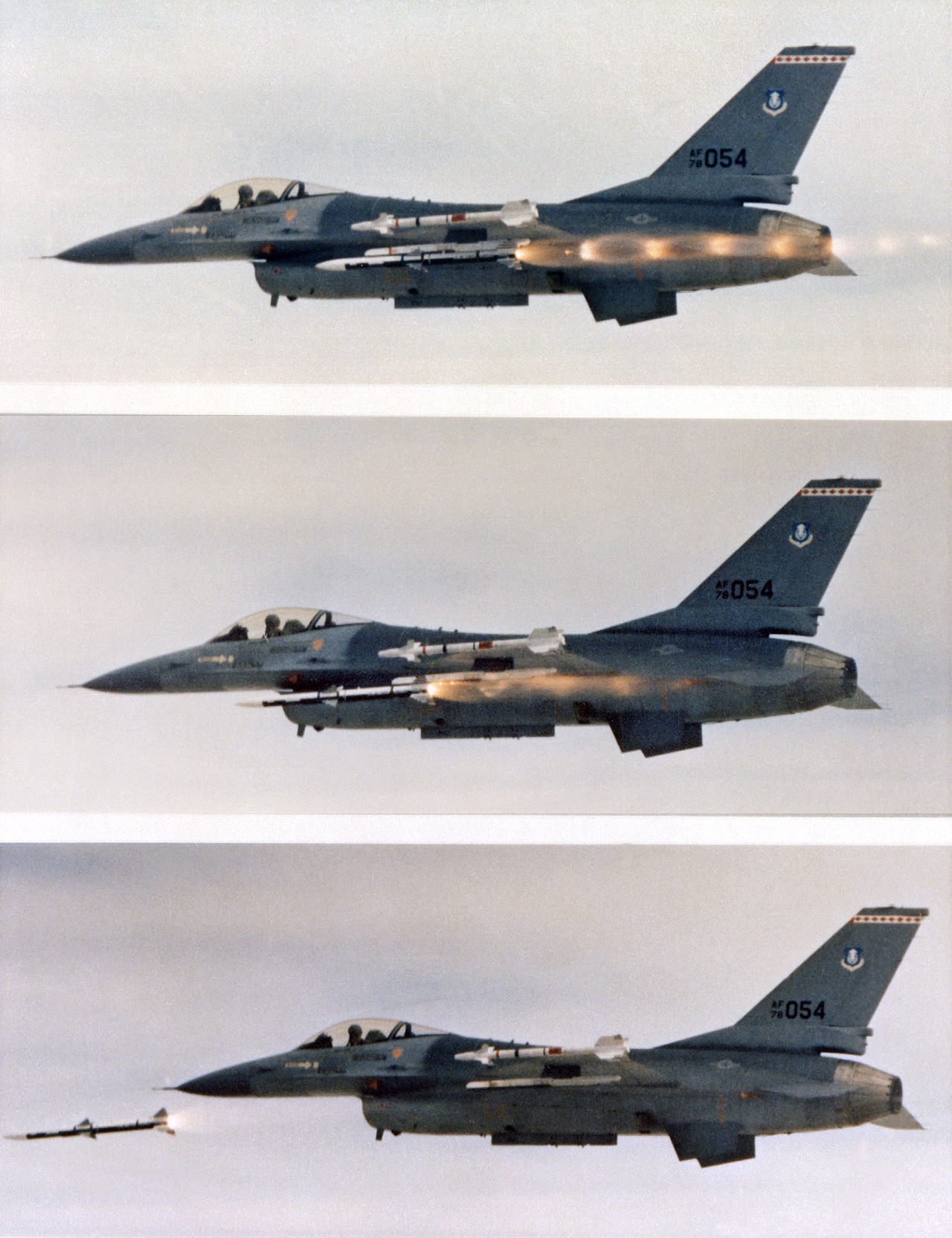
The Air Force Life Cycle Management Center awarded Marvin Engineering Co. a $138,217,405 firm-fixed-price requirements contract on May 1 to supply components for fighter aircraft that carry and release Advanced Medium Range Air-to-Air Missiles. Marvin Engineering is based in Inglewood, California, and has been the primary designer and manufacturer of AMRAAM launcher rail and adapter assemblies for the U.S. Air Force and Navy for decades. The contract, designated FA8520-26-D-B001, runs through April 30, 2036 — a decade-long vehicle that reflects the Air Force's requirement for sustained AMRAAM launcher support across the F-15C/D/E, F-16, F-22 Raptor, and F-35 Lightning II fleets simultaneously. AMRAAM launcher components are consumable items that are replaced on a cycle tied to weapon system use and periodic depot maintenance; the requirements contract structure allows the Air Force to order components as needed against validated demand without the price uncertainty of individual competitive buys.
The AMRAAM Launcher System and Its Role in Air Combat
The Advanced Medium Range Air-to-Air Missile — designated AIM-120 — is the primary beyond-visual-range air-to-air missile of the United States and more than thirty allied air forces. AMRAAM is fired from rail launchers and adapter assemblies mounted under the wings and fuselage of fighter aircraft; these launcher components hold the missile securely during flight maneuvering, provide the electrical interface through which the missile's seeker and guidance system receive targeting data and launch commands, and execute the controlled release of the missile at the moment of firing. The launcher assemblies are subject to aerodynamic stress, vibration, and thermal cycling that cause wear and require periodic inspection and replacement. Marvin Engineering's LAU-128/A rail launcher, used on F-15 and other platforms, is the most widely fielded AMRAAM launcher in the U.S. inventory, and the company's adapter assemblies for the F-35's internal weapons bay and external stations are specifically designed for the stealth fighter's demanding carriage and release requirements.
The 10-year contract duration is unusual in Air Force munitions support procurement and reflects the Air Force's confidence in Marvin Engineering's continued sole-source position as the AMRAAM launcher designer and original equipment manufacturer. Unlike a competitive IDIQ where multiple firms bid on task orders, a requirements contract to a single supplier commits both parties to a long-term relationship in which the government agrees to order all of its requirements for covered items from Marvin and Marvin agrees to meet those requirements at the negotiated prices. The 10-year ceiling of $138.2 million implies an average annual spend of approximately $13.8 million — roughly consistent with observed AMRAAM launcher procurement volumes across the combined U.S. and foreign military sales demand base.
Global AMRAAM Demand Driving Launcher Needs
AMRAAM demand has accelerated significantly since the beginning of the Ukraine conflict. The United States and NATO allies transferred AMRAAM missiles and compatible launchers to Ukraine's air force for use on Soviet-era MiG-29 fighters modified to carry American weapons under the improvised integration programs executed in 2022 and 2023. Simultaneously, U.S. allies in the Pacific — Japan, South Korea, Taiwan, Australia — have increased their AMRAAM procurement as a central element of their air defense modernization. Each AMRAAM order for an allied nation generates a corresponding requirement for compatible launcher hardware, because allied aircraft must be equipped with U.S.-standard launcher components to carry and fire the missiles. Raytheon produces AMRAAM missiles; Marvin Engineering produces the launcher hardware that makes it possible for those missiles to be carried and employed. The interplay between missile production and launcher production means that the AMRAAM production surge driven by allied demand and stockpile reconstitution translates directly into sustained and growing demand for Marvin Engineering's products through the end of this decade and beyond.
What It Means for Contractors
Marvin Engineering holds the Air Force's sole AMRAAM launcher requirements contract, which makes its supply chain the primary path for firms seeking to participate in this market.
- Precision machining firms, aluminum and titanium forging houses, and electronics assembly firms that supply components to Marvin Engineering's Inglewood production line should expect sustained and potentially growing order volumes as FMS demand keeps the AMRAAM launcher production rate elevated through the contract's 2036 ceiling; early discussions with Marvin's supply chain team about capacity planning will be more productive than reacting to individual purchase orders.
- Firms with ITAR-compliant manufacturing and export compliance programs in place are better positioned to participate in the FMS-related production that flows through Marvin's launcher programs; AMRAAM launcher hardware sold to allied nations under FMS cases requires the same export authorizations as the missiles themselves, and Marvin will flow down ITAR compliance requirements to subcontractors.
- The Air Force's F-35 program generates a distinct launcher requirement because the internal weapons bay rail system for the F-35A, B, and C variants is different from the rail systems on legacy fighters; firms with F-35-specific manufacturing experience or classified design knowledge of the F-35 internal bay integration are positioned for the most demanding launcher work under the long-term contract.
- Requirements contracts of this duration are occasionally re-competed when they expire; firms that want to position for the 2036 recompete should begin building AMRAAM launcher manufacturing capability and relevant past performance in the intervening decade rather than waiting for the recompete solicitation to appear on SAM.gov.
Launcher Requirements Across Platforms and Allied Programs
The AMRAAM launcher requirement spans a remarkably wide range of aircraft platforms and allied programs that drive the sustained production volumes reflected in the $138 million award. AIM-120 AMRAAM is the primary beyond-visual-range air-to-air missile of the U.S. Air Force, Navy, and Marine Corps, as well as dozens of NATO and partner air forces operating F-16, F-15, F/A-18, Eurofighter Typhoon, Gripen, and other compatible aircraft. Each platform requires a specific launcher configuration — rail launchers for wingtip and fuselage stations, ejector launchers for wing stations, and in some cases integrated carriages that allow multiple AMRAAM rounds per station. The F-35 Joint Strike Fighter, which carries AMRAAM internally in its weapons bay for low-observable operations and externally on wing stations when stealth is not required, is a particularly significant driver of launcher demand as the F-35 fleet expands across the U.S. services and allied partner nations. Foreign Military Sales of AMRAAM and associated launcher hardware represent a growing share of total annual demand; as European NATO members accelerate air defense investment in response to the threat environment, AMRAAM and launcher production rates have had to increase substantially from the relatively low levels sustained during the post-Cold War decade.