
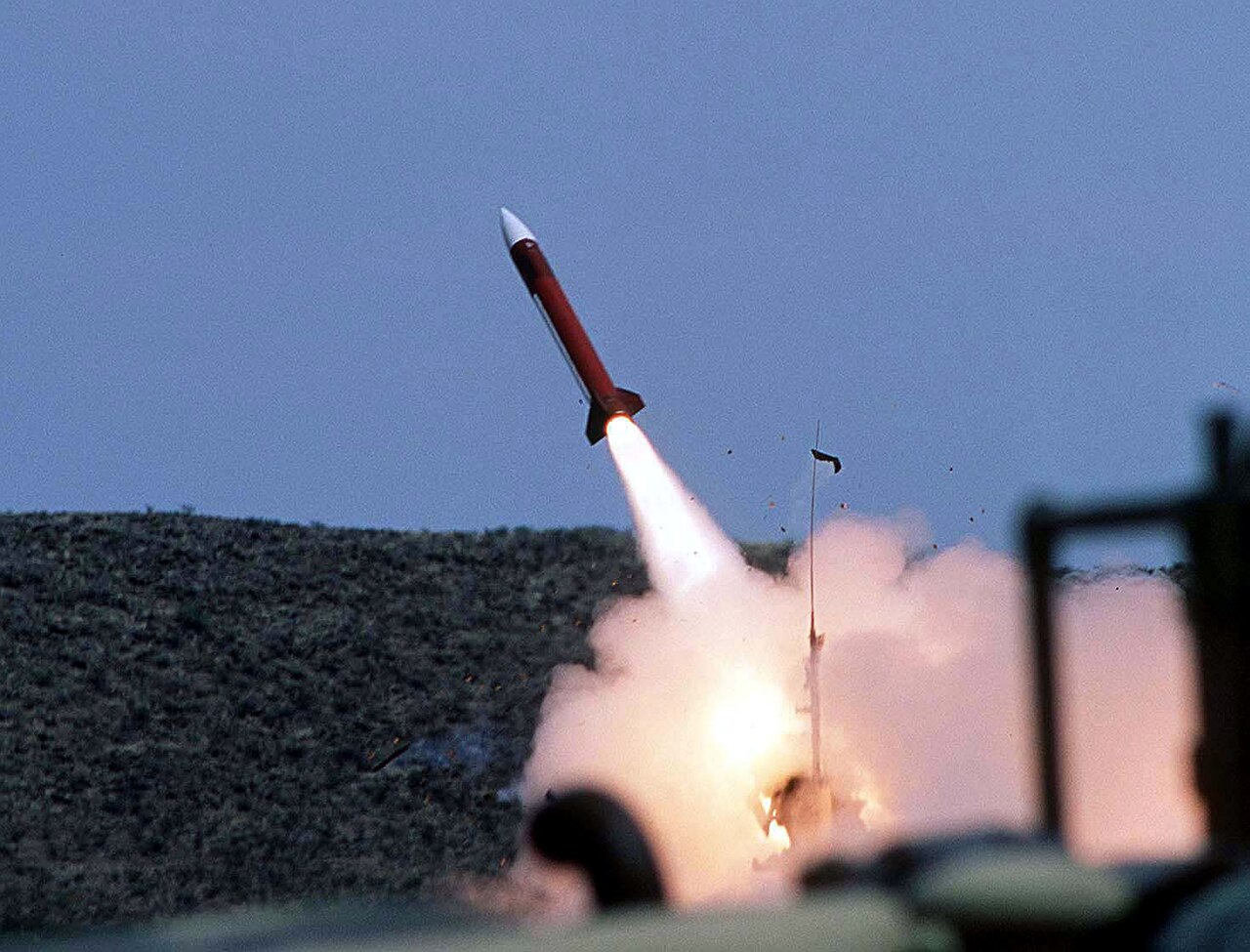
The Army Contracting Command at Redstone Arsenal awarded Raytheon RTX a $441,600,000 firm-fixed-price modification on May 1 for the procurement of PATRIOT Guidance Enhanced Missile-Tactical rounds in support of Operation Epic Fury, with performance through September 30, 2026. The modification, designated P00026 on contract W31P4Q-23-C-0036, is being executed at Raytheon's manufacturing facility in Chambersburg, Pennsylvania — the primary production and refurbishment site for GEM-T interceptors. At $441.6 million for a single lot of air defense missiles, the award reflects the scale of demand that active military operations and allied resupply programs are placing on the PATRIOT production industrial base. The public citation of "Operation Epic Fury" in the official DoD contract announcement makes this a notable disclosure: the Department rarely names active operations in publicly released contracting actions, and the citation provides the first direct public linkage between a named military operation and a specific air defense ammunition buy.
GEM-T and the PATRIOT Interceptor Family
The PATRIOT Guidance Enhanced Missile-Tactical is the third generation of the PAC-2 class of interceptors in the PATRIOT family. Unlike the hit-to-kill PAC-3 missile segment enhancement round, which destroys targets through direct body-to-body impact, the GEM-T uses a proximity-fuzed blast-fragmentation warhead to defeat incoming threats including ballistic missiles, cruise missiles, and advanced aircraft. The GEM-T is effective against the entire range of threats addressed by the PATRIOT system and is compatible with all fielded PATRIOT launcher configurations operated by U.S. forces and the seventeen allied and partner nations that operate PATRIOT batteries. The round is produced at Raytheon's Chambersburg, Pennsylvania facility, which has been the primary GEM-T production and refurbishment site for decades. Chambersburg produces both new-build GEM-T rounds and refurbished rounds that have been returned from theater or expended in testing and rebuilt to serviceable standard.
The $441.6 million award is among the largest single-lot GEM-T buys in recent memory, indicating either a very large production order, a significant price escalation reflecting raw material and component cost increases, or both. PATRIOT interceptor procurement has been under sustained pressure since the Russian invasion of Ukraine in February 2022. Multiple NATO allies have transferred PATRIOT batteries and interceptors to Ukraine's air defense forces, drawing down stockpiles that must be replenished. Simultaneously, U.S. European Command and Central Command have been increasing air defense posture across regions where ballistic and cruise missile threats from state actors are assessed to be elevated, requiring additional interceptor inventory on hand at forward positions.
Operation Epic Fury: What the Public Record Reveals
The public DoD contract announcement is unusually direct in attributing the GEM-T buy to a named military operation. The Defense Department uses formal operation names to designate sustained military activities authorized under specific legal authorities; the public naming of an operation in a contract announcement is not unprecedented but is infrequent enough to be noteworthy. The timeline — a $441.6 million modification on a contract vehicle established in 2023, running through September 2026 — is consistent with a near-term replenishment or forward positioning mission requiring rapid delivery of interceptors to support an ongoing operation. Raytheon's Chambersburg facility has demonstrated the ability to surge GEM-T production on compressed timelines when demand requires, a capability that became essential as the PATRIOT resupply mission to Ukraine accelerated in 2023 and 2024. The September 30, 2026 performance deadline ensures that rounds reach their intended destination within the current fiscal year, which is typical for operational support contracts funded with current-year procurement appropriations.
What It Means for Contractors
The GEM-T buy at this scale drives demand across the PATRIOT production supply chain and signals that air defense interceptor procurement will remain at elevated levels through the end of fiscal year 2026.
- Suppliers of GEM-T seeker assemblies, fuze components, warhead materials, and propellant grain systems should engage Raytheon's Chambersburg supply chain programs directly to understand production surge requirements and lead time expectations for the current lot; the September 2026 completion deadline compresses delivery timelines for all second- and third-tier suppliers.
- The sustained pace of PATRIOT interceptor buys — GEM-T in this action, PAC-3 in a separate modification covered elsewhere — creates a multi-year demand signal that justifies supply chain capital investment; firms considering tooling or workforce expansion for PATRIOT-related work should factor the FY2027 budget request into their investment timeline, as DoD has signaled continued air defense funding prioritization.
- The naming of Operation Epic Fury in a public contract action gives defense market analysts and smaller suppliers a planning data point that would otherwise be absent; firms supporting logistics, transportation, or technical assistance services related to air defense resupply should review this and related contract actions to understand the operational tempo driving procurement.
- Raytheon's competitive position on GEM-T is entrenched given its sole-source role as the missile designer and manufacturer; subcontractors and component suppliers seeking GEM-T work should direct outreach to Raytheon's Chambersburg facility supplier relations office rather than competing at the prime level.
Resupply Economics and the FY 2027 Budget Trajectory
The $441.6 million GEM-T modification is one of several large PATRIOT interceptor buys that have moved through Army Contracting Command at Redstone Arsenal in the past 18 months as the combined weight of allied drawdowns, forward positioning requirements, and operational use drove stockpile levels below comfort thresholds at multiple commands. The Army's FY 2027 budget request, submitted in late April 2026, includes a significant increase in PATRIOT munitions procurement funding relative to FY 2026 enacted levels, reflecting the Army's assessment that the air defense industrial base must sustain higher annual production rates to simultaneously replenish existing stockpiles and support new allied PATRIOT systems that are entering service. The FY 2027 request also includes funding for PATRIOT modernization, specifically improvements to the Fire Control computer software that allow the system to engage a broader range of advanced maneuvering ballistic missiles and hypersonic glide vehicles — capability enhancements that will require new missile variants beyond the current GEM-T and PAC-3 MSE inventory. The combination of replenishment buying and modernization investment makes PATRIOT one of the most significant sustained contracting opportunities in Army aviation and missile defense over the next three to five years.