
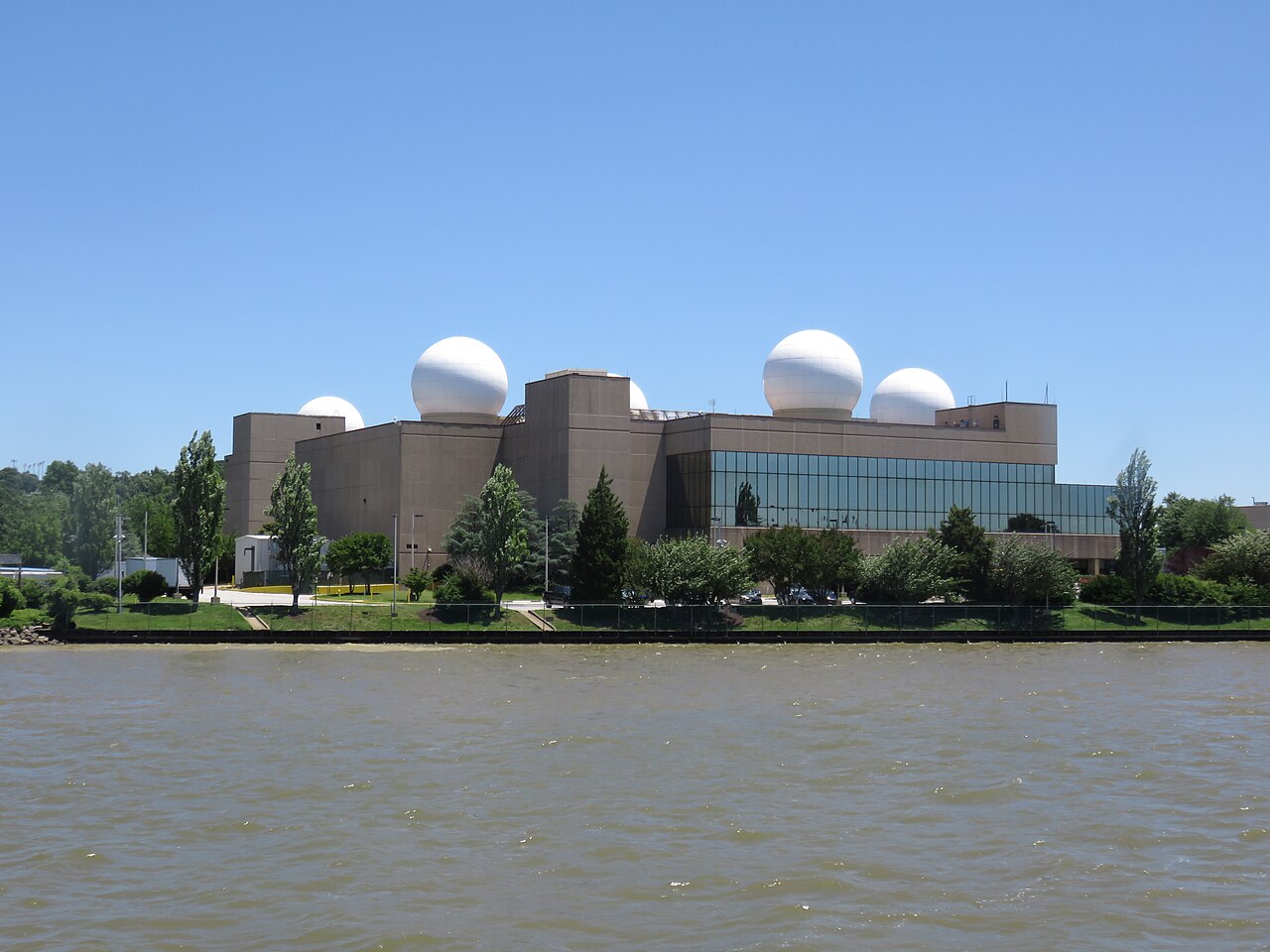
The Naval Research Laboratory awarded Applied Research Associates Inc. a $111,500,000 cost-plus-fixed-fee indefinite-delivery, indefinite-quantity contract on May 8 to support the Center for High Performance Computing's research and development mission at the NRL campus in Washington, D.C. A $14,682,541 initial task order, also cost-plus-fixed-fee, was issued concurrently with a cumulative value of $44,566,270, and work under that task order runs through May 2027. Three offers were received before NRL selected Applied Research Associates, an Albuquerque, New Mexico-based engineering and research firm. The IDIQ ceiling of $111.5 million covers the base period and any subsequent task orders that may be issued against the vehicle over its ordering period.
NRL's High-Performance Computing Center
The Naval Research Laboratory's Center for High Performance Computing provides computational resources, software tools, and scientific computing expertise to DoD researchers working across NRL's more than 30 research divisions. The center operates high-density computing clusters, data storage infrastructure, and visualization systems that support modeling and simulation work in areas including materials science, ocean acoustics, atmospheric physics, spacecraft systems, and artificial intelligence. NRL's computing infrastructure is classified and unclassified, with stringent cybersecurity requirements for systems that may host research with national security applications.
The center has expanded its HPC capacity significantly in recent years. The DoD Supercomputing Resource Center at the Naval Meteorology and Oceanography Command reported adding more than 17 petaFLOPS of computing power in a recent capacity expansion, reflecting DoD-wide pressure to increase computational capacity for machine learning workloads, large-scale simulation, and AI model training that support both basic research and applied weapons development. Applied Research Associates will provide research engineering, system administration, software development, user support, and technology evaluation services to support and expand these capabilities.
ARA's Track Record in Navy Research Work
Applied Research Associates has built a substantial Navy research portfolio over the past decade. The company previously secured a five-year, $48 million Navy contract for non-lethal weapon technologies research and holds a spot on a potential $249.7 million Navy IDIQ contract for unmanned systems engineering and technical support services. GovCon Wire reported the NRL HPC award was competitively procured under a solicitation the lab had posted publicly, and ARA's win over two competing proposals reflects the company's demonstrated credibility in delivering research support services to laboratory environments with complex computational infrastructure requirements.
The IDIQ structure of the HPC contract gives NRL flexibility to issue task orders for specific research initiatives as they emerge, rather than locking all work into a single statement of work. This is a common vehicle design for laboratory support contracts where the scope of research evolves with program priorities, Congressional direction, and shifts in threat-driven requirements from fleet and operational commands that sponsor NRL research.
What It Means for Contractors
The NRL HPC IDIQ was competed with three proposals, meaning the market for this type of research support is reasonably competitive despite the technical depth required. Firms positioned in academic research computing, DoD laboratory support, or high-performance computing infrastructure management should note this contract as a model for similar vehicles across the DoD laboratory enterprise.
- ARA will likely seek teaming partners for specific task orders requiring specialized expertise — firms with advanced parallel computing, GPU cluster management, machine learning operations, or quantum computing research backgrounds should engage ARA's NRL program team in Washington.
- Similar HPC support vehicles are operated by the Army Research Laboratory, Air Force Research Laboratory, Defense Advanced Research Projects Agency, and the DoD High Performance Computing Modernization Program; firms losing or not competing on the NRL vehicle should review solicitation history for those parallel opportunities.
- The CPFF task order structure means contractors absorb schedule and technical risk while the government absorbs cost risk — firms should ensure their overhead rates and G&A structures support competitive CPFF bids on subsequent NRL task orders.
- NRL's computing infrastructure requires personnel with active DoD clearances; firms should assess their cleared workforce capacity against the likely security requirements for task orders touching classified research systems.
The Growing Importance of HPC in DoD Research and AI Development
The Department of Defense's appetite for high-performance computing has expanded substantially over the past decade, driven by the computational demands of artificial intelligence model training, large-scale physics-based simulation, and the digital engineering frameworks that DoD now mandates for major acquisition programs. The DoD High Performance Computing Modernization Program, which manages a network of DoD Supercomputing Resource Centers at sites including NRL, the Army Engineer Research and Development Center, and the Air Force Research Laboratory, has been investing in successive generations of petascale and exascale computing systems to support researchers whose simulations require more processing power than standard cloud computing resources can cost-effectively provide.
At the Naval Research Laboratory specifically, the intersection of oceanographic modeling, atmospheric science, materials research, and directed-energy weapons physics creates a particularly demanding computing workload. NRL researchers developing computational fluid dynamics models for hypersonic vehicle thermal protection, acoustic detection algorithms for undersea systems, and machine learning architectures for autonomous platforms all rely on the Center for High Performance Computing's infrastructure. The $111.5 million IDIQ structure gives NRL program managers the flexibility to issue task orders aligned with the annual research budget cycle, ensuring that computing support capacity can scale with the research portfolio rather than being locked into a fixed scope that may not match evolving program needs.
Applied Research Associates' win on this contract continues a broader trend of engineering-focused research firms — as distinguished from large IT services firms — winning NRL and laboratory HPC support contracts. These firms compete on technical depth in scientific computing rather than on price alone, and their success in three-offeror competitions against presumably lower-overhead competitors reflects the laboratory community's preference for contractors who can engage substantively with researchers on computational methods rather than simply managing hardware and software licenses. For ARA, the NRL HPC IDIQ adds a vehicle adjacent to the company's existing Navy research work, strengthening its position in the Washington, D.C. Navy laboratory ecosystem.