
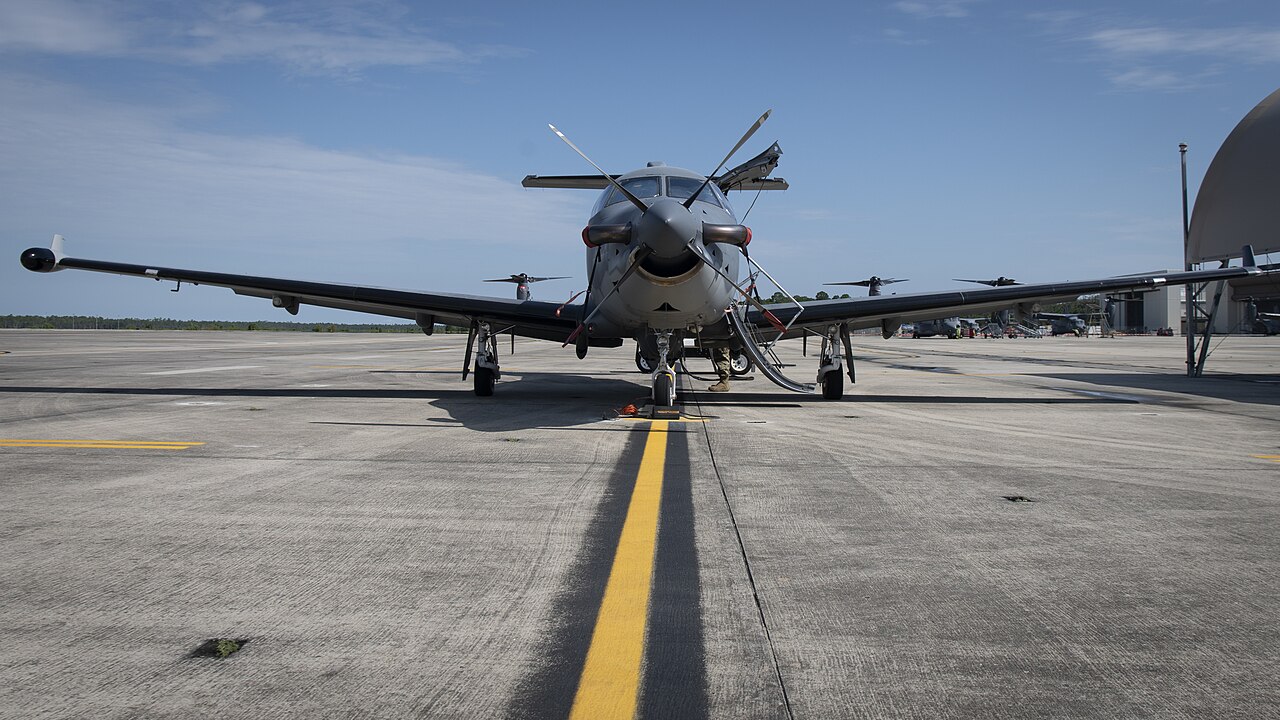
Planned Systems International Inc. (PSI) on May 1, 2026 was awarded a $110,096,319 hybrid firm-fixed-price task order for the Air Force Special Operations Command (AFSOC). The scope spans global operations, maintenance, sustainment, cybersecurity, engineering, and deployed support — the full range of IT and mission-systems sustainment that keeps AFSOC's distributed, expeditionary infrastructure operational across Hurlburt Field and forward-deployed locations worldwide. Work is performed at Hurlburt Field, Florida, and various CONUS and OCONUS locations, with a completion date of April 30, 2028.
AFSOC's unique IT and cyber requirements
Air Force Special Operations Command is not a typical Air Force major command. AFSOC's 19,000+ active duty, Guard, Reserve, and civilian personnel operate from Hurlburt Field (primary) and a global network of deployed locations spanning the Middle East, Africa, Europe, and the Pacific. The command's aircraft — AC-130J Ghostrider gunships, CV-22B Osprey tiltrotors, MC-130J Commando II tanker-transports, and U-28A surveillance aircraft — carry classified mission systems requiring continuous software sustainment, network connectivity, and cyber defense in environments ranging from Hurlburt's classified networks to forward austere airstrips with satellite-only connectivity.
The combination of highly classified systems, expeditionary deployment patterns, and global connectivity requirements makes AFSOC's IT sustainment materially more complex than a typical Air Force base support contract. Contractors performing this work need both the technical capabilities (cleared cyber engineers, mission-systems expertise) and the operational agility (ability to surge personnel to deployed locations on short notice) that limit the competitive field to a relatively small number of firms.
The hybrid contract structure in context
A hybrid firm-fixed-price structure mixes FFP for predictable, well-defined work with cost-type or time-and-materials elements for variable or emergent requirements. For AFSOC, the predictable work — enterprise helpdesk, network operations center, scheduled maintenance cycles — lends itself to FFP pricing. The variable work — incident response to cyberattacks, deployed surge support during operations, emergency engineering for mission-system failures — requires flexibility that pure FFP cannot accommodate without enormous contingency pricing.
This structure is now under pressure from the April 30, 2026 executive order requiring agencies to default to firm-fixed-price and justify any non-FFP elements in writing. AFSOC's contracting officers will face the EO's scrutiny on this task order's hybrid provisions at the next modification or follow-on competition. Contractors should anticipate that AFSOC will need to document the non-FFP elements more rigorously going forward — creating both compliance burden and potential consulting opportunities.
PSI's position in the AFSOC ecosystem
Planned Systems International, headquartered in Reston, Virginia, is a mid-size government IT services company with a long history of supporting special operations forces. The company's cleared workforce and special operations domain expertise differentiate it from larger IT firms that serve the broader DoD market. PSI has held AFSOC IT sustainment work continuously through multiple contract cycles, which means the company has embedded institutional knowledge of AFSOC's systems architecture, classified network topology, and operational tempo.
For subcontractors, PSI's AFSOC task order represents the typical "prime plus subs" model: PSI manages the overall contract performance and provides the cleared program management workforce, while specialized cybersecurity, engineering, and deployed-support firms fill specific capability gaps. AFSOC-cleared personnel with SOF-relevant cyber backgrounds (red team, penetration testing, ICS security, mission systems) are the highest-demand subcontract category.
The broader AFSOC IT market
AFSOC's IT and mission-systems sustainment portfolio extends well beyond this single task order. Key parallel vehicles include:
- SOFNET: The Special Operations Forces information network — a classified enterprise WAN connecting AFSOC and other SOF command nodes
- AFSOC ITES: The Information Technology and Enterprise Services contract family, which covers different tiers of IT service support
- Mission System Sustainment: Separate task orders covering specific aircraft mission systems (MC-130J sensor suites, AC-130J fire control systems) that require classified sustainment expertise
Firms with Hurlburt Field experience and TS/SCI cleared personnel should monitor the AFSOC contracting directorate's acquisition forecast (published semi-annually on SAM.gov) for upcoming task order competitions and potential new IDIQ vehicles as the current generation of contracts reaches its ordering period limits in FY2028–2030.