The
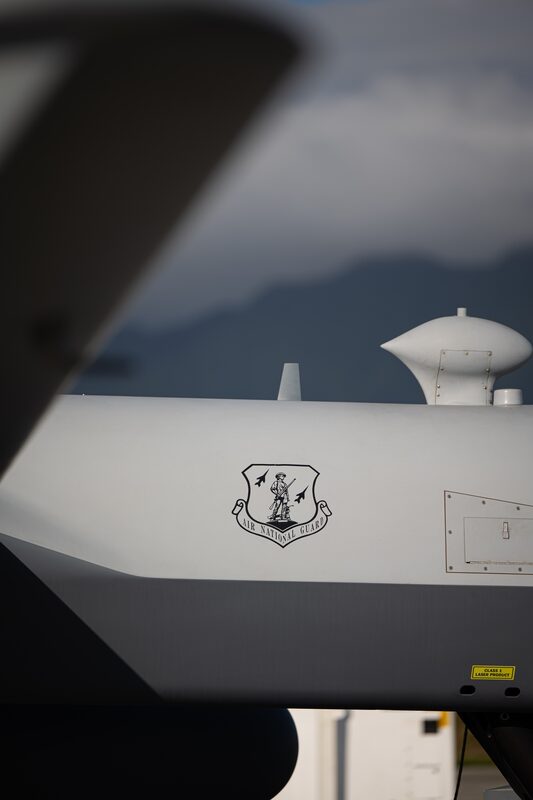
Air Force is tearing up its own schedule for a new fleet of low-cost drones because Iran's air defenses have destroyed nearly a quarter of the service's MQ-9A Reapers, and officials say they cannot buy their way out of the gap. According to
Janes, the service has compressed the timeline for its Massed Modular Aircraft (MMA) program from a 21-month prototype schedule with only 20 aircraft ready by fiscal 2031 to a plan that fields prototypes in about a year and reaches fielded scale within roughly three years, pulling meaningful operational capability forward to 2029.
The trigger was blunt. Combat losses during operations against Iran have cost the Air Force at least 45 MQ-9A Reapers — about 25% of the operational fleet — according to reporting from Air & Space Forces Magazine and DefenseScoop. Lt. Gen. Christopher Niemi, the Air Force's deputy chief of staff for force modernization, told reporters at a September 3 roundtable that the service is burning through its remaining Reapers faster than it wants to.
"Although we have plenty of MQ-9As today, we are going through them at a rate that is concerning to us," Niemi said, according to
Air & Space Forces Magazine.
Why the Air Force Can't Just Buy More MQ-9s
The obvious fix — buying more Reapers or the newer MQ-9B variant to cover the shortfall — isn't attractive. An MQ-9B costs even more than the MQ-9A aircraft the Air Force is already losing in combat, and Niemi indicated there is no ready substitute in the interim: "there's not a lot of good options to immediately replace those aircraft," he said, according to Air & Space Forces Magazine. That math is part of what pushed leadership to move faster on a design meant to be attritable rather than precious: a drone the Air Force can afford to lose in the numbers that combat against a capable air defense network apparently demands.
The cost gap explains why. General Atomics builds the MQ-9A and MQ-9B Reaper for $30 million to $50 million per aircraft depending on configuration, according to DefenseScoop. The Air Force's target for the MMA air vehicle — the base airframe alone, before sensors or weapons — is about $10 million. At that price, the service wants to field at least 180 aircraft, "probably more than that," Niemi told Air & Space Forces Magazine.
What Changed Between July and September
The Air Force's original MMA solicitation, issued earlier this year, called for a full-scale prototype within 21 months of contract award and just 20 mission-ready aircraft reaching initial operating capability by fiscal 2031 — a schedule built for peacetime attrition assumptions. Secretary of the Air Force Troy Meink directed the faster timeline after the Reaper losses mounted, according to DefenseScoop. Maj. Gen. Joe Kunkel, military deputy at the
Defense Innovation Unit, which is running the MMA prototyping effort alongside the Air Force, said the new target is a prototype "within a year of a contract" and fielding at scale within three years — as soon as 2029, according to Air & Space Forces Magazine.
Niemi described the shift in blunter terms to Janes. He said the push to accelerate MMA had already been under discussion before the losses piled up, but that the losses forced the issue: "Candidly, as a result of some of the losses that we've experienced in combat operations, that discussion sort of got accelerated," he said, according to
Janes.
The MMA design itself trades speed for range and payload: a high-aspect-ratio wing, turboprop propulsion, a payload capacity above 2,800 pounds, and a range class that DefenseScoop reported extends past 4,000 miles, with some reporting citing an 8,000-nautical-mile figure for the design envelope. That is a deliberate tradeoff — a turboprop, modular airframe built to a $10 million price ceiling will not match the MQ-9's speed or sensor fit, but it does not need to. The design only has to be cheap enough to lose in the numbers combat against a capable air defense network apparently demands.
How the Pentagon Is Writing Compliance Into the Contract Up Front
Lt. Gen. Luke Cropsey, the Air Force's military deputy for acquisitions, framed the accelerated MMA effort as a chance to bake government reference architectures into a program from day one rather than retrofitting them onto a design already in production. "Applying those to a clean-sheet design like we're doing now gives us the ability to impose that up front, so that as vendors are coming in, we're requiring them to be compliant to those government reference architectures," Cropsey said, according to
DefenseScoop.
General Atomics — the incumbent Reaper builder now watching its own product line get shot down over Iran — is competing for the MMA award with a design it calls Wildfire, according to Air & Space Forces Magazine, positioning itself to capture the replacement program even as combat losses erode the aircraft it currently sells the Air Force. The solicitation remains open to other vendors as DIU and the Air Force run the prototyping effort together, a structure meant to move faster than a traditional program of record.
What It Means for Contractors
The MMA acceleration is a live case study in how combat attrition can compress an acquisition timeline that would otherwise have taken years to move through requirements review. Vendors bidding on MMA — General Atomics among them — are now being asked to hit a $10 million unit-cost ceiling and a roughly one-year prototype deadline, both far tighter than the program's own solicitation contemplated just months ago. Companies with existing attritable-drone airframes, modular payload architectures, or turboprop propulsion already qualified for military use are best positioned to bid credibly against that schedule. The reference-architecture mandate Cropsey described also signals that DIU and the Air Force intend to lock in open, government-owned technical standards before the vendor field narrows — a detail that should shape how any bidder structures its data rights and licensing terms in a proposal. Firms currently supplying MQ-9 sustainment, spares, or ground control systems should also watch for a parallel signal: an Air Force publicly acknowledging it cannot backfill Reaper losses with more Reapers is an Air Force that may be preparing to shrink that legacy sustainment tail sooner than the original fiscal 2031 horizon implied.
Sources