
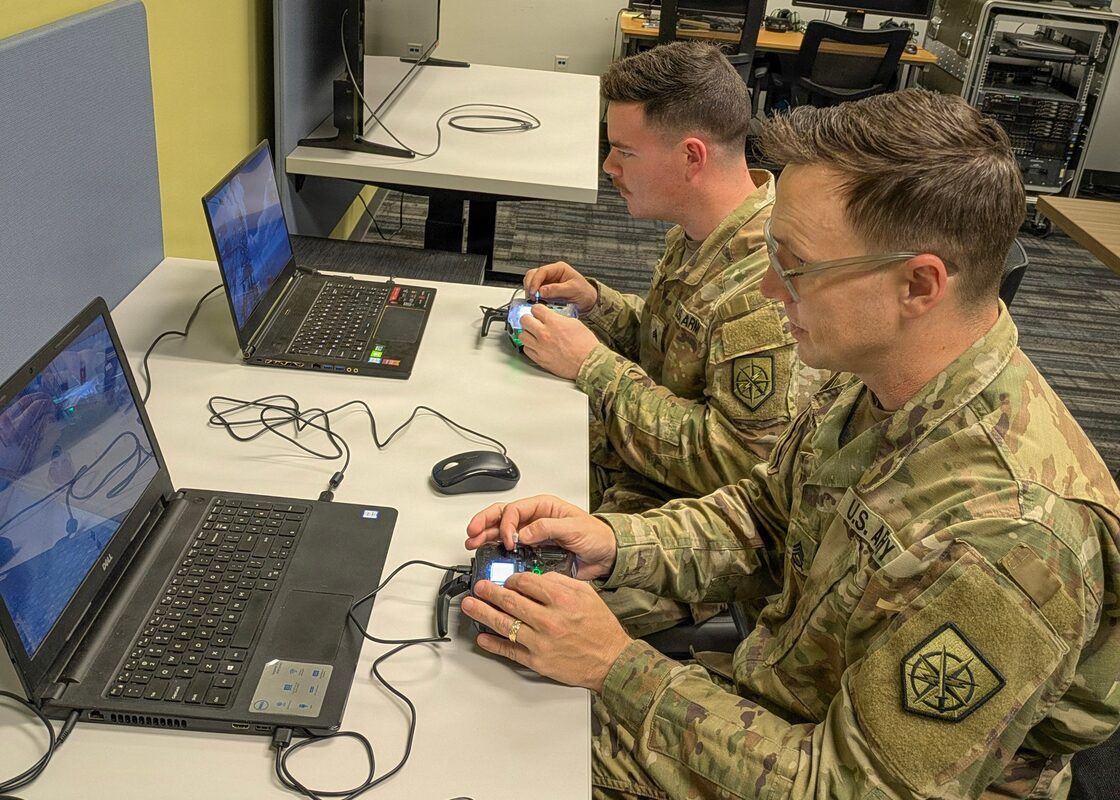
The U.S. Department of War has opened a fresh procurement channel for small, offensive drones, awarding an indefinite-delivery/indefinite-quantity contract with a ceiling of up to $90 million for Group 1 'aerial denial' unmanned aircraft systems. The Department of War daily contracts announcement dated July 20, 2026 lists Tandem Defense of Richmond Hill, Georgia, with the ceiling award under contract FA8629-26-D-B006. The buy ran as a competitive solicitation through the Air Force Life Cycle Management Center at Wright-Patterson Air Force Base, Ohio, which drew ten offers.
Background
The Pentagon sorts unmanned aircraft into five groups by weight and altitude, and Group 1 sits at the bottom: systems under 20 pounds that typically fly below 1,200 feet and under 100 knots. Most Group 1 attention over the past two years has gone toward counter-drone tools and small reconnaissance quadcopters. This award points the other way. 'Aerial denial' describes an offensive role, small expendable aircraft meant to hold ground, deny movement, or strike rather than watch and warn. Their appeal is cost: they are cheap enough to lose in numbers, which is precisely what the mission implies. Rather than a single exquisite platform, the concept leans on quantity, and quantity is what an IDIQ with a nine-figure ceiling is built to buy over time.
The contracting activity, the Air Force Life Cycle Management Center at Wright-Patterson Air Force Base, manages fast-turn buys of nonstandard and expendable hardware. Routing the aerial denial line through that center signals the Air Force wants these drones sourced and fielded quickly, outside the multi-year cadence that governs crewed aircraft and larger unmanned platforms. The buy also stands apart from the pattern of recent drone awards, which have concentrated among a handful of scaled vendors. Here the service ran a wide competition and drew ten offers before settling on a winner. That approach lets the Air Force test whether a broader vendor base can deliver cheap attack drones at the pace the mission demands.
Key Details
Tandem Defense holds contract FA8629-26-D-B006, a ceiling $90 million IDIQ. The Department of War listed it as a competitive acquisition, with ten offers received against the solicitation. Work has an estimated completion date of July 19, 2028, giving the vendor a two-year runway to deliver against task orders. The FA8629 series is the marker for Wright-Patterson's asymmetric-warfare-style buys, the fast-turn line for nonstandard and expendable hardware rather than a multi-year program of record.
The scope runs past the airframes themselves. The announcement covers the Group 1 aerial denial aircraft plus ancillary support equipment, operator training, and field service representative support, the on-site technical staffing that keeps fielded systems running. That combination points to systems the Air Force expects to move into operators' hands rather than leave in test status. The pairing of hardware with training and sustainment is a signal in itself, describing a buy aimed at fielding, not evaluation.
The obligated funding at award is modest against the ceiling. The Department of War recorded $98,000 in fiscal 2026 other procurement funds obligated to Tandem Defense at the time of award. That gap is normal for an IDIQ: the ceiling sets the maximum the government may order over the life of the vehicle, while actual dollars follow each task order the service issues. Specific delivery locations will be set by those follow-on orders rather than fixed at award. That structure lets the Air Force meter volume over the ordering window and adjust as requirements and performance become clear.
What It Means for Contractors
For small and mid-tier contractors, this award is a live example of how the services are buying expendable drones right now: wide competitions, low barriers to entry, and IDIQ vehicles that convert a single solicitation into a stream of task orders. Tandem Defense, a Georgia firm without a prominent footprint in the Pentagon's major drone awards, landing a $90 million ceiling against ten offers shows the door is open to entrants outside the established loitering-munition names.
The structure rewards companies built to execute on task orders, not just win the base award. Because obligated dollars trail the ceiling and delivery sites are set later, the real revenue depends on capturing individual orders as they drop. Vendors that can staff field service representatives, stand up operator training, and supply ancillary equipment, not only the aircraft, will be positioned to absorb a larger share of the follow-on work. A $90 million figure describes headroom, not booked revenue, and the money flows order by order across the ordering window.
Contractors already registered in SAM.gov and holding the relevant facility and cyber requirements are best placed to chase the first task orders, since the government can issue them against an existing vehicle without a fresh full-and-open competition. Newer entrants should treat this award as a template: study the FA8629 series, watch AFLCMC's fast-turn offices at Wright-Patterson for follow-on solicitations, and build the training and sustainment bench that turns a hardware bid into a full-service offer.
The mechanics here also travel. Agencies across the Pentagon are leaning on IDIQ vehicles to hold prices down and keep ordering flexible, and a contractor that learns to win one carries a repeatable playbook to the next. Registering interest early, tracking the sponsoring office, and pricing to the task-order model rather than the headline ceiling are the habits that convert a base award into delivered units. The aerial denial framing is worth watching on its own: an offensive Group 1 line, rather than another counter-UAS buy, signals the Air Force is investing in small drones as weapons that hold terrain, a demand signal the expendable-UAS space can plan against.
