
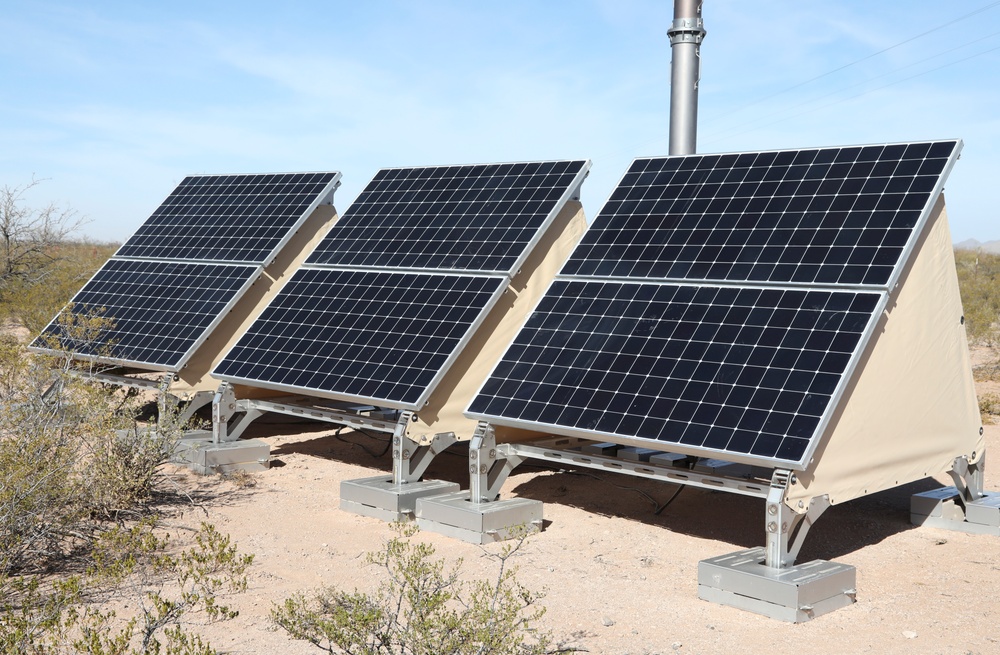
U.S. Customs and Border Protection (CBP) awarded Anduril Industries a $363 million contract for more than 200 Extended Range Sentry Towers (XRST), announced in June 2026, building on an AI-enabled border surveillance partnership the two organizations established in 2019 with a five-tower pilot program. By the time of the public announcement, Anduril had already delivered more than 40 towers and was producing more than 15 units per month, positioning the program to complete the bulk of the 200-plus-unit order within the one-year contract performance window.
Background
CBP has operated a border surveillance tower program with Anduril since 2019, when the company deployed five test Sentry Towers along the southwest border. That pilot led to a sustained expansion: by mid-2026, CBP had more than 350 standard-range AI-enabled Sentry Towers operational, systems the agency says have autonomously identified hundreds of thousands of border crossings. The XRST contract represents the next generation of that effort, fielding a longer-range, higher-capability variant designed to push detection boundaries significantly beyond the standard platform.
The program cleared a key milestone in November 2024 when the XRST completed CBP acceptance testing. The standard-range network already covers roughly 30 percent of the U.S. southern land border, and the extended-range variant is intended to fill gaps and extend persistent coverage into higher-priority corridors where terrain or resource constraints have limited traditional sensor density.
CBP's stated operational concept is to shift Border Patrol agents away from the initial identification of border crossings and toward higher-value law enforcement tasks. The autonomous detection and classification functions built into each tower handle the surveillance workload, queuing agents for response when the system identifies a person, vehicle, or other object of interest. The XRST contract accelerates that shift by extending the detection envelope and increasing the density of coverage along high-priority corridors.
Tower Specifications and Capabilities
Each Extended Range Sentry Tower stands 80 feet tall and is engineered for rapid, modular deployment. CBP and Anduril describe the XRST as field-deployable in under three hours without ground preparation or specialized construction equipment. Once installed, each tower operates continuously around the clock, running Anduril's AI software stack for autonomous threat detection and classification.
The defining capability upgrade from the standard Sentry Tower is the 12-kilometer, or approximately 7.5-mile, detection range. That range allows a single tower to cover substantially more terrain than its predecessor, reducing the total number of assets required to achieve continuous coverage along a given stretch of border. The AI system classifies detected objects in real time, filtering environmental noise and distinguishing between humans, vehicles, and wildlife without requiring a human operator to review every sensor alert.
A single operator can monitor and manage more than 10 towers simultaneously through a centralized command interface. That human-to-tower ratio is central to the program's labor efficiency argument: CBP can cover more border miles with the same number of agents by using the AI layer to pre-screen and prioritize alerts before they reach a human decision-maker. Each XRST integrates with existing Sentry tower networks and Anduril's Lattice software platform, allowing the extended-range units to slot into the agency's existing command and control architecture rather than requiring a parallel system.
Contract Structure and Production Status
The one-year XRST contract covers more than 200 towers and is valued at $363 million. Production was already underway at a rate of more than 15 XRSTs per month at the time of the June 2026 announcement, with more than 40 towers already delivered to CBP. That delivery posture means a significant portion of the 200-plus-unit order is either complete or in late-stage production, and the bulk of the remaining towers are expected to be fielded within the contract's performance window.
The program's trajectory from initial pilot to large-scale production reflects a pattern increasingly common in defense and homeland security acquisition: a small-batch operational pilot demonstrates performance, the system advances to a program of record, and successive follow-on contracts scale production as field confidence grows. Anduril's Sentry Tower program followed that arc from 2019 through 2020, when it became a CBP program of record, and onward through the 350-tower standard-range network to the current XRST order.
What It Means for Contractors
- CBP's operational model for the XRST — autonomous detection, centralized operator control, and rapid deployment without site construction — reflects an agency preference for software-defined sensor systems over fixed infrastructure. Vendors competing for future border surveillance task orders should design for that operational paradigm rather than assuming traditional camera-and-fence integration requirements.
- The 12-kilometer detection range and sub-three-hour deployment time are now the baseline capability thresholds the agency has validated and funded at scale. Competing or complementary systems entering future competitions will need to meet or exceed these specifications to be considered a viable replacement or supplement.
- The program's pilot-to-program-of-record-to-full-scale-production arc is instructive for technology companies pursuing CBP and DHS border security contracts. Agencies in this space often use small pilot awards to validate performance before committing to large production buys. Companies should structure their offers to accommodate low-cost pilot entry with defined pathways to rapid scaling, rather than assuming large-volume contracts will be awarded on specification alone.
- Subcontractors and suppliers involved in tower fabrication, power systems, ruggedized optics, or AI edge-compute hardware should monitor CBP and DHS procurement vehicles for follow-on production awards as the initial 200-unit order rolls through delivery and the agency evaluates requirements for additional border corridors.
- The XRST's integration with Anduril's Lattice software platform means the hardware contract carries a software ecosystem dependency. Prime and sub competitors seeking to displace or supplement Anduril on future awards will need to demonstrate interoperability with the existing installed base, or propose migration paths that do not disrupt CBP's current command and control operations.
- The $363 million contract value and the one-year performance window imply a cost-per-unit averaging roughly $1.7 million per tower — a data point that will anchor independent government cost estimates for future tower procurement packages across CBP and potentially other DHS components such as the Office of Field Operations and Air and Marine Operations. Vendors designing competing systems should benchmark against that unit cost when structuring their own production pricing.
