
Army Contracting Command, Orlando awarded TRU Simulation + Training Inc., of Goose Creek, South Carolina, a $396 million firm-fixed-price indefinite-delivery, indefinite-quantity contract on June 23, 2026 for the Family of Maintenance Trainers (FMT) product line. The multiple-award contract vehicle runs through June 23, 2033, and encompasses analysis, design, development, production, installation, integration, testing, concurrency upgrades, technology refresh, trainer modifications, skills sustainment, cybersecurity, and instruction for simulation-based maintenance training systems. JANUS Research Group also received an award position on the same vehicle. 23 bids were solicited via the internet. The contracting activity is Army Contracting Command, Orlando, Florida, working under Program Executive Office for Simulation, Training, and Instrumentation (PEO STRI), Product Director Virtual Training Systems (PD VTS).
Background
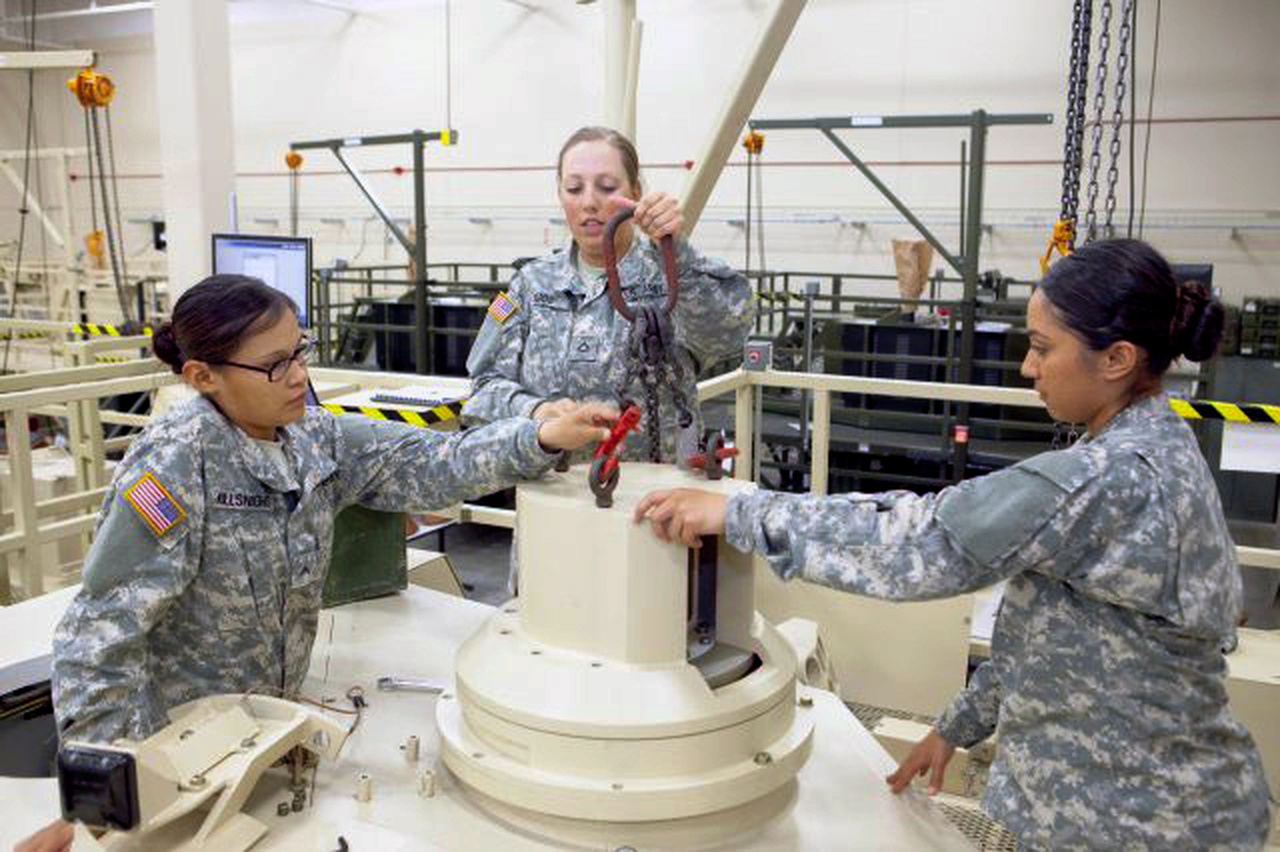
The Family of Maintenance Trainers program sits within PEO STRI's Product Director for Virtual Training Systems (PD VTS), the Army office responsible for fielding simulation and training devices that allow soldiers to practice maintenance tasks without touching operational equipment. Maintenance trainers replicate the internal systems of vehicles, aircraft, and weapons platforms well enough that a soldier can diagnose faults, replace components, and perform inspections in a safe, repeatable, and instrumented environment. Because mistakes on live equipment can damage costly assets or injure personnel, high-fidelity maintenance simulators are a standard part of how the Army qualifies its mechanics, electronics technicians, and ordnance specialists.
The FMT product line has historically produced trainers for a broad range of Army systems — from wheeled and tracked vehicles to rotary-wing aircraft and ground electronics — and the new IDIQ is structured to accommodate that breadth. Rather than covering a single platform, the vehicle allows PD VTS to issue delivery orders for any system in the FMT portfolio, meaning task orders could range from a single trainer for a newly fielded vehicle to large-scale production runs for a common platform fielded across tens of thousands of units Army-wide.
TRU Simulation + Training has operated in the military simulation and training market and holds contracts with multiple military services. The Goose Creek, South Carolina facility places the company in close proximity to a network of defense contractors in the southeastern United States.
Scope and Technical Requirements
The $396 million IDIQ ceiling encompasses an unusually wide set of technical disciplines, reflecting how military maintenance training has evolved beyond simple part-swapping mock-ups. According to the DoD contract announcement and a press release from JANUS Research Group — which also received a position on the vehicle — the FMT IDIQ covers analysis, design, development, production, installation, integration, and testing of trainer systems, as well as technology modernization, concurrency upgrades, and lifecycle sustainment over the ordering period.
Critically, the scope extends to artificial intelligence and extended reality (XR) integration. AI-assisted maintenance training can adapt scenario difficulty to individual trainee performance, flag procedural errors in real time, and generate after-action data that instructors use to identify systemic gaps across a unit. Extended reality — encompassing both augmented and virtual reality — allows trainers to overlay digital technical manuals onto physical mockups or to simulate maintenance tasks on a fully virtual platform model, reducing the need for expensive hardware replicas for every variant of a system.
The contract also requires cloud-based training capability, which enables soldiers to access trainer modules without traveling to a fixed installation. Distributed training has become a priority as the Army restructures for multi-domain operations, where units may be widely dispersed and cannot always return to home-station training facilities. Cloud-hosted simulation platforms allow a mechanic deployed to a remote location to run refresher scenarios on a laptop or tablet, maintaining proficiency without disrupting the unit's operational posture.
Cybersecurity compliance is an explicit contract requirement. Per JANUS's announcement, the FMT vehicle requires Risk Management Framework (RMF) compliance and Authorities to Operate (ATO) for training systems that connect to networks, store soldier performance data, and interface with platform technical data packages. PD VTS is treating training systems as part of the broader cyber risk surface, not as standalone tools exempt from network security requirements.
Configuration management and skills sustainment round out the scope. As platforms change — through engineering change proposals, software updates, or the fielding of new variants — their associated trainers must keep pace. The FMT vehicle provides mechanisms for PD VTS to order updates to existing trainers and to sustain the trained workforce of instructors and maintainers who support the devices in the field.
What It Means for Contractors
- Two awardees, competitive task orders: TRU Simulation + Training and JANUS Research Group both hold positions on this vehicle, meaning individual task orders will be competed between the two unless the contracting officer applies a statutory exception. Companies on neither vehicle cannot bid on FMT task orders — the window for entry was the solicitation that closed before June 23, 2026.
- Long ordering window: The period of performance runs through June 23, 2033, giving both awardees a long runway to pursue task orders across a wide range of Army platforms and training domains. Subcontracting opportunities for XR developers, AI/ML firms, cloud integrators, and cybersecurity specialists will likely appear as individual task orders are competed.
- AI and XR capabilities are now table stakes: The explicit inclusion of AI and extended reality in the base contract scope signals that PD VTS expects these technologies in FMT task order proposals. Contractors and subcontractors with demonstrated XR authoring tools, AI-driven performance analytics, or adaptive training platform experience are well-positioned for this vehicle's task orders.
- Cybersecurity compliance required: The contract explicitly requires RMF compliance and ATOs for covered systems. Any company pursuing subcontracting work on FMT task orders will need to demonstrate compliance with applicable DoD cybersecurity standards, which prime awardees are expected to flow down to subcontractors handling controlled unclassified information (CUI).
- Watch PEO STRI for task order releases: Task orders under this vehicle will be announced through PEO STRI's acquisition channels. Companies tracking FMT work should monitor SAM.gov for notices and engage with PD VTS program personnel at Army simulation conferences such as I/ITSEC and AUSA Annual.
