
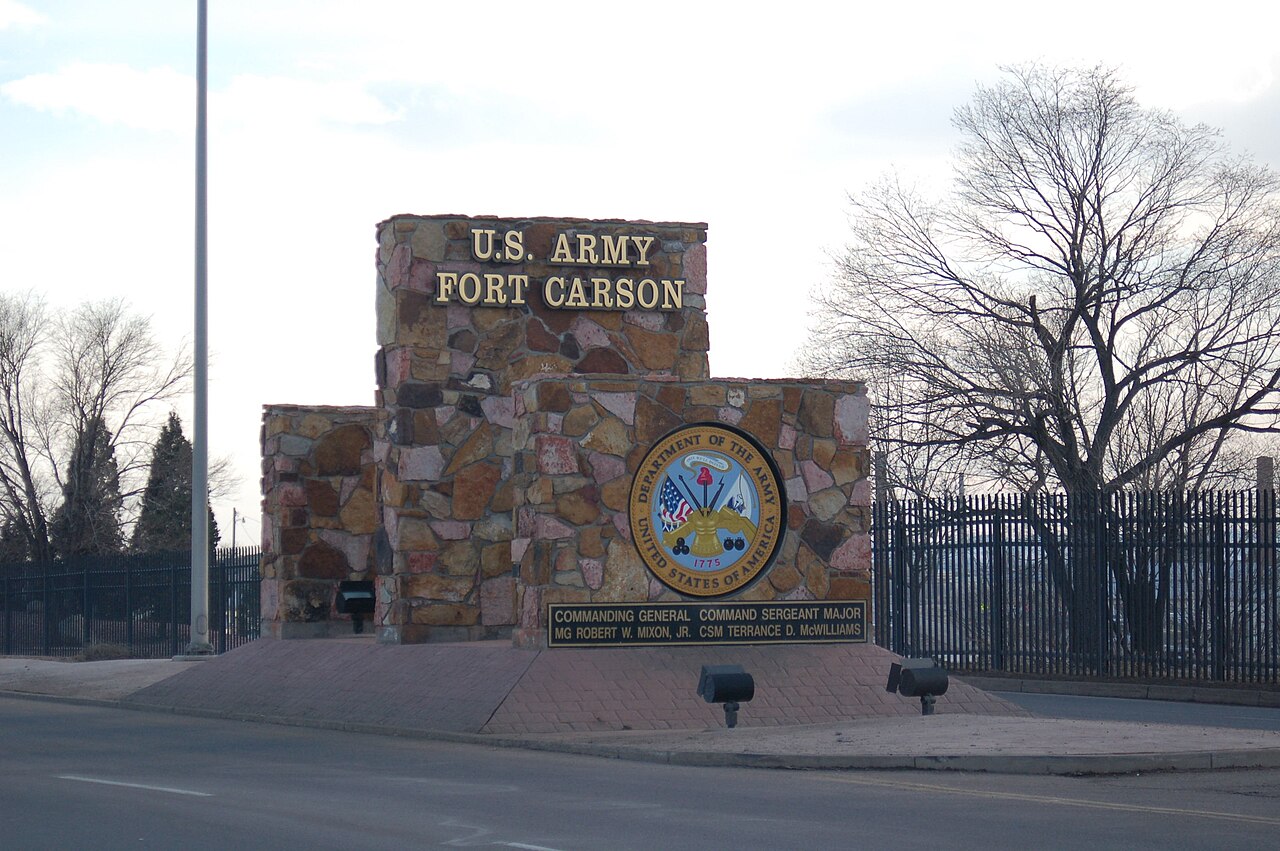
Small businesses chasing HUBZone base-operations work can lose on past performance even when their rating matches the winner's, and even when they offer the lower price. The Government Accountability Office has denied a protest by Keta Environmental and Infrastructure, LLC, upholding the Army's award of a base operation support contract to KTH Services JV, LLC at an evaluated price about $2 million higher than Keta's.
The decision, B-424583, B-424583.2 and B-424583.3, is dated Sept. 22, 2026. It covers Army Request for Proposals W5168W-24-R-0009, a HUBZone set-aside issued March 21, 2024, for base operation support services at Fort Carson and the Pinion Canyon Maneuver Site in Colorado. Set-asides like this one limit competition to small businesses, as the Small Business Administration explains for its contracting programs.
KTH, based in Falls Church, Virginia, came in at an evaluated price of $245,067,121.93. Keta, of Colorado Springs, Colorado, offered $243,090,093.42. The gap is roughly $1.98 million. The Source Selection Authority described the premium as 0.95 percent; the two figures above work out to about 0.81 percent of Keta's price, and the decision does not explain the difference.
How a $1.98 Million Price Gap Lost to Incumbent Experience
The solicitation evaluated three factors: mission capability on an acceptable/unacceptable basis, past performance through confidence ratings, and price. The work spans six required service levels: grounds maintenance, pavement clearance, vertical facility maintenance, horizontal facility maintenance, heating and cooling, and wastewater.
Both Keta and KTH earned substantial confidence ratings for past performance. On paper, the two offers looked nearly identical on the non-price factors, and Keta was cheaper. The Army's Source Selection Advisory Council recommended Keta as the lowest-priced, technically acceptable proposal.
The Source Selection Authority (SSA) rejected that recommendation and ran an independent best-value analysis. KTH is a joint venture that includes T&H Services, the incumbent contractor on the prior Fort Carson effort. Evaluators rated that incumbent reference very relevant, with exceptional performance across all six service levels.
Keta submitted four past performance examples. Its first, at Fort Benning/Fort Moore from September 2019 to February 2025, was rated very relevant and received an outstanding performance assessment, crediting five of the six service levels. Evaluators noted, however, that the grounds maintenance covered a significantly smaller area, and the SSA found the wastewater services at that site were also significantly smaller than Fort Carson's requirements.
The SSA concluded that the premium was worth paying, writing: "The 0.95 [percent] price premium is a negligible investment to mitigate transition risk, and secure performance that has historically been documented as 'exceptional' and cost-saving."
Why Matching Substantial Confidence Ratings Did Not Force a Price Award
Keta argued that the best-value tradeoff was unreasonable. Its position was that, with equal past performance ratings, price should have decided the award. The RFP made past performance and price equal in weight, but said price would become more important as offerors' past performance ratings grew more equal. GAO disagreed and repeated its view that ratings, "be they numerical, adjectival, or color, are merely guides for intelligent decision-making in the procurement process."
Under that standard, a source selection official may look behind identical adjectival ratings to find real differences between proposals. GAO found that none of Keta's four contracts, taken individually, covered all six service levels at Fort Carson's magnitude and scope. Those facts, the decision held, were reasonable discriminators between two proposals that both carried substantial confidence ratings.
Did the Army Improperly Reward KTH's Incumbency?
Keta also claimed the award improperly favored incumbency. GAO drew a line between two things. An agency may not give an incumbent favorable evaluations due solely to incumbency or an assumption that the incumbent will perform better. But an incumbent holds a "natural and unavoidable competitive advantage" from having performed the same work before, and the agency is not required to neutralize it.
GAO found the Army stayed on the permitted side. The agency evaluated KTH on the documented performance record included in its proposal, not on assumptions about how KTH would perform.
Why GAO Rejected Keta's Discussions Argument
Keta's third argument was that the Army failed to hold meaningful discussions because it never raised adverse past performance information with the company. GAO found the issue concerned the relevance of Keta's examples, not the quality of its performance. The evaluators did not find that Keta performed poorly on any example and explicitly recognized its outstanding ratings.
The decision states that identifying whether a prior contract is smaller in scale or missing relevant areas of performance is an assessment of relevance, "not a negative reflection on the contractor's past performance history for which the agency is required to engage in discussions." GAO denied this ground.
What It Means for Contractors
The Keta decision shows how far a source selection authority can go in looking past matching ratings on base-operations recompetes. Several practical points follow:
- Equal ratings are not equal proposals. A substantial confidence rating that matches the incumbent's does not turn a best-value procurement into a price shootout. Source selection officials can, and do, read the underlying evaluation findings.
- Coverage of every service line matters. Keta's first reference covered five of six service levels. On a multi-function base-operations contract, a reference that covers every required area at comparable size carries more weight than several partial matches.
- Scale is a relevance question, and you may not hear about it. Because GAO treats size and scope gaps as relevance findings rather than adverse performance, offerors should not count on a warning in discussions. Choose references that match the target installation's magnitude, and explain any size differences in the proposal itself.
- Small premiums are easy to justify. A premium the SSA put at under 1 percent gave room to call the price difference "negligible" against transition risk. Challengers who undercut an incumbent by a thin margin should not count on price alone.
- Teaming with an incumbent is a strategy. KTH's edge came through its joint venture partner's work on the prior Fort Carson contract. HUBZone firms bidding against an incumbent-backed team need past performance that answers that record directly.
For protesters, the decision confirms that disagreement with a tradeoff rarely succeeds when the record shows the SSA identified concrete discriminators and explained why they were worth the price.
