
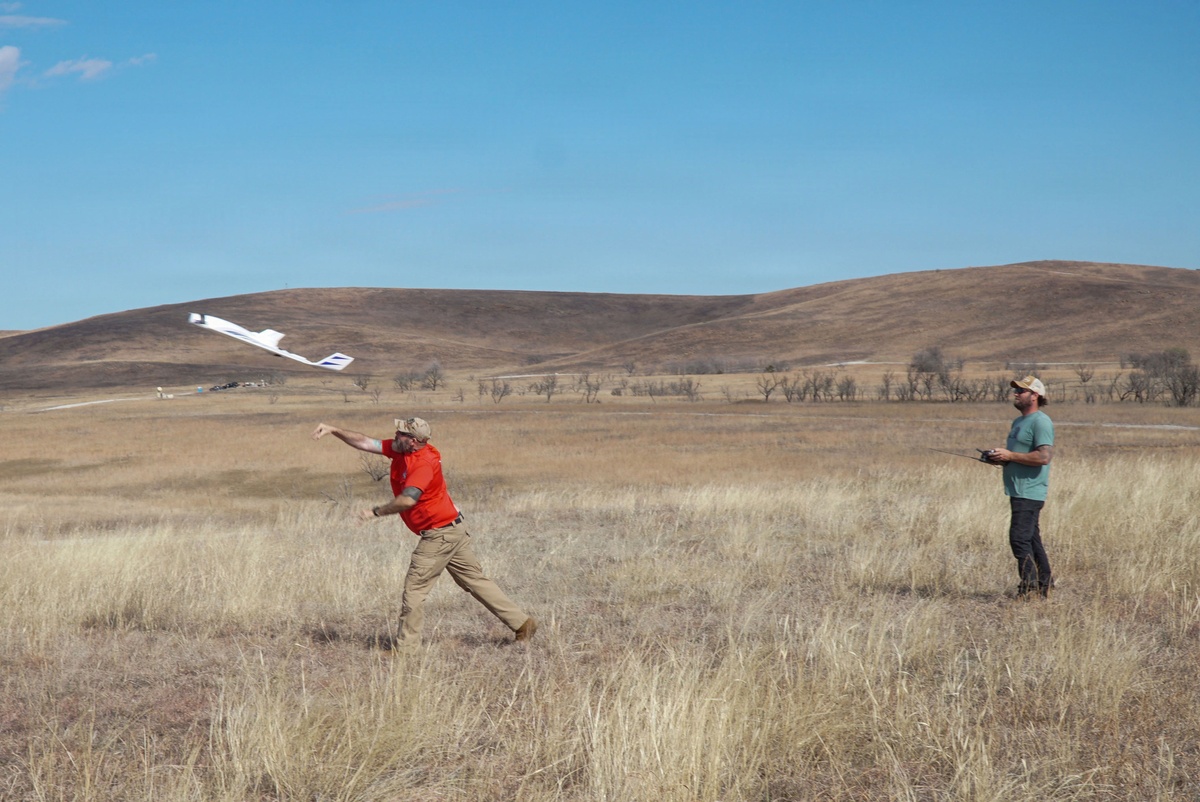
The Army will let defense companies book time on four domestic test ranges and a new site in Morocco through a reservation portal at testrange.army.mil, with a goal of getting firms onto a range within 30 days of a request — a schedule that would collapse waits that currently stretch 12 to 18 months. Army Secretary Dan Driscoll announced the initiative Aug. 7, 2026, framing it as a direct answer to the munitions lessons of the war in Ukraine and as an invitation to companies developing missiles, interceptors, drones and counter-drone systems on their own dime.
The five sites are Camp Grayling in Michigan, Camp Shelby in Mississippi, Dugway Proving Ground in Utah, the West Cibola Range at Yuma Proving Ground in Arizona, and the Africa Multidomain Training and Experimentation Center, or AMTEC, in Morocco. The portal pairs the booking function with dedicated "concierge" support to walk vendors through the process — a customer-service posture that has rarely accompanied access to government test infrastructure.
"It used to be you [had] to fight through the bureaucracy again and again... just to get to the range," Driscoll said, per DefenseScoop, which reported the announcement from Michigan alongside Gov. Gretchen Whitmer and members of the state's congressional delegation. Driscoll cast the effort in sweeping terms, telling Breaking Defense the Army is trying to "break down every single barrier that we have put up over the last 20 or 30 years."
Background
Range access has long sat near the top of the complaint list for companies trying to bring privately funded hardware to the Defense Department. A firm that spends its own independent research and development money on an interceptor or a counter-drone effector still needs somewhere to fly it, shoot it and instrument it — and the government owns nearly all of the airspace and real estate where live-fire testing of that kind is legal. Booking that infrastructure has meant navigating range control offices, safety reviews and scheduling queues that Driscoll himself says can consume 12 to 18 months — he singled out White Sands Missile Range as a chokepoint — a timeline that can outlast a startup's funding runway and stall even a large prime's internal development cycle.
The Ukraine war sharpened the stakes. Driscoll pointed to Ukraine's "innovation through necessity" moving at a pace "near or close to matching the commercial sector," and the Army wants a deeper bench of munitions suppliers and a faster pipeline from prototype to production. Opening ranges to industry attacks the problem at the testing bottleneck: if companies can generate real flight and intercept data quickly, the Army can evaluate and buy proven systems sooner.
The Morocco site adds an overseas dimension. AMTEC was established under a memorandum of understanding signed last month between U.S. Africa Command and the Moroccan Royal Armed Forces, and it has already hosted a proof point for the fast-access model: startup Covenant Industries test-launched its Anthem missile there the day before the announcement, and DefenseScoop reports a startup recently launched a missile at the site with less than two weeks' notice from the service. Covenant says it is preparing to deliver production-ready assets for its manufacturing line at the beginning of 2027.
Key Details
The initiative's mechanics, as described by the two outlets, work as follows. Companies request time through testrange.army.mil/ArmyRangeReservation, and the Army's stated objective is access within 30 days of the request. Concierge staff support vendors through scheduling and range requirements rather than leaving them to decode the process alone.
The offer covers testing of privately funded — IRAD — missiles, interceptors, drones and counter-drone systems. That scoping matters: this is not a contract vehicle and carries no development funding. Driscoll also said the Army does not plan to subsidize company travel or accommodations, so firms bear the full cost of getting people and hardware to Michigan, Mississippi, Utah, Arizona or Morocco.
The four domestic ranges bring distinct attributes. Dugway Proving Ground and Yuma's West Cibola Range are established test venues with large restricted areas suited to live fire, while Camp Grayling and Camp Shelby are major National Guard training centers — Grayling's inclusion made Michigan a natural venue for Driscoll's announcement. AMTEC extends the menu to a theater location under AFRICOM's umbrella, where, per DefenseScoop, a startup has already gone from notice to launch in under two weeks.
The reservation site is already online at a .mil address, which distinguishes this rollout from initiatives announced before the supporting infrastructure exists. What remains to be demonstrated at scale is throughput: whether the 30-day standard holds once dozens of companies are queuing for the same instrumented airspace, and how the Army will prioritize competing requests.
What It Means for Contractors
For venture-backed defense startups, the initiative removes one of the most punishing schedule risks in the business. A company burning investor cash cannot wait a year and a half to learn whether its interceptor works; a 30-day booking window makes it plausible to iterate through multiple test campaigns in a single year. The Covenant Industries example is the template the Army is advertising — a startup, a new missile, a range slot on days-to-weeks notice, and a production target set for early 2027.
For established primes and mid-tier suppliers, the value lies in maturing IRAD-funded designs before a program of record materializes. Systems that arrive at a competition with real flight data behind them carry less technical risk, and the Army has signaled through this initiative that it wants exactly that kind of pre-proven offering in the interceptor and counter-drone space.
Companies should plan around the cost structure. With no travel or lodging subsidy, a test campaign at Dugway or Yuma — let alone Morocco — is a self-funded expedition, and budgets should account for instrumentation, telemetry and range support on top of logistics. Firms with hardware closest to test-readiness stand to gain the most from moving early, before demand builds against a finite number of range slots.
The larger signal is directional. An Army secretary personally announcing a booking website, complete with concierge support, tells industry that the service is competing for private capital and private innovation the way commercial customers compete for business. Contractors that respond in kind — showing up with hardware, data requirements and a test plan — will find a range gate that opens in weeks, not fiscal years.
