
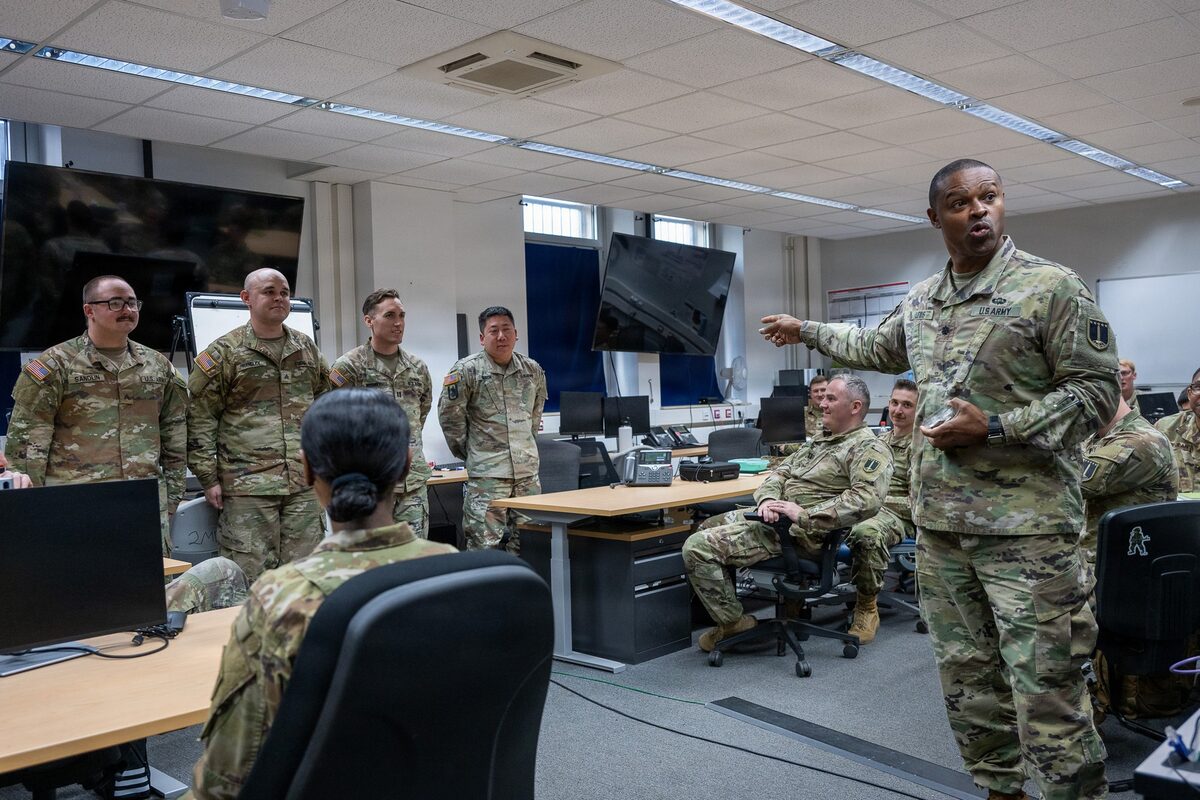
The U.S. Army has elevated space from a niche functional area into a permanent career branch, a structural change that reshapes how the service recruits, trains, and retains the soldiers who deliver satellite-enabled effects to ground forces. The Army formally established its new Space Operations Branch on June 12, 2026, and publicized the move in late June, according to an announcement from Army.mil. The decision consolidates two distinct populations of space professionals into one force and creates a dedicated enlisted specialty that did not previously exist.
For contractors that build space ground systems, training pipelines, and tactical communications gear, the reorganization signals a more defined institutional customer with its own career structure, doctrine, and demand signal.
The branch unites Functional Area 40A Space Operations Officers, a specialty the Army has fielded since 1999, with the newly created 40D enlisted Tactical Space Operations Specialists. Until now, space work sat outside the Army's basic branch system, drawing officers from across the force into a functional area rather than a permanent home. The new branch gives space professionals a single, enduring career path from entry through senior leadership.
The 40D military occupational specialty becomes effective Oct. 1, 2026. Eligible enlisted soldiers in grades specialist through sergeant major can request reclassification into the new MOS, with the transfer window opening in October 2026.
The move also relieves three "donor" branches that previously rotated personnel into space missions on a temporary basis. Air Defense Artillery, Signal, and Military Intelligence had supplied soldiers to space billets, an arrangement that pulled experienced personnel away from their home formations. By standing up a permanent force, the Army removes that recurring operational burden from those three branches.
Background
The Army describes itself as the largest user of space capabilities in the joint force, relying on satellites for communication, navigation, missile warning, targeting, and force protection. For more than two decades, the service met that demand through Functional Area 40A, a cadre of officers who specialized in space operations but remained tied to their original branches for career progression. That model worked when space was treated primarily as an enabler operating in a benign environment.
That assumption no longer holds. "Space is no longer a benign environment and enabler, but a battlefield," said Col. Felix Torres, commandant of the Space and Missile Defense Center of Excellence. The Army's leadership frames the new branch as a response to the reality that adversaries now contest the domain directly, fielding systems designed to jam, spoof, or destroy the satellites that ground forces depend on.
Lt. Gen. John L. Rafferty, commanding general of U.S. Army Space and Missile Defense Command, called the move "an important step in the Army's continuous transformation," according to DefenseScoop. Rafferty has said the Army is the largest user of space capabilities in the joint force and that "space integration is absolutely critical to multidomain operations at every echelon," while noting that the previous rotational model "served the U.S. Army well in the past but will not meet the demands of the future."
Key Details
The branch is built around two missions that Brig. Gen. Don Brooks, deputy commanding general of USASMDC, described as its "two pillars — integration of joint, coalition and commercial space capabilities; and interdiction of adversary space capabilities." The first pillar pushes space-based planning, communication, navigation, targeting, and missile-warning support down to tactical units. The second focuses on denying or degrading an adversary's ability to use space.
Those missions map directly onto the Army's emerging operational concepts. Space professionals are expected to support multidomain task forces and theater strike effects groups, formations designed to coordinate long-range fires and effects across land, air, sea, space, and cyberspace. Embedding trained space specialists in those units is intended to shorten the distance between a satellite capability and the soldier who needs it.
Gen. Christopher LaNeve, the Army's vice chief of staff, tied the move to the service's broader push for warfighting depth across domains. "Land power requires warfighting expertise in all domains," he said. "What makes me proud is that our Army is not just building a capability, we're growing professionals at every echelon."
The enlisted side is the most visible new element. The 40D specialty creates, for the first time, a permanent enlisted career track for space operations rather than relying solely on officers and borrowed personnel. The October reclassification window gives current soldiers across grades specialist through sergeant major a path to convert into the field.
What It Means for Contractors
A permanent branch changes the demand picture for industry. Functional areas tend to generate episodic, billet-by-billet requirements; a basic branch carries its own institutional training base, doctrine, equipment programs, and sustained personnel pipeline. Companies that supply space ground stations, satellite communications terminals, electronic warfare and counter-space systems, and modeling and simulation tools now have a clearer, longer-horizon customer inside the Army.
The training emphasis is especially relevant. Standing up the 40D MOS and growing an enlisted force from scratch will require courseware, simulators, and instructor support to build a pipeline that did not exist before October 2026. Vendors with live, virtual, and constructive training expertise, as well as those that build tactical space and SATCOM hardware, may find new requirements tied to the Space and Missile Defense Center of Excellence.
The counter-space pillar also points to procurement interest in systems that detect, deny, and degrade adversary space capabilities. As the Army formalizes interdiction as a core mission rather than an ad hoc task, contractors positioned in electronic warfare, space domain awareness, and resilient navigation and timing should track requirements emerging from USASMDC and the multidomain task forces the branch is meant to support.
For now, the most concrete date on the calendar is Oct. 1, 2026, when the 40D MOS takes effect and the reclassification window opens. That milestone marks the point at which the Army's space ambitions move from policy announcement to a staffed, recruited, and funded force, and it gives industry a fixed reference for when training and equipping requirements are likely to firm up.
