
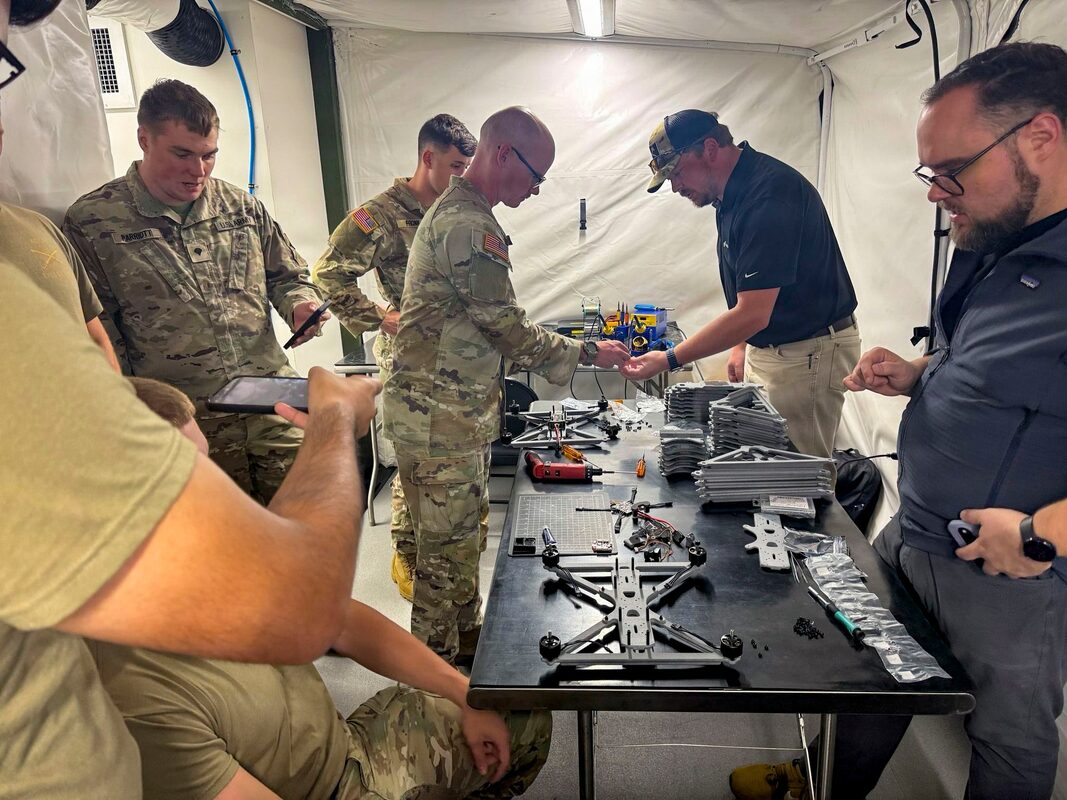
The U.S. Army just told the drone industry where its magnets are coming from, and it isn't China. The service has competitively selected Vulcan Elements, a Durham, N.C.-based manufacturer, to supply the rare earth magnets that will spin the motors inside the small drones it wants to build a million of every year.
The award, announced Sept. 23, 2026, ties Vulcan's Neodymium Iron Boron magnets to SkyFoundry, the Army's vertically-integrated push to manufacture small unmanned aircraft systems domestically at Tobyhanna Army Depot in Pennsylvania. The magnets will power the brushless direct-current motors that drive rotors on the Army's small drone systems — a component category the Pentagon has spent years trying to pull out of Chinese supply chains without success.
Why SkyFoundry Needs an American Magnet Supplier
SkyFoundry is not a research program. It is a production line, and production lines run on parts that show up on schedule. Rare earth magnets have been one of the more stubborn chokepoints in that plan: China controls the overwhelming majority of global processing capacity for the neodymium and other rare earth elements that go into high-performance magnets, giving Beijing leverage over any Western program that depends on them, including drone motors the Army needs by the thousands.
Vulcan's pitch to the Army rested on more than being domestic. According to the company's own announcement of the award, Vulcan says it is decoupled from China "down to the material, technology, software, IP, and ownership." That distinction — not just final assembly happening on U.S. soil, but the materials, know-how and corporate ownership behind it — was central to how the company positioned itself against competitors that may source raw rare earth inputs from Chinese-linked processors even while manufacturing magnets domestically.
A solicitation requirement at the center of the competition, per Vulcan's own announcement, was "a fully domestic, vertically integrated manufacturing process." The Army also required multiple evaluations of Vulcan's capability and past performance from the company's current customers before making the selection — a due-diligence step that suggests the service wanted more than a slide deck before betting a million-drone-a-year program on a single magnet supplier.
What Vulcan Brings to the Table
This is Vulcan's 10th Department of War contract, spanning multiple administrations and every military branch, according to the company. That track record gave the Army a supplier with an established relationship to defense acquisition rather than a startup making its first pitch to a program office.
Vulcan's capacity claim is substantial. The company is building a 1.1-million-square-foot manufacturing facility in Benson, N.C., which it describes as the largest rare earth magnet factory outside China once complete, with a targeted 10,000 metric tons of annual capacity and roughly 1,000 manufacturing jobs. That scale matters for a customer like the Army that needs magnets by the thousands rather than dozens, and it signals that Vulcan is positioning itself as a long-term domestic alternative to Chinese suppliers across multiple defense programs, not just SkyFoundry.
Vulcan CEO John Maslin framed the award as more than a business win. "Rare earth magnets are foundational to the military capabilities that we need to defend our country, including drones," Maslin said. "Vulcan is working every day to bring this vital capability back to American soil. As small drone systems become even more critical on the modern battlefield, we're committed to ensuring that our military can manufacture them without having to ask for permission. This isn't just a manufacturing challenge; it's a national security imperative."
The Trump Jr. Question Hanging Over the Contract
Not every detail of Vulcan's rise has gone unquestioned. Defense Daily's coverage of the award noted that Vulcan Elements "has received scrutiny for its reported financial ties to the president's son, Donald Trump Jr." Vulcan's own announcement did not elaborate on those ties, and no dollar figure for the SkyFoundry magnet award itself was disclosed in the company's release.
That detail sits alongside, rather than inside, the Army's stated selection rationale — the domestic supply chain requirement and the customer-verified past-performance record — but it is the kind of relationship that tends to draw continued attention as Vulcan racks up additional Department of War business tied to a politically connected magnet manufacturer at a moment when the administration is pushing hard on rare earth independence from China.
What It Means for Contractors
For companies competing in the small drone supply chain, the SkyFoundry magnet award is a signal about what the Army will actually pay attention to in source selection: not just a "Made in USA" label, but a vertically integrated process the government can verify end to end, backed by references from customers who have already bought the product. Vulcan didn't win this by being the only domestic option — it won by being able to show its material, technology, software, IP and ownership were all clear of Chinese entanglement, and by surviving a past-performance review from its own customer base.
That bar is likely to show up again. SkyFoundry is designed to scale toward a million drones a year, which means motors, batteries, airframes, cameras and electronics all need domestic sourcing at volumes most current suppliers haven't been asked to hit. Companies chasing that follow-on work — magnet suppliers competing for a second-source role, or component makers in adjacent categories like motors and batteries — should expect the Army to ask for the same things it asked Vulcan to prove: a traceable supply chain, capacity to scale, and customers willing to vouch for on-time delivery. Contractors who can't answer those questions with specifics, rather than assurances, are likely to watch this kind of award go to someone who can.
