
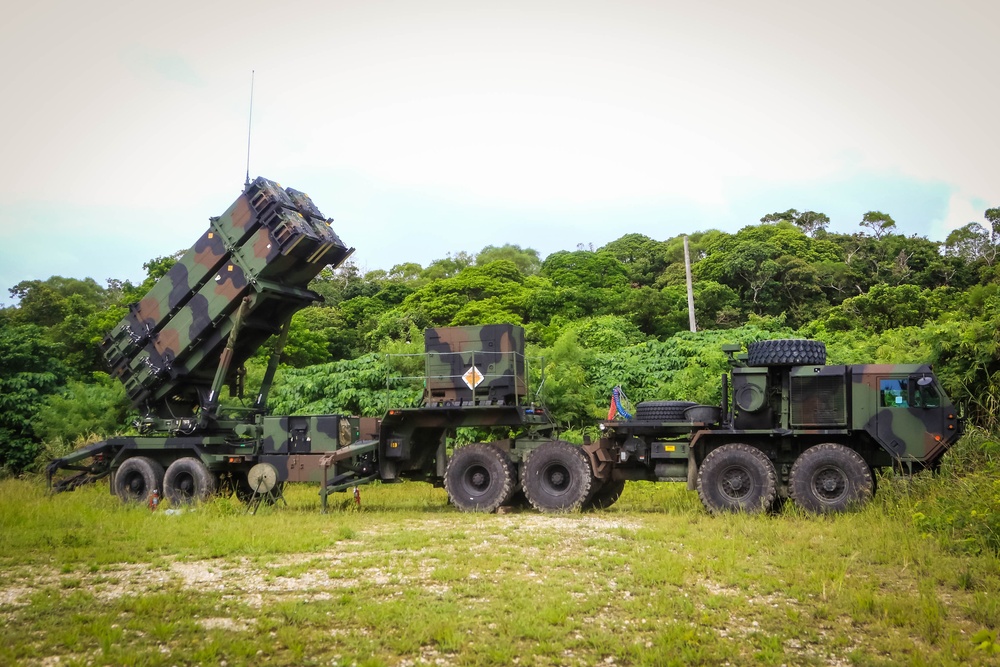
The Army just cut the field to 30 for who gets to build a cheaper interceptor for its Patriot air defense system — and put $25,000 in each finalist's pocket before a single missile flies. The xTech|Apex Intercept competition, run jointly by the Army's FUZE xTech program and the Capability Program Executive for Defensive Fires, named the finalists this week, narrowing a field of white-paper submissions down to a group split across four separate technical problems the Army wants solved.
Each of the 30 finalists collects the $25,000 cash prize now and earns a chance to demonstrate its technology to Army and Department of War experts between Oct. 1 and Nov. 30, 2026. The service plans to name up to 18 final winners by Dec. 31, 2026, who will split a prize pool worth up to $8 million, with $7.25 million of that reserved for the final round.
Four Topics, 30 Finalists, One Goal: Cheaper Interceptors
Patriot interceptors cost far more than many of the threats they shoot down. Apex Intercept is the Army's attempt to find contractors — inside and outside the traditional missile-defense industrial base — who can build something cheaper without breaking compatibility with Patriot's existing fire-control architecture.
The competition split that problem into four topics. Topic 1 seeks complete, low-cost interceptors — "all-up rounds" with their own fire control — and drew 10 finalists: RTX, Anduril, AeroVironment, QinetiQ, UDD Tech, Wardstone, Greenjets, Furientis, AEON Industries and AirX Robotics, which entered its own Katana interceptor design. Topic 2 covers low-cost solid rocket motors, with seven finalists spanning Northrop Grumman, L3Harris, General Dynamics Ordnance and Tactical Systems, Ursa Major, X-Bow Systems, Australia's DefendTex and Britain's Cambridge Aerospace. Topic 3, low-cost seekers, produced six finalists including Leonardo DRS, Toyon and Technology Service Corp., plus an entry linked to Israel Aerospace Industries submitted through Cherrill Consulting Group. Topic 4, fire control and flight guidance, has seven finalists including Australia's Advanced Navigation, Persistent Systems and Rocket Fast Drones.
The mix of household defense names, small startups and three allied countries — Australia, Britain and Israel via a U.S. teaming partner — is deliberate.
"The U.S. Army is seeking innovative, low-cost interceptor solutions from eligible small, medium, and large businesses across the U.S. and allied foreign countries to augment the current PATRIOT Air and Missile Defense mission against Air Breathing Threats (ABT), Cruise Missiles, Close-Range Ballistic Missiles (CRBM), and Short-Range Ballistic Missiles (SRBM) through the xTech|Apex Intercept competition," the Army's xTech|Apex Intercept page states.
What the $8 Million Prize Pool Actually Pays For
The money at stake escalates sharply for companies that survive the demonstration round. Winners in Topic 1 — the complete-interceptor category — can collect up to $1 million each, the richest payout in the competition. Winners in Topics 2 through 4 can collect up to $750,000 each. Across up to 18 winners, that adds up to the $8 million total prize pool the Army has budgeted, split between the $25,000 finalist payments already issued and the $7.25 million set aside for December's final-round winners.
Notably absent from the competition's public materials is any target unit price for a finished interceptor. The Army has framed the entire effort around lowering the cost of the rounds that ride alongside Patriot's existing interceptors, but has not put a number on what "low-cost" means in dollars per round — leaving that benchmark for the demonstration phase to establish, or for the Army to disclose later.
The competition ran under 10 U.S.C. § 4025, the prize-competition authority that lets the Department of War award cash for solving a defined technical problem without a traditional procurement contract. White papers, capped at five pages with an optional five-minute video, were due between July 7 and July 24, 2026. Under the same authority, the Army's competition page notes that winners may be considered afterward for follow-on prototype agreements or contracts under Other Transaction Authority, the Small Business Innovation Research and Small Business Technology Transfer programs, or other acquisition vehicles — meaning the prize money is a door-opener, not necessarily the end of the relationship.
A Field That Spans Primes, Startups and Three Allied Nations
The finalist list reads as a bet that the fastest path to a cheaper interceptor runs through companies that don't normally build missiles. Anduril, AeroVironment and a string of smaller names sit in the same Topic 1 bracket as RTX, the company that already builds Patriot. Ursa Major and X-Bow Systems, both newer entrants focused on solid rocket motor manufacturing outside the traditional prime contractor supply chain, compete against Northrop Grumman and L3Harris in Topic 2. Toyon and Technology Service Corp., smaller engineering firms, sit alongside Leonardo DRS in the seeker category.
Defence Blog, which has tracked the competition's international reach, summarized the finalist pool this way:
"The U.S. Army has picked 30 finalists, from defense giants such as RTX and Northrop Grumman to startups in Australia and the United Kingdom, in a prize competition to find cheaper interceptors that could fly alongside the Patriot air defense system," the outlet reported.
That international dimension is not incidental. Allied companies from Australia (DefendTex, Advanced Navigation) and Britain (Cambridge Aerospace) made the finalist cut in the motor and guidance categories, and the Israel Aerospace Industries-linked entry in the seeker topic extends the pool to a third allied nation. For a prize competition run under U.S. law, opening finalist slots to companies based outside the United States signals the Army is prioritizing speed and technical breadth over restricting the pool to domestic-only suppliers — at least at this stage, before any prototype or production contract is on the table.
What It Means for Contractors
For the 30 finalists, the next ten weeks are the entire ballgame. The Oct. 1 to Nov. 30 demonstration window is where the Army and Department of War will decide which of the four topic brackets actually produced workable technology, and companies that fail to show a credible demonstration risk elimination before the Dec. 31 winner announcement regardless of how strong their white paper was.
For companies that did not make this finalist list, the door is not necessarily closed. The Army's use of § 4025 prize authority, rather than a locked-down procurement, means later competition rounds or follow-on solicitations remain possible if Apex Intercept's first cohort does not fully solve the four technical problems the Army defined. And for the finalists that do win in December, the real payoff is less the prize money than what the Army's own competition page flags as the next step: consideration for prototype agreements or production contracts, negotiated separately from the prize itself, once a winning technology has proven it works.
Small and mid-sized companies watching this competition should note the structure: a five-page white paper and an optional video were enough to reach finalist status and a $25,000 check — a remarkably low entry cost, by defense-acquisition standards, for a shot at Patriot's future interceptor stack.
