
The Army awarded BeaverFit North America LLC a $350,000,000 single-award indefinite-delivery/indefinite-quantity contract to design and build fitness infrastructure across the force, according to the Defense Department's Aug. 4 contracts release. The Reno, Nevada-based company was the only bidder solicited and the only one to respond.
Background
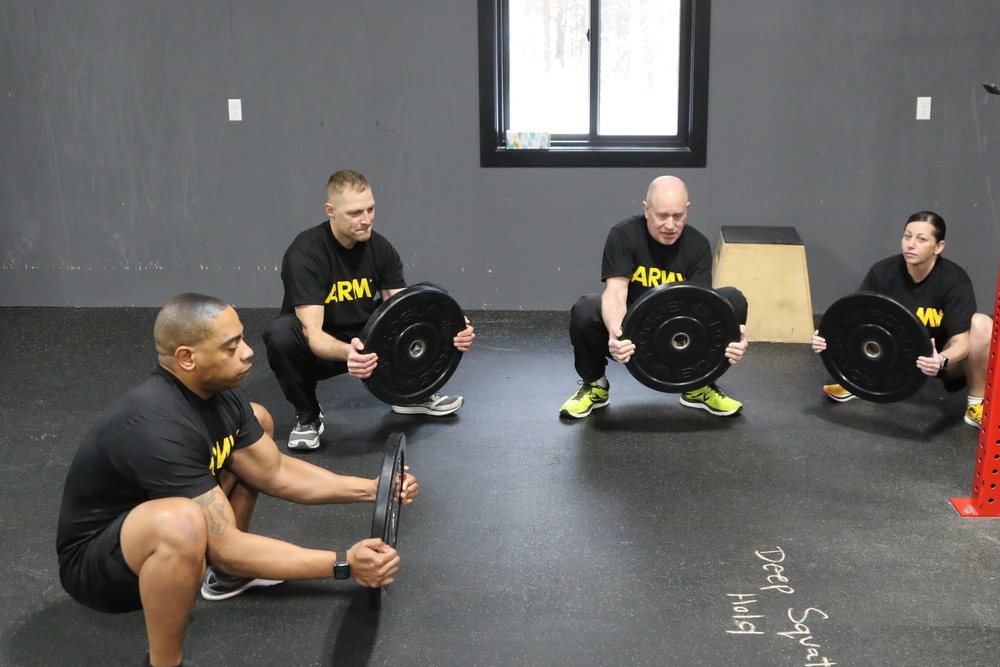
The Army's Holistic Health and Fitness program, known as H2F, restructured how the service approaches soldier readiness by embedding physical trainers, dietitians, physical therapists and other performance staff directly into brigades rather than leaving fitness training to unit-level improvisation. The program requires physical infrastructure to match: dedicated H2F facilities, expeditionary gym structures, and equipment built for both garrison and field environments.
BeaverFit has been a fixture of that build-out, with projects at installations including Fort Jackson, Fort Liberty, Fort Devens and Joint Base San Antonio. The Army recently approved accelerating H2F equipment and staff fielding to 15 brigades per year, a pace that requires a steady contracting vehicle rather than one-off purchases.
The new IDIQ, issued under the label "Small Business Innovation and Research H2F Readiness Kit," formalizes that pipeline. It was announced the same day the Army Field Directorate Office at Fort Eustis, Virginia issued a separate $450 million single-bid IDIQ to Chitra Productions LLC for instructor and training-development services — two large, sole-response awards from the same office on the same day.
H2F facilities differ from a standard base gym in scope and specification. The program calls for structures that can house strength and conditioning equipment, physical-therapy spaces, and testing lanes for the Army Combat Fitness Test under one roof, alongside wide-span and expeditionary structures that can be erected in field or deployed environments rather than only on fixed installations. Building that mix at scale — permanent construction on one end, container-based expeditionary gyms on the other — requires a contractor that can act as both a design-build construction firm and a fitness-equipment manufacturer, a combination that narrows the pool of realistic bidders.
Key Details
- BeaverFit North America LLC, Reno, Nevada, was awarded a $350,000,000 firm-fixed-price, single-award IDIQ contract (W911S0-26-D-A009).
- Scope covers design and construction of Holistic Health and Fitness structures, other human-performance structures, wide-span structures, and human-performance equipment and systems.
- Only one bid was solicited via the internet, and only one bid was received.
- Estimated completion date is Aug. 4, 2033. Work locations and funding will be determined with each individual task order.
- The contracting activity is the Army Field Directorate Office, Fort Eustis, Virginia.
- The award was announced Aug. 4, 2026.
Because the vehicle is an IDIQ with a ceiling rather than a guaranteed sum, the $350 million figure represents the maximum value the Army could obligate over the ordering period, not a committed budget. Actual spending will depend on how many task orders the Army issues and how large each one is, which in turn depends on funding decisions tied to the pace of H2F fielding across brigades.
What It Means for Contractors
The award is a reminder that "single-award IDIQ" and "sole-source" are not the same thing. The Army solicited this requirement competitively — the notice states one bid was solicited via the internet — but the market response was a single offer. That outcome can happen for several reasons: a narrow pool of firms capable of both designing and constructing specialized fitness and human-performance structures at scale, a requirement written tightly enough that only an incumbent with existing Army H2F experience could realistically compete, or simply timing that didn't reach interested small businesses. Whatever the cause, the practical effect is the same as a sole-source award: BeaverFit now holds exclusive access to task orders under this vehicle through 2033, with no other awardee to compete against for individual orders.
For firms in the fitness-equipment, expeditionary-structures, or human-performance-facility space, the lesson is about market intelligence rather than legal recourse. Once a single-award IDIQ posts as awarded, the protest window for a competitor who never bid has effectively closed — the government can point to the fact that the opportunity was open and unanswered. Companies that build modular gym structures, wide-span shelters, or ACFT lane equipment and want a share of Army H2F spending need to be tracking Army Field Directorate Office solicitations well before award, not after. That means monitoring SAM.gov postings tied to Fort Eustis and building past-performance references specific to H2F or comparable human-performance construction now, since the next vehicle of this type may not open again for years given the length of this one.
The pairing of this award with the same-day $450 million Chitra Productions training-services IDIQ also signals that Fort Eustis is actively consolidating large chunks of H2F-adjacent spending — facilities on one vehicle, instructor and training-development services on another — into fewer, larger contracts. Subcontracting and teaming may be the more realistic entry point for smaller firms than trying to win a competing prime IDIQ once these vehicles are locked in. Businesses that supply specialized components — flooring systems, container conversions, resistance equipment, or wide-span structural elements — should look at BeaverFit's subcontracting posture and small-business plan requirements, since single-award IDIQs of this size typically carry subcontracting goals the prime must meet.
Finally, the seven-year period of performance running to August 2033 means this is not a short-term opportunity window. The Army's own signal — accelerating H2F fielding to 15 brigades annually — suggests task order volume under this IDIQ should ramp rather than trail off, making early positioning with BeaverFit, or building a competing capability ahead of any future recompete, the more actionable paths for contractors watching this space.
Small businesses in particular should note that the solicitation carried the "Small Business Innovation and Research" label even though the award went to a large, established supplier. That naming does not guarantee small-business set-aside status on every task order issued under the vehicle, and firms should read individual task-order notices closely rather than assume set-aside eligibility from the parent IDIQ's title. Watching how the Army structures the first several task orders under W911S0-26-D-A009 will show whether small manufacturers of fitness equipment, flooring, or modular structures get direct subcontracting opportunities or whether the work stays concentrated with BeaverFit's existing supply chain.
