
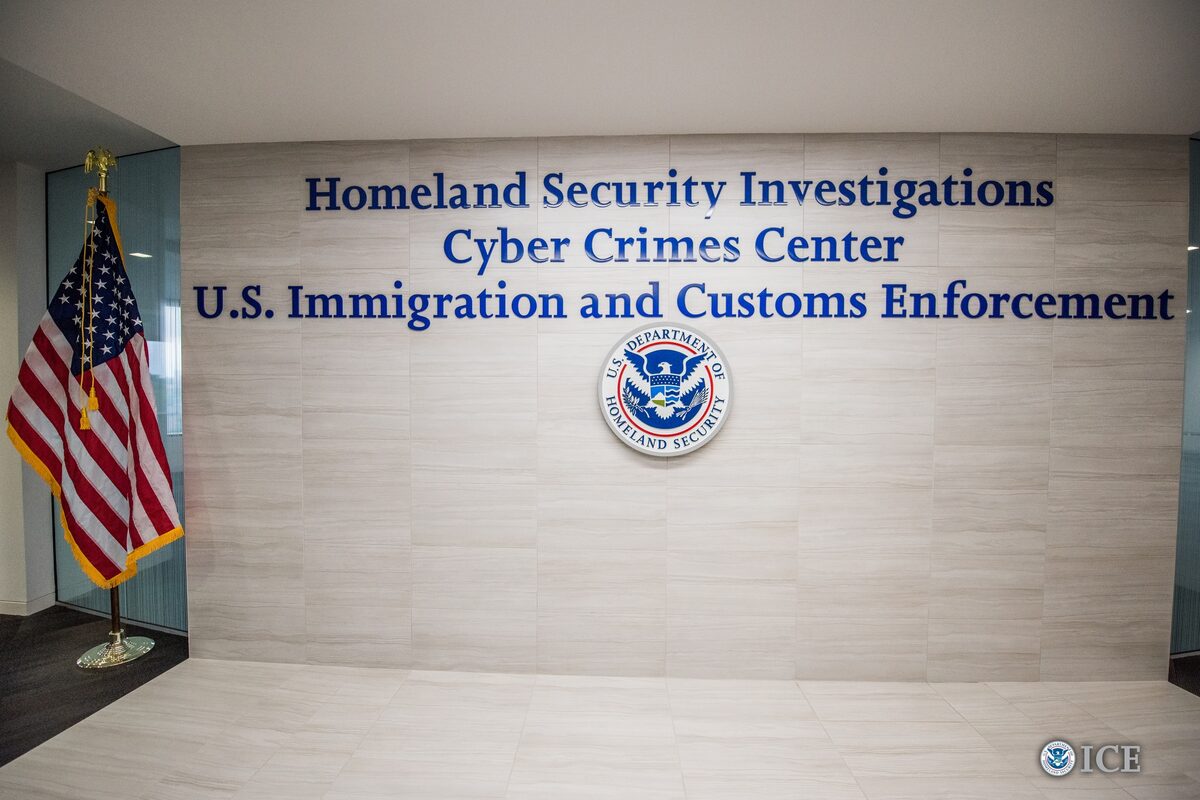
Chainalysis Government Solutions has taken the federal government to court over a roughly $94.6 million sole-source contract that U.S. Immigration and Customs Enforcement awarded to rival TRM Labs for blockchain-forensics and crypto-investigation support, according to the case docket filed in the U.S. Court of Federal Claims. The suit sets up a direct courtroom fight between the two dominant firms in government crypto-tracing work over how ICE justified skipping competition on a nearly nine-figure deal.
Background
ICE told industry in June 2026 that it planned to award a sole-source contract for blockchain-forensics and crypto-investigation-support services rather than open the requirement to competitive bidding, inviting interested firms to submit capability statements making the case for why they could perform the work. Chainalysis says it responded to that notice, submitting its own capability statement. ICE proceeded anyway, awarding the contract to TRM Labs. The contract runs from July 1, 2026, through June 30, 2027, and covers forensic software and support services for Homeland Security Task Force investigations, which lean on blockchain-tracing tools to follow illicit cryptocurrency flows tied to trafficking, sanctions evasion and other criminal activity that ICE investigates.
Sole-source awards are legal under federal acquisition rules when an agency documents that only one vendor can reasonably meet its needs, but they draw scrutiny precisely because they bypass competition. Chainalysis and TRM Labs both sell blockchain analytics platforms to law enforcement and intelligence agencies, and both have built substantial federal client bases, making ICE's decision to name only one of them without a competition an unusually pointed target for a challenge.
Blockchain-forensics tools have become standard equipment for federal investigators tracking illicit finance, and ICE has leaned on that category heavily as cryptocurrency has become a common vehicle for moving smuggling proceeds, ransomware payouts and sanctioned funds. Because the award supports Homeland Security Task Force investigations rather than a single ICE program office, the choice of vendor is likely to matter well beyond the immediate contracting decision, which raises the stakes of picking one company's platform over the other's for what functions as shared investigative infrastructure.
Key Details
Chainalysis Government Solutions filed its complaint on July 27, 2026, in the U.S. Court of Federal Claims under case number 1:26-cv-01067, invoking the Tucker Act to seek a post-award injunction. Judge Stephen S. Schwartz is presiding. TRM Labs moved quickly to protect the award, formally intervening in the case on July 28, 2026, as a defendant-intervenor alongside the government.
Chainalysis's complaint alleges that ICE's sole-source determination was "arbitrary, capricious, and unreasonable," arguing the agency lacked adequate grounds to exclude other qualified vendors from competing for the work. The company points to the capability statement it submitted after ICE's June notice as evidence it made itself known to ICE as a viable alternative before the award decision was finalized.
The case moved largely outside public view for weeks before broader reporting on its details emerged starting August 17, 2026. Court filings show the government and TRM Labs faced an August 21 deadline for their formal response, with oral argument scheduled for September 2, 2026. The government has asked the court for a decision by September 10, 2026, a compressed timeline that reflects the contract's active performance period and the urgency of resolving the dispute before more of the year-long deal is executed.
The contract sits within a much larger pattern of ICE spending on surveillance and investigative technology. A report from the advocacy groups Mijente, Just Futures Law and Surveillance Resistance Lab found that ICE's spending on surveillance-technology contracts reached roughly $513 million in 2026, underscoring how a single $94.6 million crypto-forensics award fits into a broader buildout of the agency's digital investigative capacity. At nearly one-fifth of that total, the TRM Labs award ranks among the larger single technology purchases inside ICE's surveillance portfolio for the year.
Neither Chainalysis nor TRM Labs has publicly detailed the specific capabilities ICE cited in its sole-source justification, and the government's response to the complaint had not been filed publicly as of this reporting. The compressed litigation schedule — a formal response due roughly three and a half weeks after filing, oral argument about two weeks after that, and a requested ruling roughly six weeks after filing — reflects the Court of Federal Claims' practice of moving quickly on post-award injunction requests tied to contracts already in performance, since delay can effectively decide the outcome by letting the incumbent complete the work.
What It Means for Contractors
The case is a reminder that submitting a capability statement in response to a sole-source notice is not a formality — it can become the factual predicate for a post-award challenge if an agency proceeds to award anyway. Contractors who believe they can meet a requirement an agency intends to sole-source should document that interest clearly and promptly, since Chainalysis is now relying on its June capability-statement submission as part of its case that ICE had a viable competitive alternative on the table.
The dispute also shows how narrow the government's crypto-forensics vendor base still is. With Chainalysis and TRM Labs effectively the two most visible players competing for this kind of law enforcement blockchain-tracing work, an agency's choice between them carries outsized consequences for whichever company loses out — enough to justify a Tucker Act lawsuit rather than a Government Accountability Office protest, which would have offered a faster but less binding path.
Contractors in adjacent cyber, intelligence and financial-crimes technology markets should watch how the Court of Federal Claims treats ICE's sole-source justification. A ruling that faults the agency's reasoning could make contracting officers more cautious about relying on sole-source authority for follow-on or expanded task-force support work, pushing more requirements — even ones tied to sensitive national security missions — back toward competitive procurement. Firms holding or pursuing similar single-award crypto-forensics or cyber-investigative-support contracts across ICE, Homeland Security Investigations and related task forces should also expect continued attention to how those awards were justified, given the size of the government's overall surveillance-technology spending and the competitive stakes now on display in this case.
