
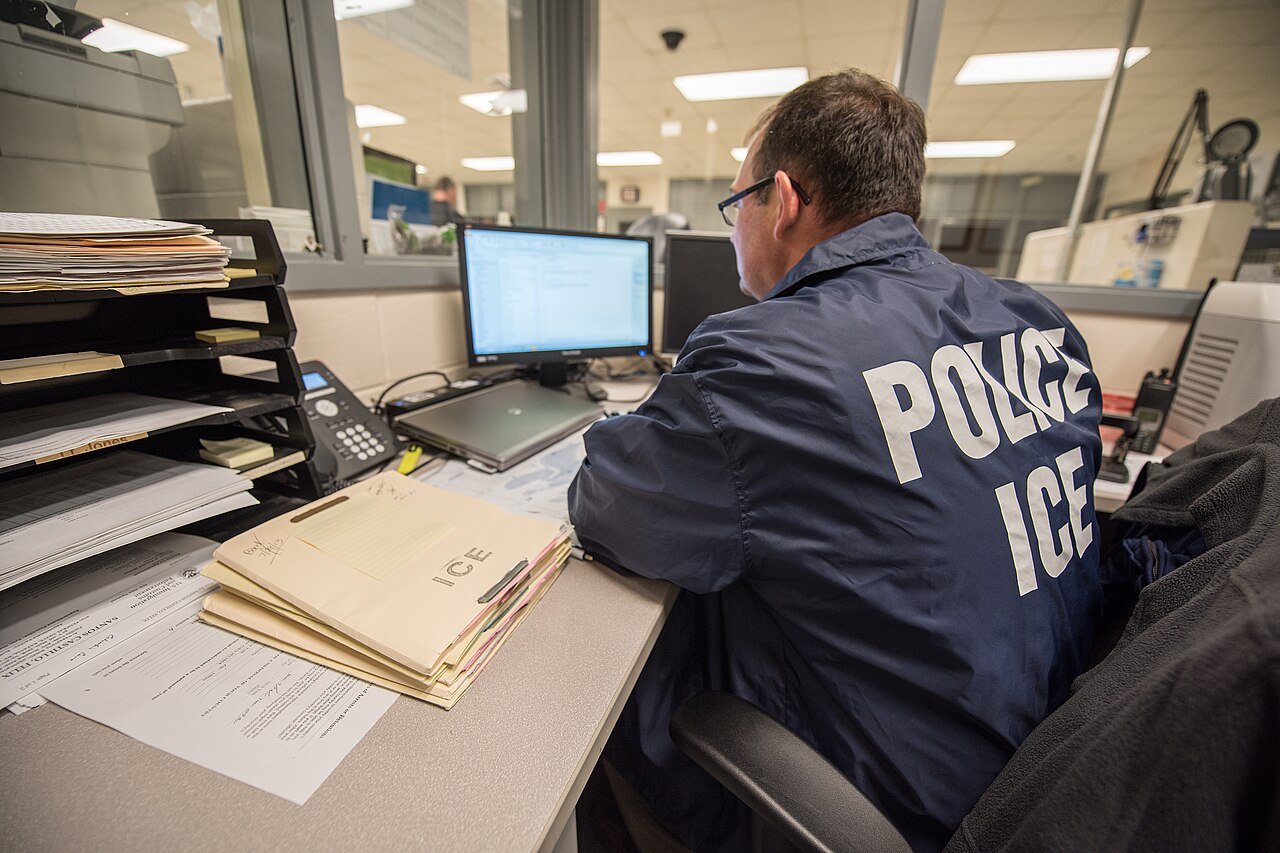
The Department of Homeland Security's own watchdog has concluded that Immigration and Customs Enforcement spent years buying detention beds without first working out how many it needed, and the findings land just as ICE is sitting on a far larger pot of money. In report OIG-26-37, dated Sept. 28, 2026, the DHS Office of Inspector General reviewed 46 new detention-space procurements from fiscal years 2020 through 2023 with a potential value, including options, of about $9.7 billion.
The 46 actions break down into 22 contracts under the Federal Acquisition Regulation (FAR), 11 FAR-based purchase orders and 13 intergovernmental service agreements. The inspector general's headline finding is blunt:
"U.S. Immigration and Customs Enforcement (ICE) from fiscal years 2020 through 2023 did not always manage detention space contracts and agreements — valued at almost $10 billion — in accordance with Federal and departmental requirements." (DHS Office of Inspector General, OIG-26-37)
Why Did ICE Buy Detention Space Without a Needs Assessment?
According to the report, ICE never assessed its overall detention space needs. Instead, the agency handles each request from an Enforcement and Removal Operations (ERO) field office individually, through what it calls White Paper Proposals. Each proposal is supposed to explain why more space is needed and what benefit it gives ICE.
The inspector general found the paper trail thin. Procurement files for 16 of the 27 contracts and agreements it reviewed, or 59 percent, lacked information justifying why additional detention space was required. Those 16 files covered roughly $2.4 billion in value. Eleven had no proposal at all, and five had proposals that did not describe the benefit to ICE.
For contractors, the practical point is that a requirement can enter the acquisition pipeline without a documented, agency-wide basis. A field-office request that ICE headquarters never tested against national demand can become a multimillion-dollar vehicle.
The $311 Million Contract and the Planning Gap
The report also identifies two awards made without full and open competition that the inspector general says were not handled properly.
The first is a $311 million contract awarded in September 2022. The justification for using other than full and open competition was not signed by DHS's senior procurement executive, a required approval step.
The second is an interim contract. ICE issued a combined solicitation roughly two weeks before the prior contract expired, then relied on the time crunch to justify limited competition. The inspector general rejected that reasoning:
"However, our review identified that combining multiple requirements left ICE with insufficient time to compete the contract, and the FAR indicates that lack of planning is not a justification for other than full and open competition." (DHS Office of Inspector General, OIG-26-37, Key Finding 4)
That language matters for incumbents and challengers alike. A sole-source or limited-competition bridge that exists only because the agency ran out of runway is exactly the pattern the FAR does not allow, and it is the kind of award a competitor can challenge.
Who Was Watching the Facilities?
The monitoring findings are the most granular in the report. Of 28 contracting officer's representatives (CORs) the inspector general surveyed, 10, or 36 percent, did not perform on-site surveillance. Those 10 were responsible for 12 facilities. Workloads were heavy: two CORs oversaw 21 and 19 contracts, and one COR covered 22 other facilities across six states.
The inspector general also tested ICE's custody data. Of 1.8 million custody records examined, more than 44 percent showed a gap in custody between placement and release. Ninety-seven records showed gaps of at least five days. The report ties data reliability to a second problem: the DHS Office of the Chief Procurement Officer denied the inspector general back-end access to its contract management system and supplied only select data extracts. Without that access, the auditors could not validate how reliable the contract data was.
What Changes With $45 Billion Now Available?
The review covered fiscal years 2020 through 2023, but the inspector general stresses that the money has grown since fieldwork. ICE has received $45 billion for detention space under the One Big Beautiful Bill Act, and the report says that funding heightens the need to fix these processes. A needs-assessment gap that touched $9.7 billion in procurements becomes harder to defend when the budget is several times larger.
The report makes six recommendations, and ICE concurred with all six. The inspector general also began a separate review of ICE warehouse procurement in May 2026.
The warehouse question already has a second watchdog's attention. CBS News, reporting on a Government Accountability Office review on Sept. 29, said ICE used $1.07 billion to buy 11 warehouses, seven of which it now plans to sell, and lost about $20 million in unrecoverable costs on warehouses it no longer plans to use. CBS also reported $1.55 billion still held in escrow, premiums of 11 to 13 percent on the warehouse purchases (per CoStar) and $2.85 million spent on unused Guantanamo tents. GAO concluded that "urgent planning" is needed to reduce further waste, and ICE said it would produce a strategic plan by Aug. 31, 2027, a date the watchdog said was not soon enough.
The two reviews address different slices of the program. The inspector general looked at contract and agreement files for facilities, while GAO, as CBS describes it, examined the larger buildout. Both point the same direction: ICE committed money before it had a plan to justify the commitments.
What It Means for Contractors
Companies that hold or want ICE detention-space work should expect tighter paperwork demands and more scrutiny of the award file, not less.
- Justification files will get checked. With ICE concurring on all six recommendations, expect contracting officers to require a documented needs basis before an award, and to push back on proposals that do not describe a benefit to ICE.
- Limited-competition awards are exposed. The inspector general's reading of the FAR means a justification built on late planning is a weak foundation. Competitors that were shut out of a bridge or interim award have a documented argument.
- Approval signatures matter. The $311 million award shows that a missing senior procurement executive signature is an audit finding in its own right. Contractors cannot control that step, but they bear the risk if an award is later questioned.
- Expect more COR presence. The finding that 36 percent of surveyed CORs skipped on-site surveillance, and that some carried 19 to 22 facilities, points toward more site visits and more documentation requests at performing facilities.
- Data will be pulled harder. Custody-record gaps in more than 44 percent of tested records, plus the dispute over system access, suggest that billing, population and placement data will face closer reconciliation.
- More audits are coming. The inspector general's separate warehouse procurement review, opened in May 2026, and the GAO findings keep the spotlight on how ICE buys space, not only how it manages existing facilities.
Contractors with intergovernmental service agreements face a version of the same pressure, since 13 of the 46 reviewed actions were that type of vehicle. Keeping records of the underlying need, the competition path and every approval will be the clearest defense when the next review arrives.
