
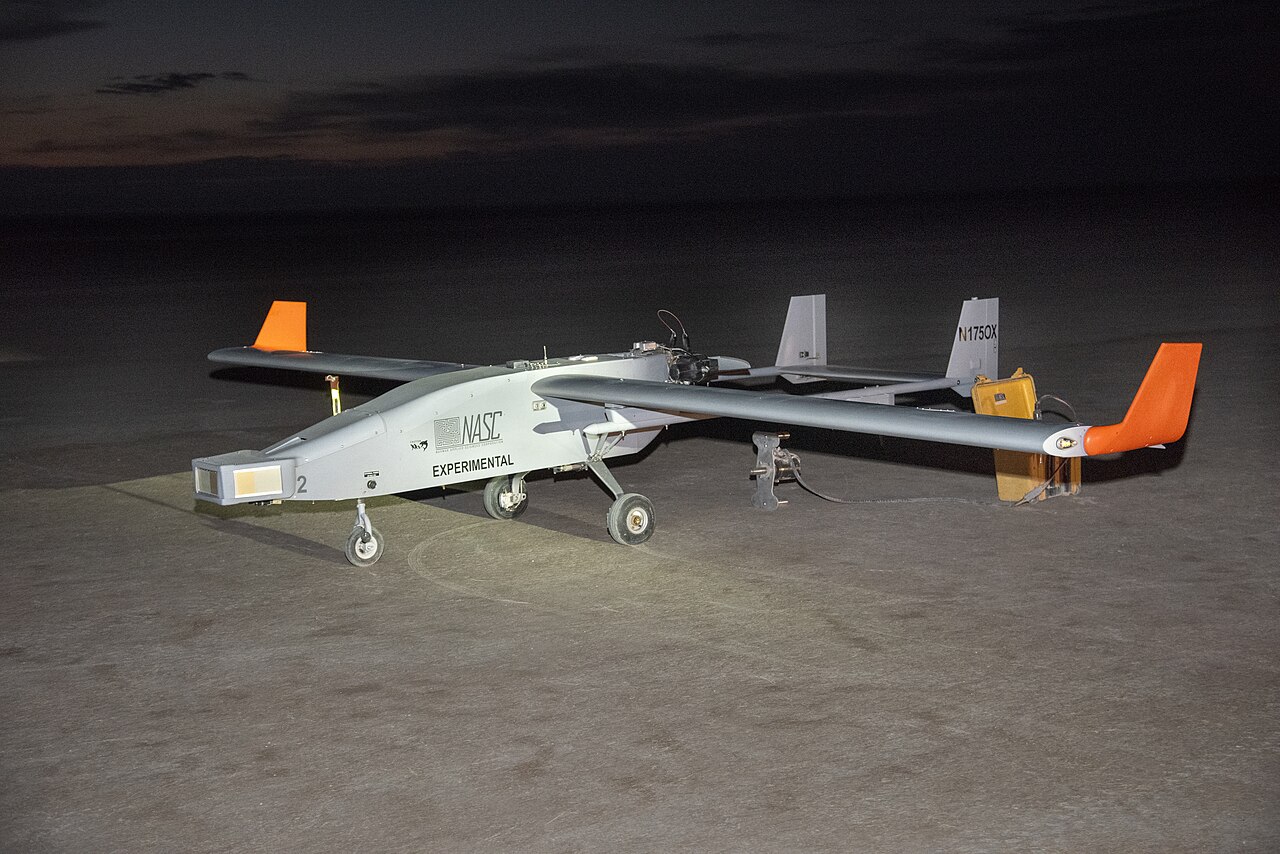
Nineteen drone research projects at the FAA's nine designated test sites now have federal money behind them, and the companies holding them are being asked to match every dollar. The Federal Aviation Administration said on Oct. 5, 2026, that it awarded $12 million to 19 companies for drone research and testing projects through its Unmanned Aircraft Systems (UAS) Broad Agency Announcement (BAA) Program. Each project is paired with an FAA-designated UAS Test Site, and the agency says the results will feed how it integrates drones into the National Airspace System.
The awards cover detect-and-avoid systems, satellite links, counter-drone sensing, drone identification and air taxi connections. The FAA did not publish a dollar figure for any individual project, and it gave no performance schedule.
Who Holds the 19 UAS BAA Awards?
Fourteen organizations share the 19 projects, according to a DroneXL count of the FAA list. ANRA Technologies took four, more than any other recipient. Its projects cover tools to connect air taxi operations, vertiports and flight procedures; a common altitude reference for drones; a link between drone traffic systems and traditional air traffic systems at airports; and AI tools to identify different types of drones.
SPS Aerial Remote Sensing won three: a test of drone visibility technology, a sensor system for drone traffic management and counter-drone operations, and tools to measure sensor performance.
The other twelve recipients hold one project each, per the FAA release:
- General Atomics: ground systems to help drones avoid other aircraft
- NAVMAR: systems to help large drones fly safely
- Skydweller: onboard systems to help large drones avoid other aircraft
- OneRadio Corporation: testing passive radar to help drones avoid other aircraft
- Censys Technologies Corp: testing satellite communications for long-range drone flights
- Devorto Corporation: long-range cargo drone service
- DroneUp LLC: a secure way to verify drone identity and approval to fly
- Frequentis USA: a drone technology demonstration
- Aerial Vantage: tools to manage reserved airspace for drones in cities
- Lighthouse Avionics Inc.: surveillance tools for long-range drone routes
- ResilienX, Inc.: software to coordinate drone missions and resources
- Oklahoma State University: drone visibility technology under the Aero Aware project
Several names are returning participants. DroneXL reports that the FAA's BAA final reports page lists ANRA under Call 003, General Atomics under Call 002, and both Lighthouse Avionics and ResilienX under Call 004. ExecutiveGov grouped the projects into two clusters: airspace safety and traffic management on one side, and cargo, flight authorization and urban operations on the other.
Where the $12 Million Comes From
The money is not a new appropriation. Section 925 of the FAA Reauthorization Act of 2024 set aside $6 million a year for matching funds at the UAS test ranges, running from fiscal 2025 through 2028 and split evenly among the sites, DroneXL reported. Two fiscal years of that funding equals the $12 million the FAA announced.
The FAA framed the awards as advancing the Unleashing American Drone Dominance executive order by supporting full use of the test sites to develop, test and scale American drone technologies. FAA Administrator Bryan Bedford said, "The UAS Broad Agency Announcement Program gives us another way to directly work with industry and our test site partners on technologies that are critical to safe drone integration."
He added: "The research supported through this program will give us better data, help us identify and understand operational challenges, and inform how we safely integrate these aircraft into the National Airspace System."
How the 1:1 Cost Share Caps Each Test Site
The solicitation's terms shape what each award can buy. According to DroneXL, the FAA posted the solicitation on SAM.gov on Sept. 30, 2025, and issued Call 001-2026 under it days later, with white papers originally due Nov. 14. The agency pushed that deadline to Dec. 12 because of the government shutdown, then to Jan. 9, 2026. A fourth amendment in March opened a separate call for the two test sites added in January, the Choctaw Nation of Oklahoma and the Indiana Economic Development Corporation, with white papers due April 9.
The solicitation requires a one-to-one minimum cost share, with the FAA paying no more than half of any project's cost. The FAA's own questions-and-answers document set the agency's maximum share per test site at $1,333,333 once a ninth site was designated, DroneXL reported. That means each test site had roughly $1.3 million in FAA funds to place, with industry partners contributing at least as much.
The nine test sites, as listed by the FAA, are the Alaska Center for Unmanned Aircraft Systems Integration; the Northern Plains UAS Test Site in North Dakota; the New Mexico State University UAS Test Site; the State of Nevada UAS Test Site; the New York UAS Test Site; the Texas A&M University-Corpus Christi Autonomy Research Institute; the Mid-Atlantic Aviation Partnership in Virginia; the Choctaw Nation of Oklahoma; and the Indiana Economic Development Corporation.
Part 108 Still Waits at OIRA
The data these projects generate is meant to inform rulemaking, but the main beyond-visual-line-of-sight rule is already written. Part 108, which would make routine BVLOS flight standard rather than approved waiver by waiver, has sat at the White House Office of Information and Regulatory Affairs since July 10, DroneXL reported. The executive order gave the rule a 240-day deadline, which passed in February.
DroneXL's Haye Kesteloo backed the program's design but argued the sequence is reversed: "Publish the rule, then fund the data that shows where it needs fixing." He also wrote that the test-site data "will matter for the Part 108 amendments that follow the first rule."
What It Means for Contractors
The UAS BAA is a recurring, cost-shared research vehicle, not a production contract. Firms considering a future call should plan to fund at least half of any project and to work with an FAA-designated test site, since each award in this round was paired with one and the FAA capped its share at about $1.33 million per site.
The authorization behind the program also gives bidders visibility. Section 925 funding runs through fiscal 2028 at $6 million a year, so two more years of matching funds remain on the books if Congress appropriates as planned. Companies with detect-and-avoid, command-and-control, traffic management or identification technology have a defined path to put that technology in front of the agency, which says the research will give it better data on operational challenges.
Repeat winners show that prior BAA work carries weight. ANRA, General Atomics, Lighthouse Avionics and ResilienX all appear on earlier BAA final reports. For newer entrants, a single funded demonstration at a test site can produce the operational data the FAA says it wants, and Kesteloo expects that data to matter for Part 108 amendments after the base rule publishes.
Contractors should track the FAA's UAS BAA Program webpage and SAM.gov for the next call, and watch OIRA for Part 108, since the final rule will set the requirements that future test-site research measures against.
