
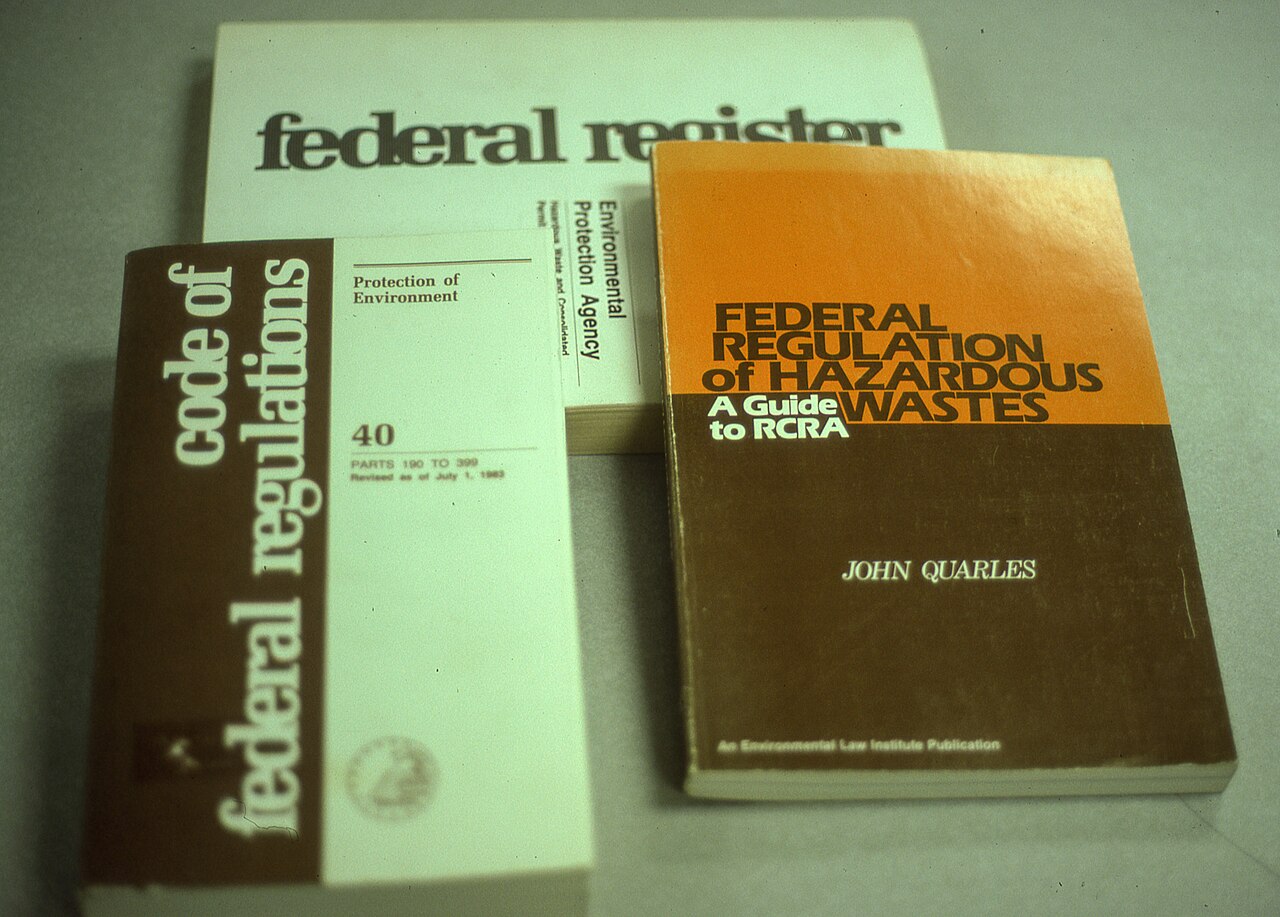
Contracting officers could soon shrink competitive ranges, bargain harder with a single offeror and buy construction as a commercial service, and contractors have one week left to push back. Three proposed rules the FAR Council published in the Federal Register on Sept. 18, 2026 would rewrite FAR parts 8, 12, 13, 15, 16, 17, 14, 28, 36 and others, and each sets the same comment deadline: on or before October 19, 2026.
The three documents are FAR Case 2026-003 (parts 8, 12, 13, 15, 38, 44, 51 and 52), FAR Case 2026-006 (parts 16, 17, 35 and 52) and FAR Case 2026-010 (parts 14, 28, 36 and 52). They come from the four agencies that make up the FAR Council: the Office of Federal Procurement Policy, DoD, GSA and NASA. The notices say the Council "is issuing twelve proposed rules that collectively will streamline the FAR in its entirety." The rules carry out Executive Order 14275, Restoring Common Sense to Federal Procurement, and OMB Memorandum M-25-26, which announced the Revolutionary FAR Overhaul (RFO). This is the formal notice-and-comment stage of the overhaul, and comments filed now can shape the final text.
Why the Council Wants 'Negotiations' Instead of 'Discussions'
The biggest change for source selection is in FAR part 15. Case 2026-003 would replace the term "discussions" with "negotiations," and the preamble says plainly what the Council thinks is wrong with current practice: "In practice, the current discussion process is often limited to fixing problems in an offeror's proposal, instead of truly negotiating to get the best possible deal to meet the Government's requirement."
Under the proposal, contracting officers "may have more than one negotiation with a particular offeror in the competitive range, without having to do so with all other offerors." The rule keeps one floor in place. It still requires a meaningful negotiation with each offeror in the range in which, "at a minimum, each offeror's deficiencies and significant weaknesses must be addressed."
How the Competitive Range Could Get Smaller
The rule also changes who gets into the range. "The proposed rule would no longer require the competitive range to contain all of the most highly rated proposals and instead clarify that the range should include those proposals best suited for further negotiation," the preamble states. When an agency trims the range for efficiency, the text would refer to "highest evaluated" proposals instead of "highest rated" ones. The Council says this acknowledges that a rating system is not required.
Two smaller part 15 changes are also in the rule. Munitions response services would join the list of services that should avoid lowest price technically acceptable (LPTA) source selection, implementing section 822 of the FY2025 NDAA. The exchanges-with-industry language now at FAR 15.201 would move to part 7.
Commercial Buys Up to $9 Million Move Into Part 12
Case 2026-003 moves the simplified-procedure authority for commercial products and services valued up to $9 million, or $15 million for supplies and services used in certain emergencies or major disasters, out of FAR subpart 13.5 and into part 12. Rather than keep a standalone authority section, the rule would place the higher thresholds throughout part 12. The preamble says the changes make clear that contracting officers "should not be using the burdensome procedures associated with conducting negotiations or sealed bidding using the procedures in FAR parts 15 and 14, respectively" in that dollar range.
The same preamble describes a companion change under FAR Case 2026-001 that would amend the definition of "commercial services" in FAR part 2 so construction can count as a commercial service. A contracting officer would first have to find that the work is "of a type offered and sold competitively in substantial quantities in the commercial marketplace," based on established catalog or market prices. If it qualifies, part 12 procedures would apply. A new applicability section at FAR 12.200 states that buyers must still follow the part 36 construction requirements.
Part 16 Opens the Door to Any Contract Type, With a Price-Type Check
Case 2026-006 "would shift the guiding principles on contract type selection from a restrictive to a permissive framework, consistent with 10 U.S.C. 3321 and 41 U.S.C. 3901." That would let agencies use contract types the FAR does not name explicitly. The Council also plans to restructure the part: "The proposed rule would also reorganize FAR part 16 to first address contract types, then contract mechanisms (indefinite-delivery contracts, letter contracts, and agreements)." It reflects E.O. 14402, issued April 30, 2026, and a new section 16.104 sets out justification and approval requirements for contracts that are not fixed-price.
Implementing section 1825 of the FY2026 NDAA (Pub. L. 119-60), the rule would define "consumption-based solution." Contracting officers could buy supplies and services that are metered and billed on actual usage as fixed-price units, and those buys would count as firm-fixed-price contracts. The rule also adds policy on "on-ramping" and "off-ramping" contractors on multiple-award contracts. Under section 874 of the FY2020 NDAA, an unsuccessful offeror on a task or delivery order above the simplified acquisition threshold and up to $7.5 million could get a brief explanation of why it lost if it asks in writing.
In part 17, the rule would drop the general five-year limit on contract duration at 17.204(e). In its place, agencies would "follow any statutory or regulatory limits on contract duration," such as the five-year initial and ten-year total ordering periods for indefinite-delivery contracts. The rule would also lift limits on using clauses 52.217-6 and 52.217-7, Option for Increased Quantity, in services contracts.
GSA's Separate Utility Rule Runs to Nov. 4
A related GSA notice published Oct. 5, 2026 (GSAR Case 2026-G502) would move utility-services procedures from FAR part 41 to GSAR part 541. The proposal "directs agencies to first contact GSA for assistance prior to acquiring utility services." GSA puts familiarization costs at $5,000 for ordering activities and $3,047 for utility business concerns. Comments are due November 4, 2026.
What It Means for Contractors
For bidders on best-value competitions, the part 15 changes cut both ways. A proposal that is highly rated but not seen as "best suited for further negotiation" could be left out of the range, and one competitor could get extra negotiation rounds that others do not. The rule still requires agencies to raise each offeror's deficiencies and significant weaknesses, so that obligation should anchor any debriefing or protest argument. Construction firms should watch the commercial-service definition, since a qualifying project could be bought under part 12 procedures while still meeting part 36 requirements. Services contractors should expect more consumption-based pricing, on-ramps and off-ramps on multiple-award vehicles, and longer terms where the law allows them. Comments on all three FAR cases go through regulations.gov by October 19.
Sources
- Federal Register, Sept. 18, 2026: Revolutionary FAR Overhaul Parts 8, 12, 13, 15, 38, 44, and 51 (FAR Case 2026-003; GovInfo copy of the FederalRegister.gov document)
- Federal Register, Sept. 18, 2026: Revolutionary FAR Overhaul Parts 16, 17, and 35 (FAR Case 2026-006; GovInfo copy of the FederalRegister.gov document)
- Federal Register, Sept. 18, 2026: Revolutionary FAR Overhaul Parts 14, 28, 36, and 52 (FAR Case 2026-010; GovInfo copy of the FederalRegister.gov document)
- Federal Register, Oct. 5, 2026: GSAR Implementation of E.O. 14275, Acquisition of Utility Services (GSAR Case 2026-G502; GovInfo copy of the FederalRegister.gov document)
