
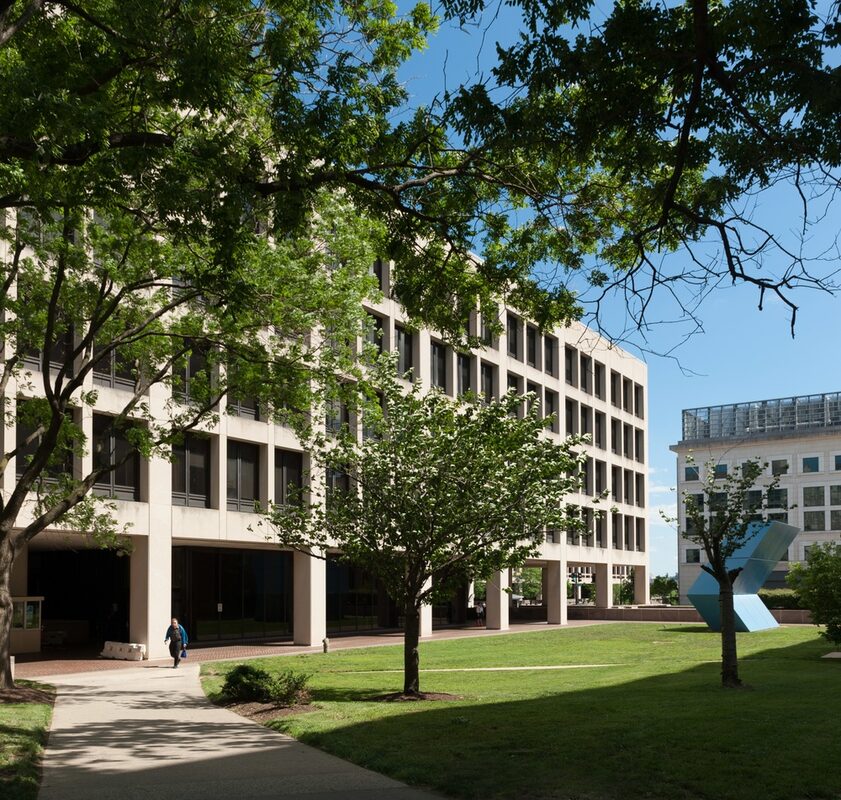
A service-disabled veteran-owned small business from Alabama came away empty-handed after the Government Accountability Office upheld GSA's decision to award a ten-year facilities contract at one of Washington's most prominent federal buildings to a large firm bidding nearly $18.6 million less. In South Dade Air Conditioning and Refrigeration, Inc. (B-424292), decided June 5, 2026, GAO denied the protest in its entirety, affirming both the agency's best-value tradeoff and its handling of an organizational conflict of interest allegation that could have upended the award entirely.
The solicitation at issue — RFQ No. 47PN1125Q0002 — called for facilities engineering, operations, and maintenance services at the Ronald Reagan Building and International Trade Center in Washington, D.C. The ten-year contract scope covers the full complement of building systems work: mechanical, electrical, plumbing, HVAC, pest control, elevator maintenance, and general O&M — precisely the kind of work South Dade Air Conditioning and Refrigeration, headquartered in Selma, Alabama, has built its business around.
The Ratings and the Tradeoff
South Dade earned a "Very Good" rating on its management plan — the stronger of the two offerors' technical scores — but its proposed price of $157.5 million trailed the awardee's figure by a substantial margin. AAA Complete Building Services, a large business based in Washington, D.C., received only an "Acceptable" rating on its management plan yet proposed $138.9 million, a difference of approximately $18.6 million or 11.8 percent over the life of the contract.
GSA concluded that CBS's lower price was worth more to the government than the incremental technical advantage South Dade demonstrated. The procurement was conducted under Federal Supply Schedule (FSS) procedures, and GAO reviewed GSA's tradeoff rationale under that framework. Even where a solicitation emphasizes technical merit over price, an agency may properly select a lower-technically rated, lower-priced quotation when it cannot justify the price premium — and GAO found GSA did exactly that here, declining to substitute its judgment for the contracting officer's.
For South Dade, the result highlights a recurring tension in federal contracting: SDVOSB set-asides and socioeconomic preferences do not automatically override best-value determinations in unrestricted competitions. When an agency chooses to compete a requirement on an unrestricted basis rather than setting it aside for veteran-owned firms, price discipline becomes a central differentiator regardless of a small business's technical strengths — even when socioeconomic designation is one of the listed evaluation factors.
The OCI Question
Perhaps the more consequential allegation in the protest involved an organizational conflict of interest. South Dade argued that a CBS employee who also worked full-time as a GSA building manager at the Reagan Building had access to competitively sensitive operational information and would later evaluate CBS's own performance on the contract — raising both an unequal-access OCI and an impaired-objectivity OCI. Either claim, if substantiated, can void an award regardless of technical or price standings.
GAO examined the record and found no basis to conclude CBS enjoyed an unfair competitive advantage. The employee had signed recusal letters stating disqualification from "all matters involving, directly or indirectly, CBS," did not participate in proposal preparation, was not a member of the evaluation voting panel, and did not receive access to sensitive procurement materials. CBS confirmed the employee provided no information about the building to the firm during the competition.
Under the OCI framework established by FAR Subpart 9.5 and decades of GAO precedent, an OCI allegation requires more than proximity or prior association; the protester must show that the conflict actually tainted the competition. Where an agency has taken reasonable steps — including documented recusals — to wall off a potentially conflicted individual, GAO will generally uphold the agency's mitigation approach unless evidence suggests the firewall failed. Here, GAO found no such evidence and denied both OCI grounds.
OCI allegations have become an increasingly popular protest tool in large, multi-year service contracts because they carry the potential to reset an entire competition. The South Dade decision is a reminder that recusal documentation, properly executed and maintained, remains GAO's preferred mitigation mechanism and that protesters bear the burden of showing actual contamination rather than theoretical exposure.
What It Means for Contractors
Several practical takeaways emerge from this decision for contractors competing on large GSA facilities contracts.
Price discipline is not optional on unrestricted acquisitions. A "Very Good" management rating is a genuine achievement, but on a ten-year O&M contract with a scope this large, an 11.8 percent price premium — nearly $18.6 million — creates a tradeoff burden that is difficult for any agency to justify without extraordinary technical differentiation. Contractors building price models for long-duration service contracts should stress-test their assumptions against realistic competitive benchmarks before submission.
Set-aside strategy should be evaluated early. South Dade, as an SDVOSB, would have been the presumptive awardee had GSA set the requirement aside under the Veterans First Contracting Program. The fact that GSA ran an unrestricted competition suggests the agency concluded the Rule of Two threshold was not met — or made a deliberate best-value judgment to go open market. SDVOSBs competing on unrestricted contracts should assess whether a set-aside challenge at the pre-award stage is viable before investing in a full proposal.
OCI mitigation documentation is a competitive asset. Awardees facing OCI allegations are well-served by maintaining clear, contemporaneous records of recusal agreements, information barriers, and any steps taken to isolate potentially conflicted personnel. The CBS recusal letters were apparently sufficient to defeat South Dade's challenge. For any firm bringing personnel with incumbent or related-program knowledge, building that documentation before award — not after a protest is filed — is essential.
The Reagan Building contract is now effectively settled. With GAO's denial and no indication of further challenge, AAA Complete Building Services moves forward on a ten-year, $138.9 million engagement at one of the federal government's highest-profile properties. The decision was issued alongside a cluster of other June 2026 GAO rulings, including denials in TechGlobal Inc. (B-424287, June 10) and Servexo Protective Services (B-424349, June 9), and a dismissal in The Gilchrist Law Firm (B-424421, June 11) — a period of active protest adjudication across multiple agencies and contract types.
For South Dade, the path forward likely involves a candid reassessment of pricing strategy on future large-building O&M opportunities and a close look at whether any remaining administrative remedies — including a Court of Federal Claims challenge — make business sense given the evidentiary record GAO already reviewed.
