
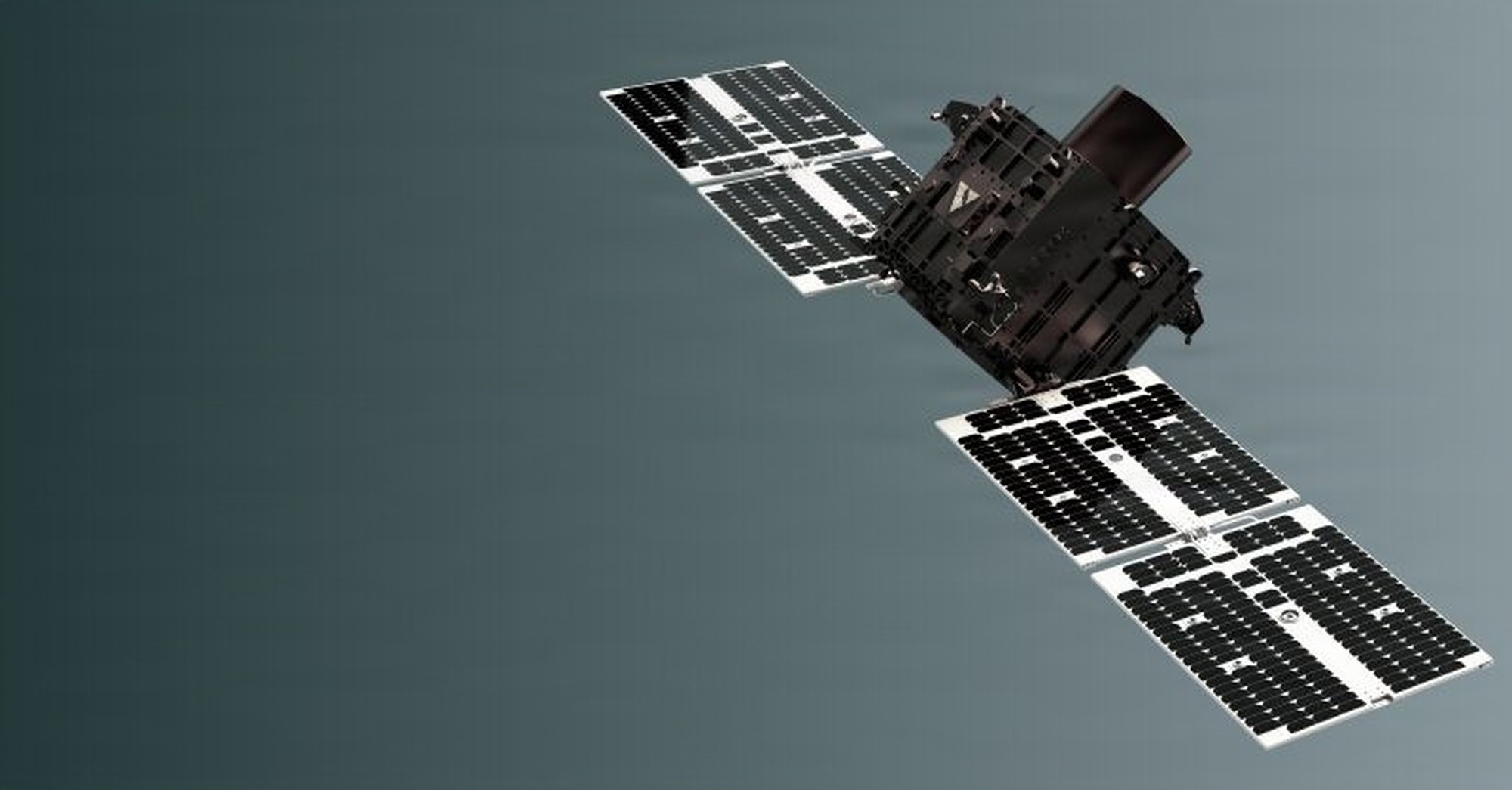
The Space Force is betting that small satellites built from commercial parts can watch friendly and adversary spacecraft in geosynchronous orbit, and two companies now hold the prototype contracts to prove it. The Department of War Innovation Unit (DIU) and Space Systems Command (SSC) awarded GHOST-R prototype contracts to Northrop Grumman and True Anomaly, announced Sept. 18, 2026. GHOST-R stands for GEO High-Resolution Optical Space-Based Tactical Reconnaissance. None of the sources published so far discloses a contract value.
What Will GHOST-R Satellites Do in Geosynchronous Orbit?
The program office describes the mission plainly. According to the DVIDS caption released with the award, GHOST-R "leverages commercially developed space vehicles, buses, and electro-optical payloads to deliver high-resolution space-to-space imagery for characterizing resident space objects in GEO." The caption adds that DIU and SSC made the awards to drive down costs and accelerate timelines.
Air & Space Forces Magazine reports that the demonstration uses small satellites built with low-cost, commercial technology to track both friendly and adversary satellites in geosynchronous orbit. Gen. Stephen Whiting, commander of U.S. Space Command, framed the operational need this way: "To be able to negate threats in space, we must be able to find, fix, track, and target those threats."
Northrop's release says the company will assemble, integrate, test and deliver an operational GHOST-R prototype to the U.S. Space Force, and that the Space Force aims to deliver the dynamic space operations capability U.S. Space Command needs.
The prototypes feed the Space Force's RG-XX initiative, which aims to field reconnaissance satellites by the end of the decade. RG-XX is a multibillion-dollar effort. Separately, in April the Space Force chose 14 companies for an industry consortium called Andromeda, which will compete for task orders worth up to $6.2 billion, according to Air & Space Forces. That figure covers Andromeda as a whole, not GHOST-R.
How Northrop Grumman and True Anomaly Plan to Build Their Satellites
The two awardees bring different hardware. Northrop Grumman will use its ESPASat-L bus, which the company describes as the size of a small suitcase, paired with optical payloads from TRL-11 of Irvine, California. Northrop committed to an accelerated 24-month timeline to deliver the prototype. It will assemble, integrate and test the spacecraft at its satellite manufacturing facilities in Dulles, Virginia, and Gilbert, Arizona.
Northrop says the agreement falls under DIU's "Kill Web" portfolio, which features technology advancements for out-sensing and out-targeting the adversary. Ryan Tintner, vice president and general manager of space superiority at Northrop Grumman, said, "Space is becoming more congested and contested every day, and our joint forces depend on clear, timely insight into what's happening on orbit."
True Anomaly will fly its Jackal spacecraft together with its Mosaic offering. CEO Evan Rogers said, "Jackal and Mosaic were purpose-built for this mission, delivering superior maneuverability, sensing, and autonomy at a price point that enables scale without compromising performance."
Col. Bryon McClain, acting portfolio acquisition executive for space combat power, said the prototype approach "burns down technical risk, drives down lifecycle costs, and gets vital capability to the warfighter faster to ensure a more resilient architecture." He added that successful prototypes will have a direct transition into the program of record.
What Timeline Did DIU Set for GHOST-R?
According to Air & Space Forces, the Northrop and True Anomaly satellites are expected to launch in 2028 and then perform a series of demonstrations to prove they can collect high-resolution imagery and conduct weekly observations of target satellites. If successful, those spacecraft would become operational RG-XX platforms by 2029. Northrop's 24-month delivery commitment, counted from a September 2026 award announcement, ends around September 2028, so the schedule appears to leave little room for slips.
Breaking Defense reported in February 2026 on the solicitation behind the awards, and its account shows how demanding the requirements were. The solicitation called for a minimum viable product with high-resolution imagery of a geosynchronous satellite within 24 months. It wanted the system to move from contractor ownership to government ownership and operation within 36 months and to demonstrate at least one pass by a target spacecraft per week within 48 months.
The technical bar was equally specific. The solicitation described target satellites of approximately 700 kilograms, imaged from no closer than 10 kilometers, and an operational lifespan of three years. Proposals were due March 3. The solicitation said the effort aims to reduce costs compared with existing and planned programs of record while still delivering high-resolution imagery.
Why Contract Values and Handover Details Remain Open Questions
DIU, SSC, Northrop Grumman, and the DVIDS caption all omit dollar figures, so the size of each prototype award is unknown. No source describes the payment structure.
Other questions remain open. The sources do not spell out what counts as a successful demonstration, or how the government will judge the two designs against each other. The transition from contractor-owned to government-operated satellites, which the solicitation put at 36 months, will test whether the Space Force has the ground infrastructure and trained operators ready when the hardware arrives.
What It Means for Contractors
The award suggests the Space Force intends to buy space domain awareness capability in small, commercially derived increments rather than as bespoke flagship satellites. Companies that already build buses, optical payloads, autonomy software, or ground systems on commercial timelines fit that model, and DIU's Kill Web portfolio is one route in.
- Payload and component suppliers. Northrop's use of an outside optical payload provider, TRL-11, suggests prime-led teams may source high-resolution sensors from specialists. Optics specialists should watch for similar teaming calls.
- Ground and operations vendors. True Anomaly pairs Jackal with Mosaic, and the solicitation's 36-month handover milestone means the government must eventually run these satellites itself. Software, training, and mission-planning providers may see demand.
- RG-XX and Andromeda positioning. GHOST-R feeds RG-XX, and McClain said successful prototypes will transition directly into the program of record. Firms among the 14 Andromeda consortium members, and those seeking teaming arrangements, should track demonstrated performance against the solicitation's 10-kilometer standoff figure and weekly-pass requirement.
The 14 firms in the Andromeda consortium, competing for task orders worth up to $6.2 billion, now have two live benchmarks for what commercially derived reconnaissance satellites can do. Because no values are published, teaming partners and subcontractors should ask their prime directly about scope and funding before committing capacity.
Sources
- DVIDS: DIU and Space Systems Command award GHOST-R prototype contracts to support GEO recon capabilities for Department of War
- Pentagon Picks 2 Companies for Reconnaissance Satellite Demo (Air & Space Forces Magazine)
- Northrop Grumman to Deliver New Space Domain Awareness Prototype Satellite (Northrop Grumman)
- DIU wants commercially developed imagery satellites for on-orbit spying (Breaking Defense)
