
The Department of Health and Human Services' Office of Inspector General has published a data brief examining how the Indian Health Service has spent billions of dollars in construction funding on tribal water and sanitation infrastructure — and warns that the money still won't be enough to finish the job. The brief, numbered OAS-25-05-078, was published September 4, 2026 and appeared in HHS-OIG's newsroom listing on September 9, 2026.
Congress allocated $3.5 billion over five years through the Infrastructure Investment and Jobs Act to IHS's Sanitation Facilities Construction Program, which builds and repairs water, wastewater, and solid-waste systems for tribal communities — many of which have gone decades without reliable running water or basic sanitation infrastructure.
Where the Money Has Gone So Far
According to the OIG brief, IHS allocated $2.6 billion of the $3.5 billion IIJA appropriation between fiscal years 2022 and 2025, directing the funds to 702 Tier 1 projects — the program's highest-priority category, generally covering communities with the most severe existing sanitation deficiencies — along with 233 additional Tier 2 and Tier 3 projects addressing less urgent but still significant needs. That spending pace means roughly three-quarters of the five-year appropriation has already been committed with more than a year of the funding window still to run.
The brief credits that spending with substantial progress, stating that "when current SFC projects are completed, IHS will have reduced, by more than half, the number of previously unfunded projects for communities with severe sanitation deficiencies." That is a significant achievement for a program that has historically struggled to keep pace with a backlog of underserved tribal communities, some of which predate the IIJA appropriation by years.
A Shortfall Baked Into the Program's Remaining Years
Despite that progress, the OIG brief is explicit that the job won't be finished when the current funding tranche runs out. It states plainly that the fiscal year 2026 IIJA funding will not be sufficient for IHS to address the remaining deficiencies — meaning a meaningful share of identified sanitation needs in tribal communities will still be unmet even after the full $3.5 billion appropriation has been spent.
Notably, the data brief does not include formal recommendations, which distinguishes it from OIG's typical audit or evaluation reports. That format signals the office intended this document primarily as a status snapshot for Congress and IHS leadership, laying out a funding math problem rather than directing a specific corrective action. It nonetheless puts a hard number and a clear conclusion in front of policymakers who will decide whether the Sanitation Facilities Construction Program gets additional appropriations once the current IIJA funding window closes.
Construction Contractors Remain Central to the Program's Pace
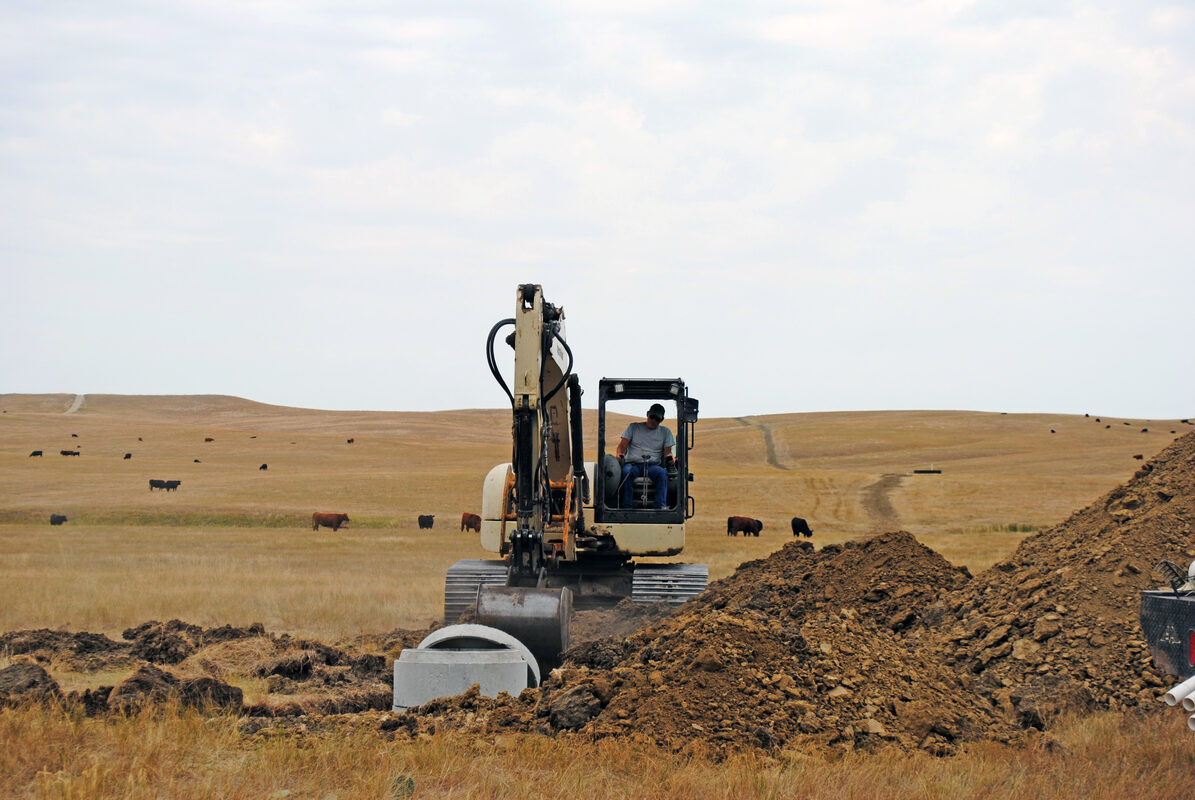
The Sanitation Facilities Construction Program relies heavily on outside contractors and tribal construction firms to design and build the water and wastewater systems it funds, working alongside IHS engineering staff and often in remote or logistically difficult locations. The pace at which IHS has been able to obligate $2.6 billion across nearly a thousand projects in under four years reflects sustained construction-industry capacity in this niche, even as the OIG brief makes clear that capacity alone won't close the remaining funding gap.
A Long-Standing Problem the IIJA Was Meant to Address
Sanitation infrastructure gaps in tribal communities served by the Indian Health Service have persisted for decades, with some communities lacking access to piped water or basic wastewater treatment well into the 21st century — conditions tied directly to elevated rates of certain infectious diseases and other public health problems that the Sanitation Facilities Construction Program exists to address. The $3.5 billion IIJA appropriation represented one of the largest single infusions of dedicated funding the program had ever received, reflecting a rare moment of sustained congressional attention to an infrastructure gap that had previously been funded only through smaller annual appropriations insufficient to keep pace with the scale of unmet need.
That history is part of why OIG's finding carries weight: even an unusually large, multi-year infusion of dedicated construction funding — one credited with cutting the backlog of severely underserved communities by more than half — still won't be enough to finish the job once the current appropriation window closes. It illustrates just how large the underlying infrastructure deficit has been allowed to grow before IIJA funding arrived, and raises the question of what mechanism, if any, will fund the remaining work once the current five-year appropriation is exhausted.
What It Means for Contractors
For construction and engineering firms working tribal infrastructure contracts, the OIG brief is both a signal of continued near-term work and an early warning about a coming funding cliff. With three-quarters of the IIJA sanitation appropriation already allocated to nearly a thousand projects, the pipeline of newly funded Tier 1 work is likely to thin out as the current appropriation window closes, even though OIG's own analysis confirms substantial unmet need will remain.
Firms with existing relationships on IHS sanitation projects should watch closely for how Congress responds to this funding math heading into the next appropriations cycle — a supplemental or follow-on appropriation would extend the current pipeline, while a lapse would leave both contractors and tribal communities in a gap between the current authorization and any future funding decision. Companies newer to this space should note that OIG's tiered prioritization system (Tier 1 through Tier 3) is likely to remain the primary mechanism determining which unmet-need communities get funded first if and when additional money becomes available.
