
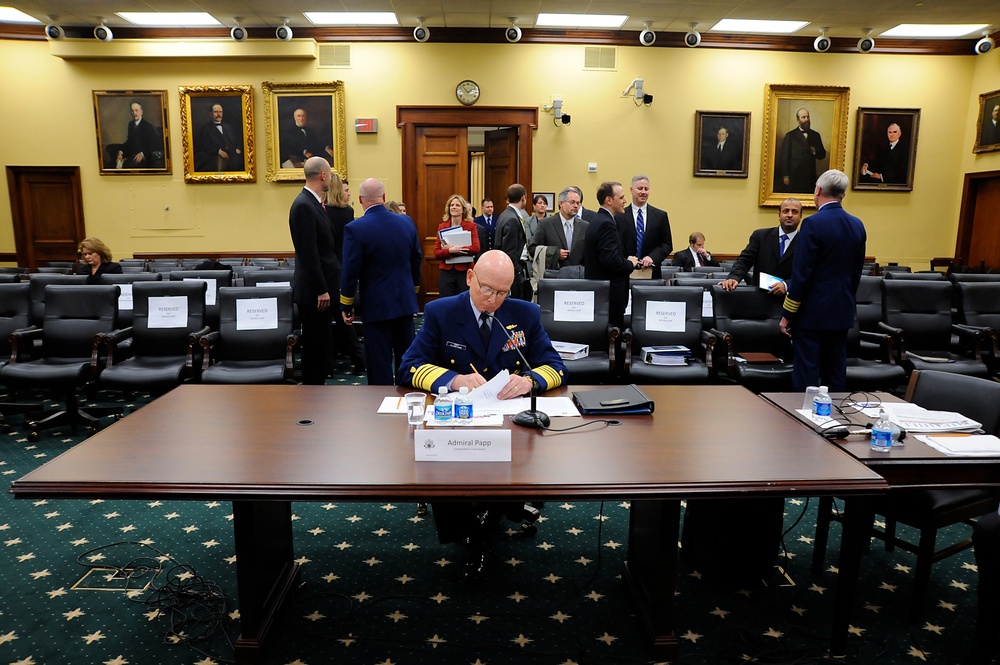
The House Appropriations Committee advanced a fiscal year 2027 Labor, Health and Human Services, and Education spending bill in June 2026 that would eliminate the Office of Federal Contract Compliance Programs and cut the Department of Labor's overall budget by approximately $3.8 billion from fiscal year 2026 enacted levels, according to House Appropriations Committee documents. If enacted into law, the bill would end the OFCCP's enforcement role, removing the primary federal agency responsible for ensuring that federal contractors comply with affirmative action requirements and prohibitions on employment discrimination based on protected characteristics. The proposal reflects the House majority's position that OFCCP's functions overlap with the Equal Employment Opportunity Commission and that the current administration's reversal of prior DEI executive orders makes dedicated contractor compliance enforcement unnecessary.
The Office of Federal Contract Compliance Programs was established under Executive Order 11246, signed by President Lyndon B. Johnson in 1965, which required federal contractors to take affirmative action to ensure that employees and applicants are treated without regard to race, color, religion, sex, or national origin. Over decades, OFCCP's authority expanded to cover additional protected characteristics and its enforcement role grew to include compliance reviews, complaint investigations, and formal enforcement proceedings against contractors found to be in violation of applicable requirements. Federal contractors above certain dollar thresholds have been required to maintain written affirmative action plans reviewed by OFCCP on a scheduled basis.
What OFCCP Elimination Would Mean
Eliminating OFCCP through the appropriations process — which would defund the agency rather than repealing the underlying statutory authorities — would create significant uncertainty about the continued legal status of affirmative action obligations for federal contractors. The executive orders requiring affirmative action would not necessarily be repealed by an OFCCP defunding, but without an enforcement agency, the practical effect on contractor compliance programs would be substantial. Federal contractors who have maintained OFCCP-compliance programs for decades would need to reassess their legal obligations in the absence of the agency that has historically interpreted and enforced those requirements.
The bill's elimination of OFCCP reflects both fiscal and policy arguments. Fiscally, OFCCP's annual budget of approximately $110 million would be reallocated or eliminated, a modest saving in absolute terms but consistent with the broader budget reduction philosophy reflected in the $3.8 billion cut to DOL overall. On policy grounds, proponents of elimination argue that EEOC provides sufficient civil rights enforcement for federal contractor workforces, that OFCCP's requirements duplicate and sometimes conflict with EEOC's, and that the current administration's executive orders have already effectively suspended the affirmative action obligations that gave OFCCP its core mission.
Opponents of the proposal argue that EEOC and OFCCP serve distinct functions: EEOC responds to individual employee complaints, while OFCCP conducts proactive compliance reviews of contractor establishments regardless of whether complaints have been filed. Eliminating proactive enforcement would mean that discrimination in federal contractor workforces would only come to light through individual complaints — a mechanism that historically leaves much discrimination undetected, particularly systemic patterns that no single employee may have standing to challenge. Civil rights organizations have strongly opposed the bill, arguing that OFCCP's proactive review authority is the essential feature that distinguishes its enforcement role from EEOC's complaint-driven model.
Broader DOL Budget Cuts and Their Contractor Impact
Beyond OFCCP elimination, the bill's $3.8 billion cut to DOL's overall budget would affect a range of programs with direct implications for federal contractors. The Department of Labor's Wage and Hour Division — which enforces prevailing wage requirements under the Davis-Bacon Act and the Service Contract Act — would face significant resource reductions under the bill. Reduced WHD staffing and investigative capacity could mean slower complaint resolution and reduced proactive enforcement of prevailing wage requirements, which would have mixed implications for contractors: reduced audit frequency might reduce compliance burden, but less robust enforcement also means less competitive equity for contractors who comply fully while competitors cut corners on wage requirements.
The bill also affects OSHA funding, with reductions that would reduce inspection capacity for federal contractor worksites. Federal contractors working in hazardous industries — construction, manufacturing, chemical processing — operate under OSHA standards that are enforced through both targeted investigations and programmatic inspections. Reduced OSHA capacity would mean longer intervals between inspections at most contractor worksites, reducing the immediate risk of citations but also reducing the enforcement pressure that incentivizes sustained safety compliance.
Legislative Outlook and Contractor Planning
The House Appropriations Committee's bill faces a difficult path to enactment. The Senate Appropriations Committee is likely to advance a significantly different version, and the two chambers must ultimately reach agreement before a bill can be enacted. In recent years, Congress has routinely failed to complete the annual appropriations process before the start of the fiscal year, instead relying on continuing resolutions that maintain funding at prior-year levels. Under a continuing resolution, OFCCP would continue receiving funding at current levels and would remain in operation regardless of the House committee's position.
Federal contractors should not change their compliance posture based solely on the House committee bill, which represents only the beginning of a lengthy legislative process. However, the proposal is significant as a political signal of the direction some in Congress wish to take OFCCP, and contractors should monitor the bill's progress through the appropriations process and any amendments that may affect its provisions. Legal counsel with federal employment law expertise should be engaged to assess the potential implications for existing compliance programs if the legislative landscape changes materially in the coming months.
What It Means for Contractors
Federal contractors with established affirmative action plans and OFCCP compliance programs should not immediately dismantle those programs based on the House committee bill. The bill is far from enacted, and even if enacted through an appropriations vehicle, the underlying executive orders and regulations may continue to create legal obligations that do not simply disappear with OFCCP defunding. Contractors who eliminate compliance programs prematurely could face legal exposure from employee discrimination claims or civil rights organizations even in the absence of active federal enforcement.
The appropriate response is to maintain existing compliance programs while closely monitoring legislative developments, consulting with employment law counsel about the implications of any enacted changes, and being prepared to adjust compliance programs promptly if the legal landscape changes definitively. Contractors who fail to maintain adequate documentation of their compliance activities during this period of uncertainty will be poorly positioned to demonstrate good-faith compliance efforts if enforcement actions resume or private litigation arises.
