
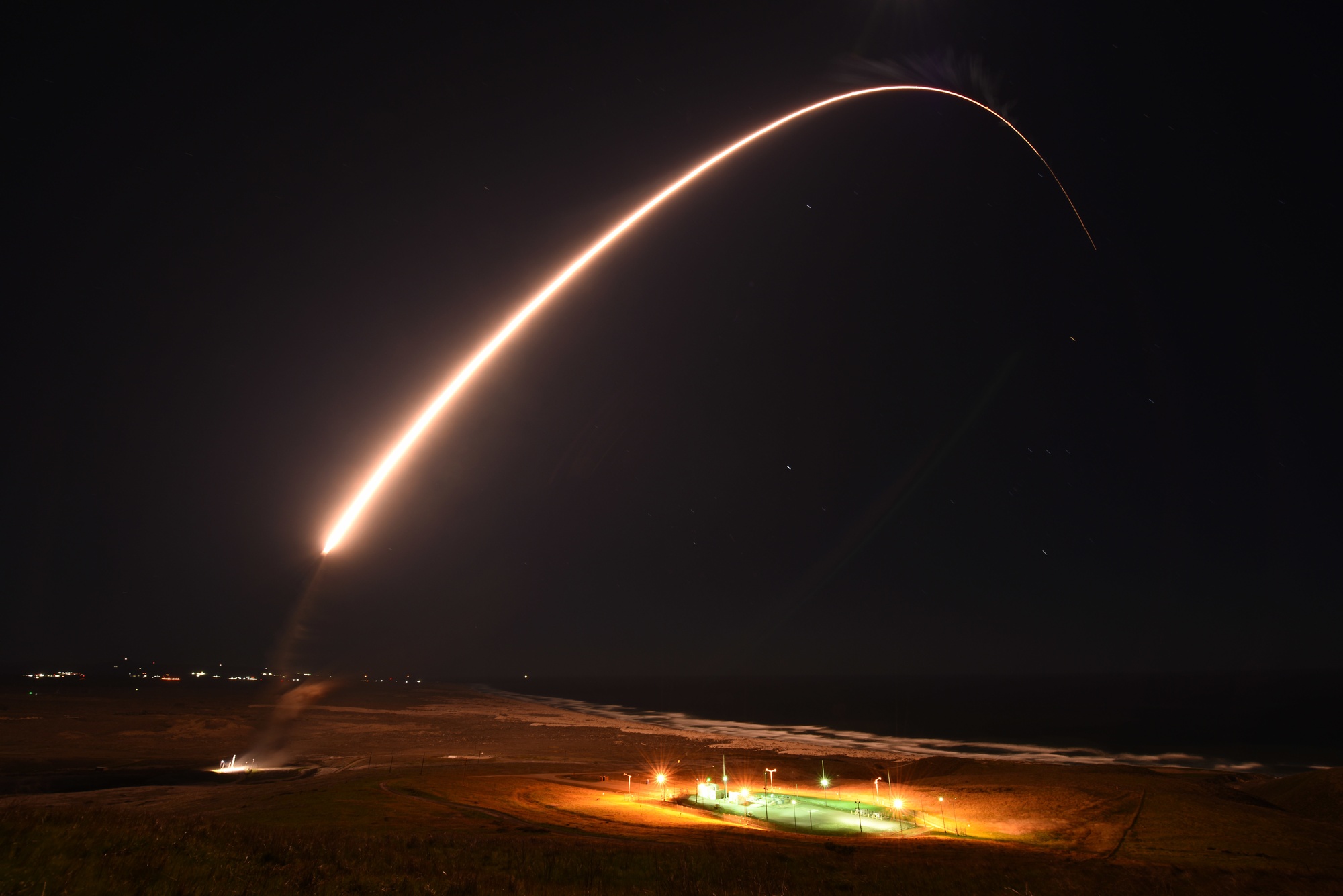
The U.S. Air Force has tapped the Johns Hopkins University Applied Physics Laboratory for a $199.3 million task order supporting the Sentinel intercontinental ballistic missile program, according to the Defense Department's contract announcement for July 20, 2026. The cost-plus-fixed-fee award places one of the nation's largest university-affiliated research centers directly inside the engineering effort behind the LGM-35A, the ground-based missile that will replace the aging Minuteman III across one leg of the U.S. nuclear triad. Work under the order runs through July 23, 2029.
Background
Sentinel is the Air Force program to modernize the land-based intercontinental ballistic missile force, swapping out the roughly half-century-old Minuteman III missiles and the silos, launch control centers, and command-and-control network that support them. It is one of the most expensive and technically demanding modernization efforts the service has underway, spanning missile hardware, ground infrastructure across several states, and a sprawling digital-engineering backbone. A prime contractor holds the development contract, but the program's scale has drawn in a wide bench of engineering and technical-services organizations to help the government evaluate designs, manage risk, and keep the schedule honest.
The program has also drawn heavy scrutiny. After cost growth triggered a formal review, the Air Force restructured Sentinel to contain overruns and reset its baseline, keeping the effort alive but under intensified oversight. That environment raises the value of independent technical judgment—exactly the kind of work a federally funded advisory organization is built to provide. The Johns Hopkins University Applied Physics Laboratory, or APL, operates as a university-affiliated research center (UARC), a not-for-profit entity that serves as a trusted technical adviser to the government and is barred from competing against industry for production work. That structure lets APL sit alongside the government on sensitive programs without the conflicts of interest a for-profit integrator would carry.
Key Details
The order is valued at $199.3 million and is structured as cost-plus-fixed-fee, the standard arrangement for research and engineering work where the government reimburses allowable costs and pays a set fee rather than tying profit to hitting a fixed price. The Defense Department described the scope as research and development engineering services, with work performed at several locations throughout the U.S. That contract type fits Sentinel's still-evolving requirements, where the exact scope of analysis and testing support is hard to pin down years in advance. The Air Force set completion for July 23, 2029, giving APL a roughly three-year runway to deliver against the task order.
APL's role on Sentinel aligns with its broader defense engineering portfolio. Federal spending records list the laboratory under aerospace research, development, and engineering support work, and its book of business spans missile systems, space, and strategic technology. The laboratory's scale is substantial: federal award data reflect large multiyear engineering programs across the Defense Department and NASA, including deep-space science work such as the Dragonfly mission to Titan, a program valued in the billions. That depth signals the kind of systems-engineering and analysis muscle the Air Force is buying for Sentinel—independent modeling, test and evaluation support, and technical assessment of a weapon system that has to remain reliable for decades.
The July 20 announcement identified the award as a sole-source acquisition under order number FA8204-26-F-B008 and reported $31.3 million in fiscal 2026 research, development, test and evaluation funds obligated at the time of award, with the Air Force Nuclear Weapons Center at Hill Air Force Base, Utah, as the contracting activity. The Sentinel line appeared in one independent secondary outlet, ClearanceJobs, alongside the Defense Department's own daily contract release and the laboratory's recipient record in federal spending data. Those three data points—the government announcement, the trade pickup, and the USASpending history—corroborate the award and APL's status as an established aerospace engineering contractor.
What It Means for Contractors
For the contracting community, the award is a marker of where Sentinel money is flowing as the program moves deeper into engineering and test. UARCs and federally funded research and development centers occupy a protected lane: they advise the government but do not build the hardware, which means their expanding role tends to pull work toward the industry teams they help oversee rather than compete with. Firms chasing Sentinel should read APL's task order as a signal that the government is investing in independent technical rigor, not scaling back—useful context for anyone weighing a bid on adjacent test, digital-engineering, or systems-integration scopes.
There is subcontracting relevance as well. Large UARC engineering task orders frequently generate demand for specialized talent and niche technical services that the laboratory sources from industry—modeling and simulation, cybersecurity for weapon systems, data engineering, and systems-safety analysis among them. Vendors with cleared personnel and strategic-systems experience can position as suppliers into that pipeline, particularly in the Sentinel supply base and the digital-engineering environment the program leans on heavily.
More broadly, the award reinforces a pattern worth tracking across the nuclear-modernization portfolio. As Sentinel absorbs cost pressure and oversight, the government is spending on advisory and engineering support that helps it hold the prime accountable and de-risk decisions. Companies whose value proposition is independent assessment, test infrastructure, or program analysis—rather than production—have a durable market here, because that demand grows precisely when a flagship program is under the microscope. Contractors should also note the multiyear completion date: a 2029 finish line means the government is committing to sustained technical support through the heart of Sentinel's development, giving teams a window to build past performance on one of the Air Force's highest-priority efforts. Watching how follow-on orders attach to this vehicle will tell industry how much more advisory and engineering capacity the Sentinel program plans to buy.
