
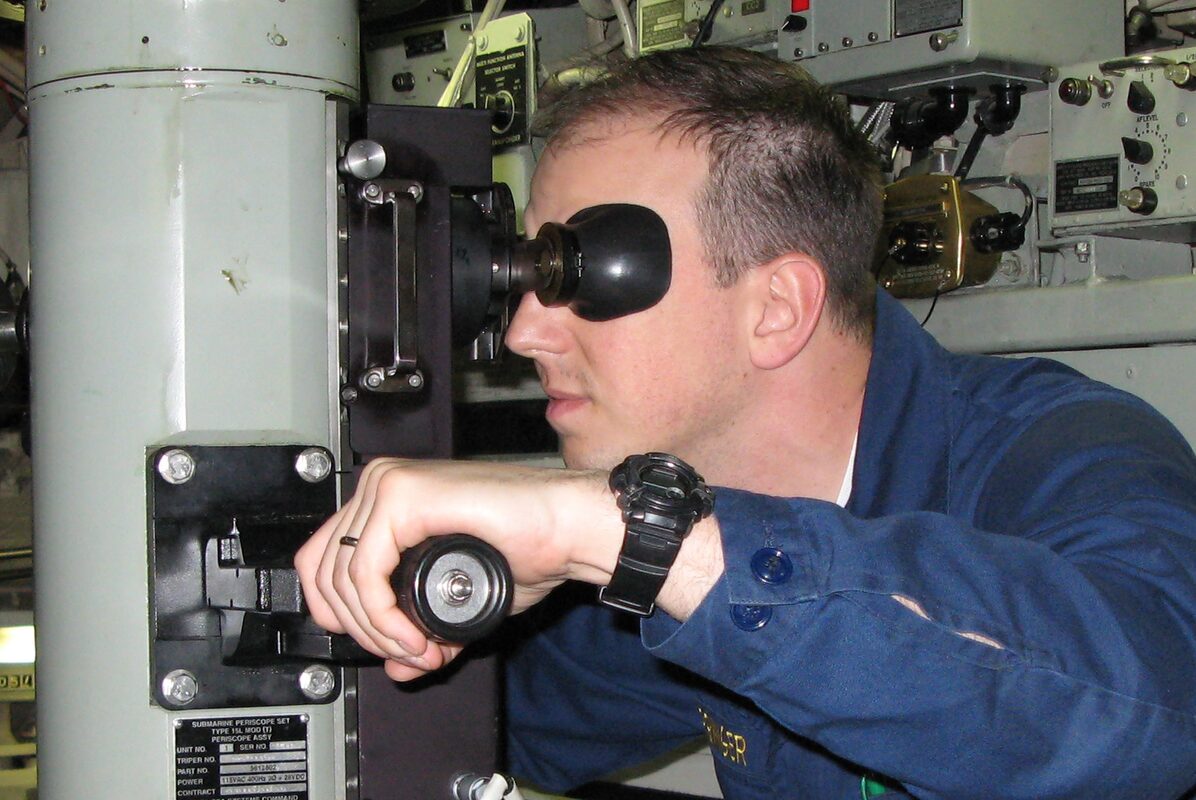
The U.S. Navy is keeping a single Massachusetts plant as the sole source of periscope replacements for its submarine fleet through 2030, after the Department of War's Sept. 4, 2026 contracts release disclosed a $139,012,362 modification to L3Harris Technologies' existing Navy contract. The award covers production of new-construction and in-service submarine low-profile photonics masts, spare parts, and engineering and technical support, all performed at L3Harris's Northampton, Massachusetts facility.
The modification is structured as a mix of cost-plus-fixed-fee, cost-plus-incentive-fee, and firm-fixed-price work, funded across fiscal years 2024 through 2026. Naval Sea Systems Command in Washington, D.C. is the contracting activity, and the government expects the work to wrap up in September 2030.
What the $139 Million Buys
Photonics masts are the modern replacement for a traditional periscope: instead of an optical tube running straight through the pressure hull, submarines now use masts fitted with digital cameras and sensors that transmit imagery electronically to control-room displays, letting the mast itself be shorter and non-penetrating. L3Harris's Northampton plant has built and supported this hardware for years, and the new money keeps that pipeline running for both ships still under construction and boats already in the fleet.
The government's own contract language describes the work as a "cost-plus-fixed-fee, cost-plus-incentive-fee, and firm-fixed-price modification to previously awarded contract... for production of new construction and in-service submarine low-profile photonics masts," according to the Department of War's official announcement text. The three-part fee structure signals that some elements of the work — likely engineering and technical support tasks with less-defined scope — carry cost risk the Navy shares with the contractor, while the production runs are priced on a firm-fixed basis.
Because the masts must fit both boats still on the ways and boats already deployed, the production line serves two customers at once: shipbuilders installing hardware into a hull for the first time, and fleet maintainers replacing an older mast. Spare-parts production, called out explicitly in the war.gov description alongside new-construction and in-service units, keeps that second, sustainment-driven demand flowing even in years when no new submarine is scheduled to receive a mast. That combination — new-build production, in-service replacement, spares and engineering support under one modification — is why the value covers multiple fiscal years rather than a single lump-sum buy.
A Sole-Source Track Record at the Same Plant
This is not L3Harris's first bite at this exact niche. The company also holds a separate, non-competitively awarded roughly $142 million indefinite-delivery/indefinite-quantity contract for depot-level repair, maintenance and upgrade support on the same family of hardware, issued out of Naval Undersea Warfare Center Division Newport and performed in Northampton, Massachusetts. As ExecutiveBiz reported when it tracked that earlier award, "the contract, which has a five-year ordering period, was not competitively procured as the government previously determined that L3Harris is the sole responsible source to satisfy agency requirements." ExecutiveBiz described the scope of that work as depot-level repair, maintenance and upgrade support services for photonics mast variants and integrated submarine imaging system augmented systems.
Together, the two contracts span the mast's full lifecycle: the Newport-administered IDIQ keeps existing masts running through depot repair and upgrades, while the new NAVSEA modification funds new production and in-service support. Both point back to the same Northampton production line, underscoring how narrow and specialized the submarine photonics-mast supplier base has become. The photonics-mast work has stayed with one contractor across at least two separate contract vehicles — a pattern typical of specialized submarine sensor systems, where qualifying a second producer would mean years of testing before the Navy risks fleet-critical optics on an unproven source.
Why the Fee Structure and Funding Profile Matter
The multi-year funding — spanning FY24 through FY26 appropriations on a contract action recorded in September 2026 — reflects how shipbuilding-adjacent contracts often draw on prior-year money already appropriated for specific hull numbers or overhaul packages, rather than a single year's budget. That matters for tracking purposes: the headline $139 million figure represents total contract value across those fiscal years, not new money appropriated in a single budget cycle. The blend of cost-reimbursement and fixed-price line items also means the final amount the government actually pays could shift somewhat from the ceiling figure, depending on how the cost-plus-incentive-fee portions perform against target costs.
What It Means for Contractors
For companies outside L3Harris, this award is a reminder of how entrenched incumbency works in submarine sensor systems. A contractor that wants into this space would need to demonstrate not just technical capability but a qualified production line and government-approved test data for hardware that touches submarine hull integrity and stealth performance — barriers that make organic competition rare once an incumbent like L3Harris has built the facility, workforce, and track record NAVSEA and NUWC Newport already trust. New entrants are more realistic as second-tier suppliers of subcomponents, sensors, or software rather than as prime competitors for the mast itself.
For L3Harris, the modification confirms photonics masts remain a durable, if narrow, revenue line tied directly to submarine construction and sustainment schedules rather than to any single program's funding swings. Contractors watching the submarine industrial base more broadly should note that NAVSEA continues to fund both new-build and sustainment work through the same modification vehicle, a structure that rewards incumbents who can flex between production and support roles as fleet needs shift. Firms positioning for adjacent submarine electronics or optics work should expect NAVSEA and NUWC Newport to keep relying on sole-source justifications — the government determining, as it did for the Newport IDIQ, that only one qualified source exists — meaning the more effective path in is often teaming or subcontracting with the incumbent rather than competing head-on for the prime role.
The multi-fiscal-year funding profile is worth tracking for anyone modeling the submarine supply chain's budget cycle. A modification drawing on FY24 through FY26 money and running through a September 2030 completion date locks in demand signals for L3Harris's Northampton workforce and its subcontractors for roughly four years, giving smaller suppliers in that chain a planning horizon most single-year task orders never provide. Companies already selling into that supply chain — machined components, electro-optical sensors, submarine-rated cabling — should read this as confirmation the program's funding is intact through the back half of the decade, not as a new vehicle opening to fresh competition.
