
L3Harris Technologies and Turkish drone manufacturer Skydagger signed a memorandum of understanding on June 16, 2026, establishing U.S. co-production of first-person-view drone interceptors for integration into L3Harris's VAMPIRE counter-unmanned aircraft system. The agreement, announced at Eurosatory 2026 near Paris, involves a technology transfer from Skydagger that will enable localized manufacturing of FPV interceptors on American soil — marking the first time VAMPIRE will carry a drone-on-drone intercept capability alongside its existing rocket and ISR payloads. L3Harris aims to complete integration of the new FPV capability by the end of 2026.
Background
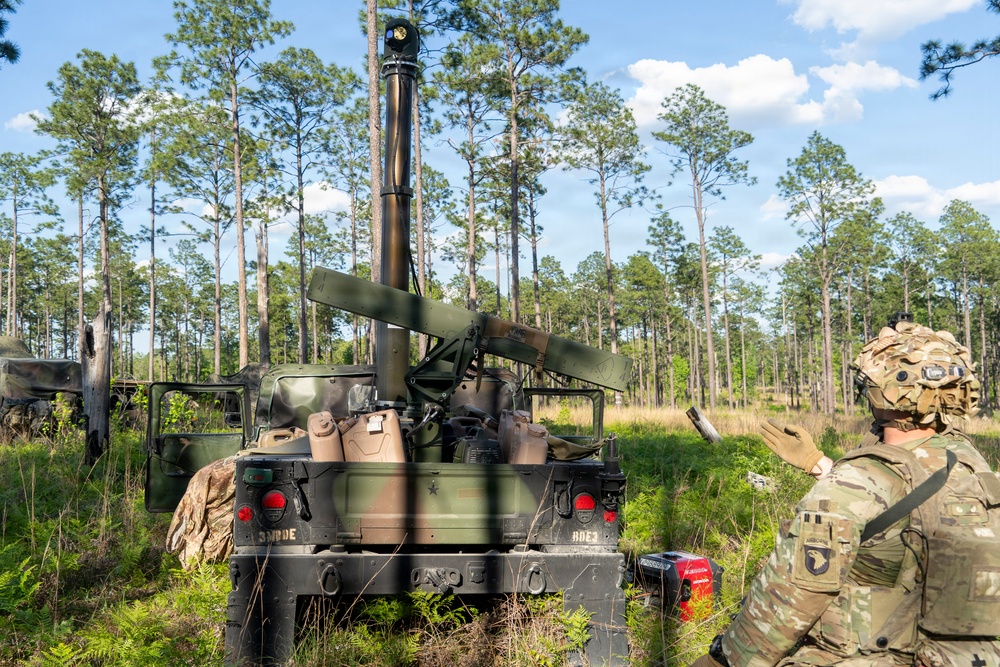
VAMPIRE — Vehicle-Agnostic Modular Palletized ISR Rocket Equipment — is a truck-mounted counter-UAS platform developed by L3Harris Technologies. The system mounts on the bed of a commercial pickup or military tactical vehicle, making it deployable without dedicated launch infrastructure. Since entering European combat operations in 2023, VAMPIRE systems have logged more than 350,000 operational hours, with crews using the platform to defeat aerial threats across a range of combat environments.
Skydagger is a Turkish defense company that manufactures FPV drone interceptors engineered specifically for drone-on-drone engagements. Its Hunter interceptor variant weighs approximately one pound and reaches speeds near 200 miles per hour. The company currently produces 50,000 FPV interceptors per year at its Turkish facilities. FPV interceptors represent a lower-cost alternative to kinetic missiles for defeating small commercial-style drones, which have proliferated as battlefield threats since 2022 and are now a primary counter-UAS challenge for U.S. ground forces operating in contested airspace.
VAMPIRE entered the Army acquisition pipeline following Ukrainian battlefield validation of the truck-mounted counter-UAS concept. Six days before the Eurosatory announcement — on June 10, 2026 — the U.S. Army awarded L3Harris a contract worth up to $106 million to deliver VAMPIRE systems as part of the Pentagon's layered counter-unmanned systems defense strategy. L3Harris also opened a new VAMPIRE production line in Huntsville, Alabama, in 2026 to meet growing allied demand alongside domestic Army orders. The Huntsville line increases throughput and positions L3Harris to absorb future task orders without the lead-time constraints that affected earlier deliveries.
MOU Details
The memorandum of understanding commits both companies to establishing a U.S. co-production capability for Skydagger's FPV interceptors and integrating that capability into the VAMPIRE platform. Under the agreement, Skydagger will transfer manufacturing technology to L3Harris, enabling the interceptors to be produced domestically rather than imported from Turkey.
The partnership was unveiled at Eurosatory 2026, the land defense exhibition where multiple NATO member states also signed agreements to join a U.S. Army counter-drone marketplace. The Skydagger deal fits the broader allied investment in layered counter-UAS architecture: rather than treating FPV interceptors as an import line item, the MOU locks in domestic production capacity that can be sustained and scaled independent of Turkish export controls or foreign supply chain disruptions during a conflict.
FPV interceptors compete with laser systems, electronic warfare jammers, and hit-to-kill missiles in the counter-UAS toolkit. The global FPV drone interceptor market is projected to reach $5.8 billion by 2032, driven by demand from armed forces that have watched commercial quadcopters and first-person-view racing platforms defeat armored vehicles and fortified positions across multiple active conflict theaters. The cost asymmetry — low-cost commercial drones threatening high-value military assets — has pushed procurement offices toward inexpensive kinetic interceptors as part of a multi-layer counter-UAS response that avoids exhausting expensive guided-missile inventories on small aerial targets.
Contracting Context
The L3Harris-Skydagger MOU does not carry a published dollar value. Memoranda of understanding establish cooperation frameworks and technology-transfer terms rather than binding procurement commitments. Commercial production agreements and government procurement actions would follow once integration is validated and Army or allied customers issue orders specifying FPV-interceptor-equipped VAMPIRE configurations.
The $106 million Army VAMPIRE contract awarded June 10, 2026 — six days before the Eurosatory announcement — covers VAMPIRE system deliveries under the existing counter-UAS acquisition framework without the Skydagger interceptor payload. The MOU provides the technical and legal groundwork for FPV capability to appear on future VAMPIRE procurement orders once integration is complete by the end of 2026.
Adding domestically manufactured FPV interceptors to the VAMPIRE payload expands the system's engagement options against Group 2 and Group 3 drone threats — the small-to-medium commercially derived platforms that are poorly matched to radar-guided missiles or larger directed-energy systems. The domestic co-production structure also aligns with Pentagon acquisition guidance encouraging American manufacturing for critical defense components, keeping the interceptor payload eligible for buy-American requirements on future federal contracts and removing dependence on foreign export approvals for operational sustainment through the program's service life. For allied customers acquiring VAMPIRE under foreign military sales arrangements, a U.S.-manufactured interceptor simplifies export licensing for follow-on sustainment orders as well.
What It Means for Contractors
The SkyDagger-VAMPIRE co-production arrangement signals a broader shift in how the Pentagon approaches counter-drone procurement — prioritizing domestic manufacturing partnerships and rapid fielding timelines over traditional sole-source contracts.
- Tier-2 and Tier-3 defense electronics and airframe manufacturers in the FPV drone space should monitor L3Harris's Huntsville facility for subcontract opportunities as co-production ramps toward the end-of-2026 integration milestone.
- Counter-UAS integrators competing for Army layered-defense task orders should note that VAMPIRE will carry an FPV interceptor option by early 2027, adding a new payload category to platform-level competitions.
- Companies pursuing the Army's counter-drone marketplace agreements signed at Eurosatory 2026 should evaluate whether allied VAMPIRE procurement will specify FPV interceptor payloads, creating parallel demand for U.S.-manufactured Skydagger interceptors under those agreements.
- Small businesses with UAS hardware manufacturing capabilities in Alabama or adjacent states may find supply-chain openings as L3Harris builds out domestic FPV interceptor production independent of Skydagger's Turkish facilities.
- The projected $5.8 billion FPV interceptor market through 2032 signals sustained demand; firms not currently in the counter-drone supply chain should assess whether existing manufacturing capabilities translate to this category before the domestic production base consolidates around established prime contractors.
Sources
- Breaking Defense — L3Harris, Turkish firm Skydagger to establish US co-production of FPV interceptors (June 16, 2026)
- L3Harris Newsroom — L3Harris Delivering Counter-Drone Systems to US Army (June 10, 2026)
- ASD News — L3Harris and Skydagger Sign Agreement to Collaborate on Drone Interceptor Technology (June 16, 2026)
