
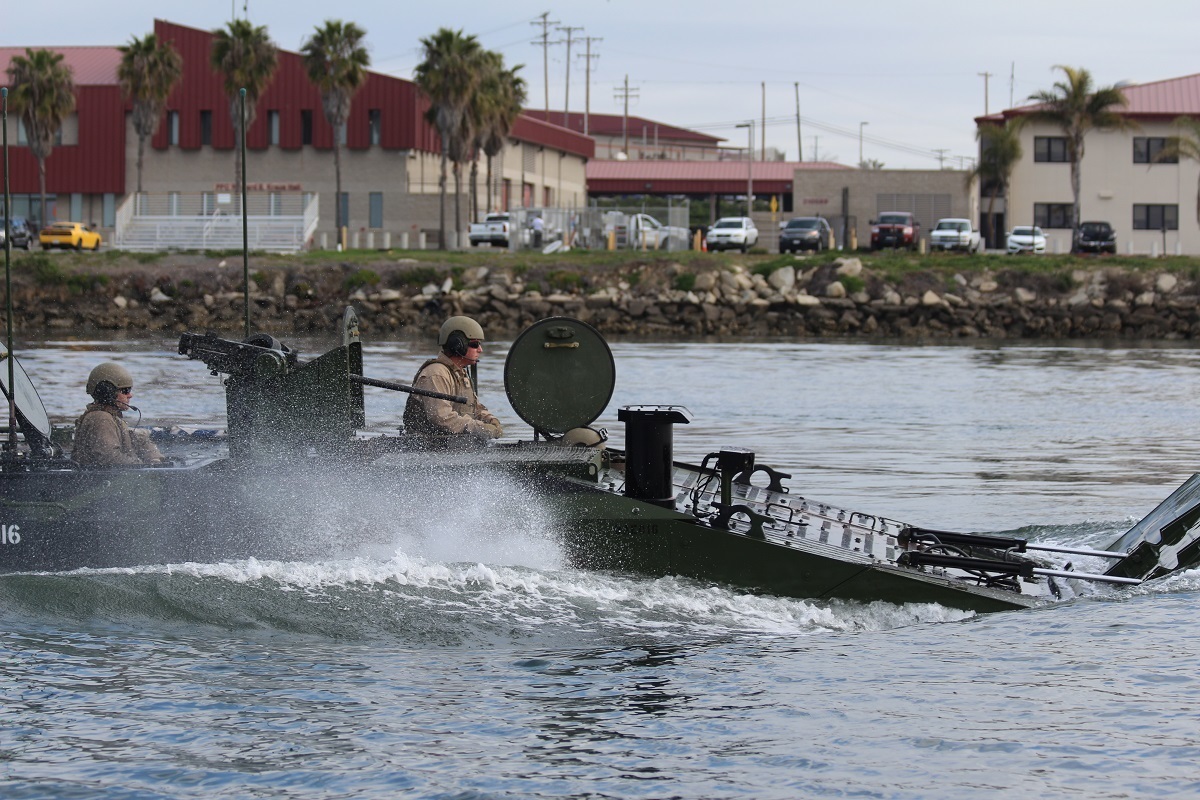
The Marine Corps is buying the vehicle that will haul its broken-down amphibious fleet off the beach. A $230.1 million firm-fixed-price modification to BAE Systems Land and Armaments puts 32 Amphibious Combat Vehicle recovery variants, known as ACV-R, into full-rate production, The Defense Post reported. The order gives the ACV family its maintenance and recovery member and moves the Marines a step closer to retiring the recovery version of the aging Assault Amphibious Vehicle.
The modification exercises options covering the vehicles along with related production, fielding and support costs and spares, according to Baird Maritime. With every option exercised, the contract's total potential value can reach approximately $4.096 billion, a figure The Defense Post rounded to about $4.1 billion.
How the $230.1M ACV-R Order Is Funded and Scheduled
The money is already in hand. Baird Maritime, citing the Department of War contract notice, reported that "FY2026 US Marine Corps procurement funds covered the entire amount, which was obligated when the award was made." Full obligation at award means the work does not depend on a future appropriation to start, and the contractor carries the cost risk under the firm-fixed-price structure.
The notice set an expected completion date of November 2028. BAE's own timeline runs a little longer: the company said work on the program will take place primarily in York, Pennsylvania, through 2029, according to both Baird Maritime and Defence Industry Europe. The outlets do not explain the gap between the two dates, and readers tracking delivery milestones should treat November 2028 as the contract figure and 2029 as the company's description of its York workload.
Coverage also differs on what exactly BAE is building. The Defense Post and Baird Maritime describe 32 recovery "variants," matching the award language. Defence Industry Europe reported that BAE received the contract "to build 32 chassis for the recovery variant." That distinction matters because the finished vehicle does not leave York complete.
Why a Palfinger Crane at Anniston Completes Each Vehicle
The program includes government-led design work and final integration of a Palfinger crane at Anniston Army Depot, Alabama, before the vehicles are fielded to the Fleet Marine Force, The Defense Post reported. The crane will support equipment handling, vehicle recovery and field repairs.
That split production line, with BAE building the vehicle and an Army depot finishing the mission equipment, makes the ACV-R different from the other members of the family. It also helps explain why Defence Industry Europe framed the order as chassis: the recovery capability that defines the variant is added after the hull leaves Pennsylvania.
Once integrated, the winch and crane let the recovery variant pull vehicles weighing more than 30 tons, according to The Defense Post. Baird Maritime noted that BAE previously described the variant with the same 30-ton recovery capability. The ACV-R is expected to replace the Marine Corps' legacy recovery vehicle, the AAVR7A1, The Defense Post reported.
Where the Recovery Variant Fits in the Amphibious Combat Vehicle Family
The ACV is an 8x8 platform built for open-ocean amphibious operations, land mobility and improved survivability. It can carry up to 16 personnel and reach 65 miles per hour on paved roads and six knots in water, according to The Defense Post. The family already includes the ACV-Personnel for troop transport, the ACV-Command for command and control, and the ACV-30, which mounts a 30mm cannon.
The recovery variant fills a support role the other three cannot. Its job is to keep the rest of the fleet moving. Defence Industry Europe described its role as supporting "fleet readiness by allowing Marines to recover vehicles rapidly and carry out maintenance as needed."
The ACV-R order follows other recent buys across the family. Baird Maritime reported that the Marine Corps ordered 30 ACV-30s fitted with 30mm turrets in 2025, and in January 2026 placed an order for 30 additional ACVs under a $184 million contract. BAE has also pointed to growth beyond the current variants; The Defense Post reported that the company says the platform's modular design allows integration of additional capabilities, including air defense and electronic warfare systems.
What BAE Says the ACV-R Award Signals
BAE framed the award as part of a long relationship with the service. "Our partnership with the US Marine Corps has been instrumental in the development and production of the ACV program, and this award highlights our shared commitment to make sure they are equipped with the capabilities they need to succeed," Rebecca McGrane, BAE Systems vice president of combat vehicles, said in remarks quoted by The Defense Post.
McGrane also tied the vehicle directly to fleet sustainment. "The ACV-R is a critical addition to the fleet, and we remain dedicated to delivering a high-quality vehicle that supports Marines, providing cutting-edge solutions to keep our warfighters safe in any mission," she said.
What It Means for Contractors
The structure of this order points to several places where work will flow beyond the prime.
- York-area suppliers: BAE expects the work to sit primarily in York, Pennsylvania, through 2029. Firms already supplying components and services to BAE's combat vehicle production there have a funded, fully obligated order running that long.
- Depot integration work: Final crane integration happens at Anniston Army Depot, not at the prime's plant. Companies that support depot-level integration, tooling, test and logistics at Anniston should expect activity tied to ACV-R deliveries ahead of fielding.
- Mission equipment vendors: The Palfinger crane is the defining piece of mission equipment on the ACV-R. Suppliers of recovery, lifting and field-repair equipment can study how the government handled this integration, because the government led the design work rather than leaving it to the prime.
- Fielding, support and spares: The modification covers fielding, support and spares alongside the vehicles. Sustainment contractors should track how those lines are executed as the new variant reaches the Fleet Marine Force and replaces the AAVR7A1.
- Contract ceiling headroom: With a total potential value of about $4.096 billion, the ACV contract remains a large vehicle for further option exercises. The modular design BAE promotes for air defense and electronic warfare suggests where future competition for subsystems may arise, though none of the cited sources reports such orders.
The fixed price and full obligation reduce near-term funding risk for this tranche. The open question is whether the November 2028 completion date in the notice or the 2029 work period BAE cites better reflects the delivery schedule subcontractors should plan around.
Sources
- BAE Wins $230M Contract for 32 US Marine Corps ACV Recovery Variants (The Defense Post)
- US Marine Corps awards $230m contract for new amphibious recovery vehicles (Baird Maritime, citing the Department of War contract notice)
- BAE Systems says it secured $230.1 million contract for Marine Corps ACV recovery chassis (Defence Industry Europe)
