
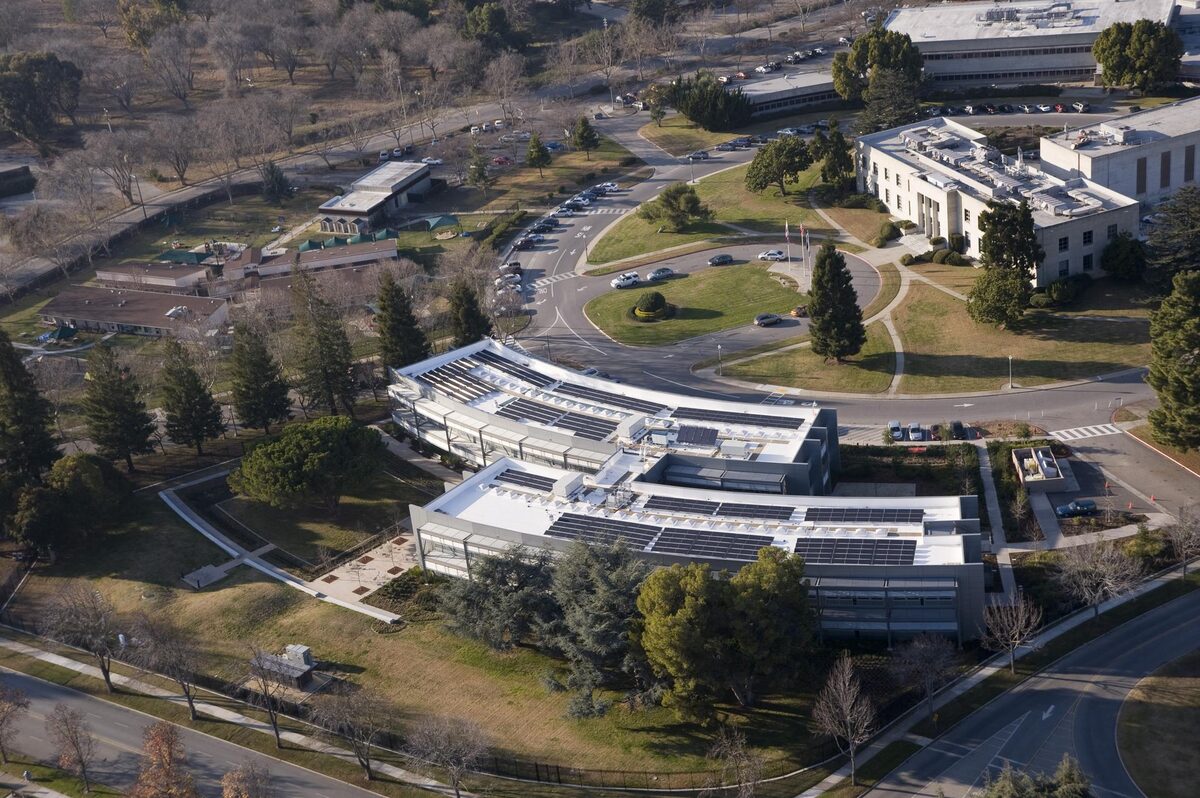
NASA has picked Chugach Intelligence Solutions LLC to run the buildings, labs and utility systems at Ames Research Center under a contract worth roughly $158 million if the agency exercises every option. The agency announced the Ames Facilities Support Services II award on July 17, 2026, setting up a five-year run of operations, maintenance and repair work across one of the agency's more unusual campuses.
Background
Ames sits on Moffett Field in Silicon Valley, and the footprint the winning contractor inherits is larger than the research center itself. According to the AFSS II solicitation NASA issued on SAM.gov in September 2025, the effort covers the 1,960-acre Moffett Field site, which houses the 389-acre Ames campus. Inside that perimeter are administrative offices, laboratories, computing facilities, research and mission support complexes, clean rooms, utility systems, storage areas, shop spaces and paved surfaces.
That inventory explains why facilities support at Ames is not a routine grounds-and-custodial buy. Clean rooms carry contamination-control requirements tied to flight hardware. Computing facilities carry power and cooling loads that do not tolerate an unplanned outage. Utility infrastructure on a site of that age carries deferred-maintenance risk that any bidder has to price without perfect information. The contractor is responsible for keeping all of it running.
The customer base is also broader than NASA. The work supports NASA missions, center research activities, and tenant partners based at NASA Research Park, the partnership area where outside organizations occupy space on the federal campus. A facilities contractor at Ames is therefore servicing a landlord relationship as well as a mission-support one, with tenants who have their own schedules, their own access requirements and no direct contractual relationship with the service provider.
Key Details
The AFSS II contract carries a maximum potential value of approximately $158 million, a figure NASA describes as inclusive of all options and the total indefinite-delivery/indefinite-quantity ceiling. That last clause matters: the $158 million is not a guaranteed revenue stream but a ceiling that combines the priced core work with headroom for task orders that may or may not be issued.
The structure is a hybrid, and each piece does a different job. Core requirements are cost-plus-award-fee, which puts the government on the hook for allowable costs and ties the contractor's fee to periodic performance evaluations rather than to cost underruns. Phase-in is firm-fixed-price, a narrow, well-defined transition scope both sides can bound in advance. Everything episodic — surge repairs, project work, requirements that surface after award — flows through IDIQ task orders.
The period of performance runs five years: a 12-month base period plus four 12-month option periods, with the possibility of a six-month extension. Performance is expected to begin Thursday, Aug. 13, 2026, which gives the incoming team under a month between announcement and start.
Chugach Intelligence Solutions is a subsidiary of Chugach Government Solutions, which is itself a subsidiary of Chugach Alaska Corp., an Alaska Native corporation. Chugach Government Solutions operates through a network of subsidiaries serving federal civilian, defense, intelligence and space customers, and the ANC-affiliated services sector has been a durable presence in federal base and facilities operations for decades.
What It Means for Contractors
The contract type tells bidders more about NASA's risk posture than the dollar figure does. Cost-plus-award-fee on the core scope acknowledges that the government cannot fully specify, in advance, what a 1,960-acre site with aging utility infrastructure will demand over five years. Agencies reach for cost reimbursement when the requirement is real but the cost is genuinely uncertain, and they pair it with award fee when they want leverage over how the work is performed rather than just whether it was delivered. For a contractor, that means the profit conversation is a performance-evaluation conversation, held on the government's schedule, with fee determinations that are largely unilateral. Companies that treat award-fee periods as an administrative formality leave money behind; companies that staff for the evaluation board and instrument their own performance data collect it.
The firm-fixed-price phase-in is worth studying separately. Transition is where facilities recompetes are won or lost, because the incoming contractor is simultaneously badging staff, taking custody of maintenance records, learning which systems are quietly out of tolerance, and absorbing whatever the outgoing team did not document. Pricing that period as firm-fixed-price puts the schedule and cost risk of transition squarely on the contractor. With performance starting Aug. 13, 2026, the phase-in window here is short.
The IDIQ component is the part most likely to determine whether this contract approaches its ceiling. Priced core work is predictable; task orders are not. On facilities contracts, the task-order lane typically absorbs repair work that exceeds routine maintenance thresholds, small construction, and requirements generated by tenants or by new mission needs. NASA framed the hybrid structure as giving it flexibility to address both routine and emergent facility needs. Firms competing for similar work should read the split as guidance on how much of a ceiling is actually addressable and build their capture models on the core, not on the headline.
The tenant dimension deserves attention from anyone eyeing a NASA facilities recompete. Supporting NASA Research Park organizations means the contractor answers to a government customer while serving occupants who are not that customer. Service-level expectations, access control, escort requirements and after-hours response all get more complicated when the population inside the fence includes non-federal entities. Past-performance narratives that show experience managing multi-tenant federal campuses read differently than ones built purely on single-agency installations.
The timing is a reminder of how NASA's center-level services pipeline moves. The solicitation went out in September 2025; the award came in July 2026, roughly ten months later, with performance starting weeks after announcement. Firms tracking NASA facilities and institutional services work should assume that kind of interval between solicitation and award, and should be resourced to stand up a full facilities operation on short notice once the decision lands.
The base-plus-four-options structure also sets the next competitive marker. Absent the six-month extension, the follow-on capture cycle for this scope begins well before the option years run out, and the record Chugach Intelligence Solutions builds in the base year — award-fee scores, task-order execution, tenant satisfaction — becomes the past performance that shapes who is credible when NASA writes AFSS III.
