
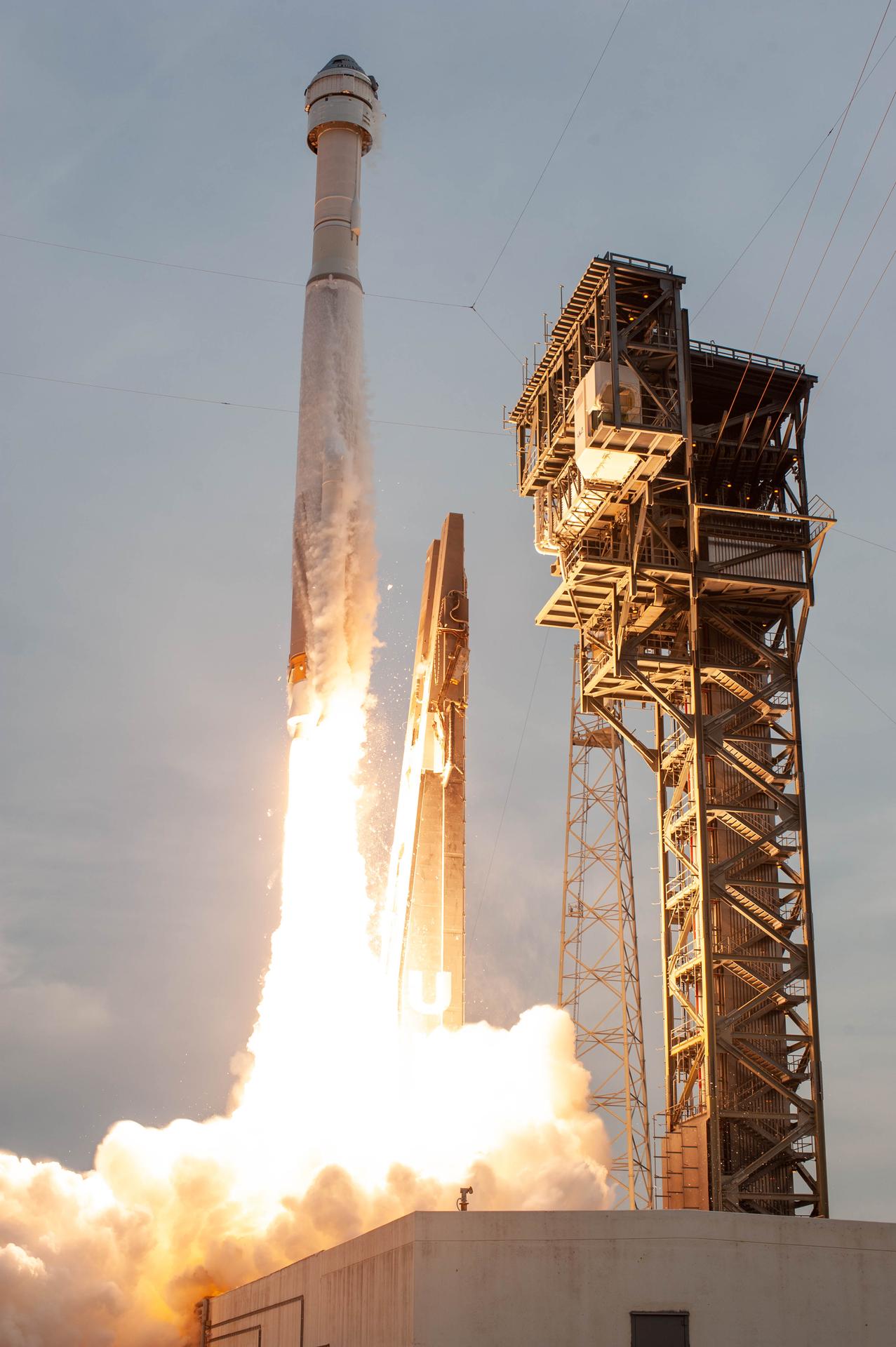
NASA's inspector general has questioned $127.9 million in payments the agency made to Boeing under the Commercial Crew Program, warning that the company's Starliner spacecraft may not earn human-rating certification before 2027 — if it earns it at all. The report, "NASA's Management of Its Commercial Crew Program" (IG-26-011), landed June 30, 2026, and stacks a fresh $127.9 million in questioned costs on top of $43 million flagged in a 2019 audit, while laying out six recommendations for how NASA should steer the rest of the effort.
Background
The Commercial Crew Program was built to end U.S. reliance on Russian Soyuz seats by paying two private companies to fly astronauts to the International Space Station. Boeing and SpaceX both won development-and-services awards, and for years NASA framed the dual-provider structure as insurance: if one vehicle stumbled, the other would keep the crew rotation moving. That framing has held up unevenly. SpaceX's Crew Dragon was certified in 2020 and has since flown 12 crewed ISS missions, becoming the workhorse of the program. Boeing's CST-100 Starliner has taken a far harder road — three flight tests, a string of anomalies, and a Crew Flight Test that ultimately returned to Earth without its crew aboard.
The OIG's latest audit examines how NASA managed Boeing's side of that ledger, and the picture it paints is one of a program that repeatedly absorbed schedule slips and technical surprises while continuing to pay against milestones. The report's central judgment is not that Boeing simply underperformed, but that NASA's own oversight posture — its assumptions about the vehicle and its tolerance for optimistic timelines — helped let the problems compound.
Key Details
The $127.9 million in questioned costs sits at the core of the report. The OIG traces the program's troubles to three unresolved technical issues that surfaced across Starliner's flight tests: helium leaks, propulsion-system failures, and parachute anomalies. As of March 2026, the audit states, the helium leaks and propulsion failures remained open — meaning the defects that helped ground the Crew Flight Test had not been fully closed out even as the report went to print.
The audit is equally pointed on process. NASA did not classify the failed Crew Flight Test as a Type A mishap — the agency's most serious category — until roughly 21 months after the flight. That delay matters because mishap classification triggers formal investigation and corrective-action machinery; a 21-month lag meant the most rigorous review process did not begin until well after the flight.
On root cause, the OIG is blunt: NASA was "overconfident" in Boeing's use of heritage systems — hardware and designs carried over from earlier programs — and accepted unrealistic schedules without demanding sufficient integrated testing. In other words, the agency treated proven-on-paper components as lower-risk than they turned out to be, and did not insist on enough end-to-end testing to catch how those components behaved together. The report questions whether Starliner will ever earn human-rating certification, and pegs the earliest realistic date at 2027. The six recommendations are aimed at tightening how NASA tracks Boeing's remaining work and how it validates readiness before committing crews.
What It Means for Contractors
Starliner is a case study in the risks that ride along with fixed-price development contracts on hard technical programs, and the lessons reach well beyond spaceflight. The first is that "heritage" is not a free pass. Boeing leaned on the argument that Starliner reused mature systems, and NASA accepted it; the OIG concluded that reliance bred overconfidence on both sides. Contractors who market inherited designs as de-risked should expect agency technical teams — and their inspectors general — to probe whether those systems were actually re-tested in the new integrated environment, not just certified in isolation.
The second lesson is that questioned costs are not abstractions. The OIG has now flagged a cumulative $170.9 million across two reports on this single program. Questioned costs do not automatically mean money must be returned, but they create pressure on the contracting officer to reconcile payments against delivered value, and they hand oversight bodies a durable record when a program underdelivers. For any firm on a milestone-payment structure, the takeaway is that continued payments during a troubled development do not insulate the work from later scrutiny.
Third, mishap and incident reporting timeliness is its own compliance surface. The 21-month gap before NASA classified the Crew Flight Test as a Type A mishap became a finding in its own right. Contractors that operate under agency safety and mishap-reporting regimes should read that as a signal: slow classification and reporting can compound a technical failure into a governance failure, and oversight bodies will call out both.
Finally, the report is a reminder of what a functioning dual-source strategy looks like under stress. SpaceX's steady cadence gave NASA the room to keep Starliner in remediation rather than rush it to flight. For agencies weighing single-award versus multiple-award structures on critical capabilities, the Commercial Crew experience is a live argument for redundancy — and for contractors, a reminder that a competitor's reliability reshapes the schedule pressure and scrutiny you face.
