
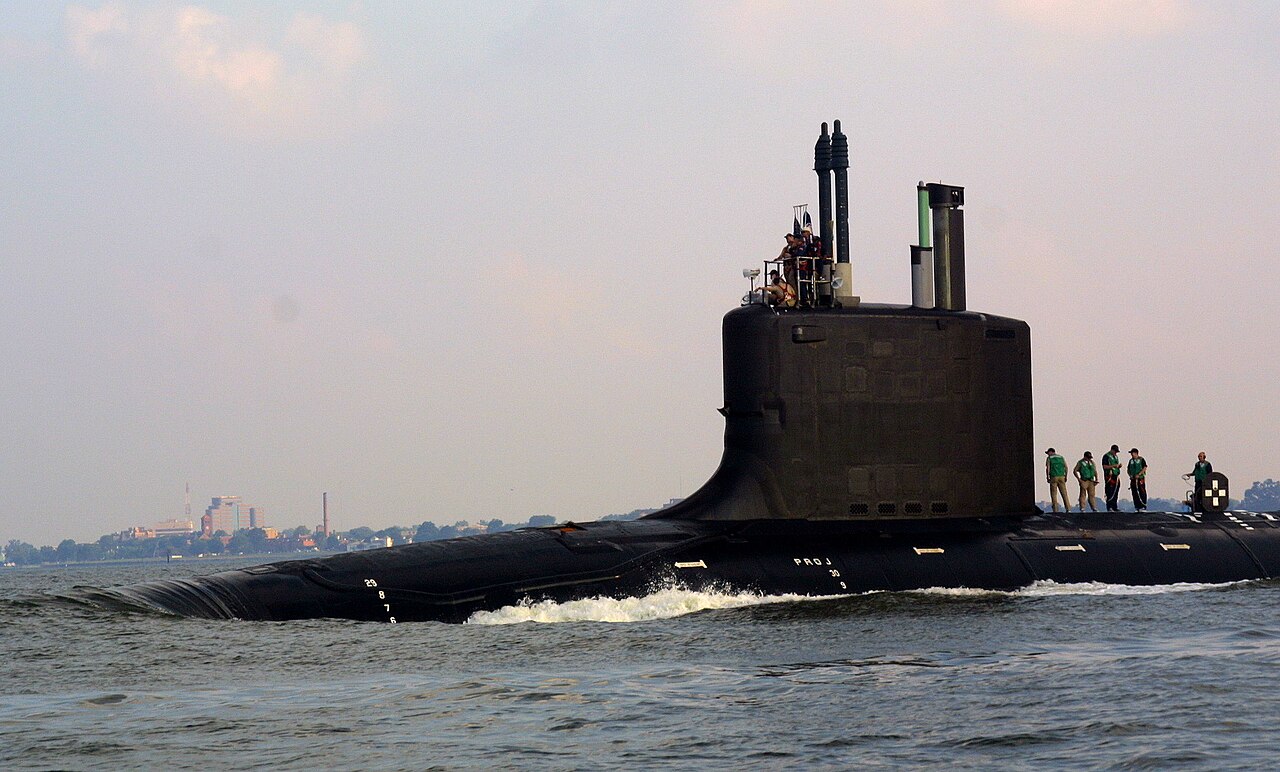
The Navy has added roughly $2.4 billion in potential value to the contract that runs the Naval Nuclear Laboratory, extending the money available to Fluor Marine Propulsion LLC for reactor work spread across three states, WorkBoat reported. The Arlington, Va., company received a $2.409 billion cost-plus-fixed-fee modification for work at the laboratory. Only $597,900 of that total was obligated when the Navy signed it.
The gap between those two numbers drives this action. The modification raises what the government can spend under the contract. It does not hand Fluor $2.4 billion today. Money will move as the Navy funds specific work over the coming years, and the first tranche amounts to about 0.025% of the headline value.
The Navy awarded the modification Sept. 24 and announced it Oct. 23. According to SamSearch's summary of the action, it modifies previously awarded contract N0002418C2130 and continues incumbent work rather than opening a new competition. WorkBoat identifies Naval Sea Systems Command in Washington, D.C., as the contracting activity.
Where the Naval Nuclear Laboratory Work Will Happen
The announcement splits the work among three locations. Pittsburgh carries 47% of the effort, Schenectady, N.Y., carries 45%, and Idaho Falls, Idaho, carries the remaining 8%, according to WorkBoat's summary of the Oct. 23 Navy contract announcements.
That near-even split between Pittsburgh and Schenectady means the modification feeds two large regional workforces at roughly the same level, with Idaho Falls taking a smaller share. For suppliers, the geography matters more than the headline figure. Purchase orders, staffing requests and facility support tend to follow the place of performance, so vendors in western Pennsylvania and New York's Capital Region sit closest to the spending this action authorizes.
WorkBoat grouped the Fluor modification with other Navy actions from the same day, including a $42.8 million award to Vigor Marine for an overhaul and drydocking of the fleet replenishment oiler USNS Henry J. Kaiser, and a shared $98.1 million ceiling increase to a multiple-award contract for submarine safety work. The nuclear propulsion modification dwarfs both.
Why Only $597,900 Was Obligated on a $2.4 Billion Action
WorkBoat broke down the initial funding: "The Navy obligated $597,900 at the time of the award, including $582,062 in fiscal 2026 operations and maintenance funds and $15,838 in fiscal 2026 shipbuilding and conversion funds."
Two funding streams appear in that sentence, and they behave differently. Operations and maintenance money pays for the day-to-day running of programs and facilities. Shipbuilding and conversion money is tied to building and modifying ships. Each appropriation has its own availability period, and once that period closes, the funds can no longer be placed on new obligations.
That point applies here. WorkBoat noted that "The shipbuilding funds expired at the end of fiscal 2026." The Navy awarded the modification on Sept. 24, days before the fiscal year ended on Sept. 30. Obligating the $15,838 in shipbuilding funds before that deadline appears to have let the Navy use money that would otherwise have lapsed for new obligations. The timing reads as a routine end-of-year move to put expiring balances to work before they closed, though no source states the Navy's reasoning.
The small obligation also reflects how large cost-type vehicles operate. A contracting officer can raise a contract's value in one action and then fund it incrementally as Congress appropriates money and the program defines tasks. The $2.4 billion figure sets the room available. The obligations that follow show what the Navy actually commits.
What Cost-Plus-Fixed-Fee Means for Laboratory Spending
Under a cost-plus-fixed-fee arrangement, the government reimburses the contractor's allowable costs and pays a fee set when the contract is negotiated. The fee does not rise if costs climb. The structure suits work where the scope cannot be pinned down well enough in advance for a fixed price, which is common in research, development and laboratory operations.
For the Navy, the tradeoff is cost exposure. The government carries the risk of overruns, and the contractor's profit stays flat whether the work comes in under or over estimate. That puts the burden on oversight: cost accounting systems, incurred-cost audits and the contracting officer's review of what counts as allowable.
For Fluor Marine Propulsion, the arrangement provides a reimbursement path for costs the government accepts, plus a known fee. For its subcontractors, cost-type prime contracts usually bring flow-down clauses on cost principles, audit access and accounting standards, so a vendor supporting this work should expect more financial scrutiny than it would see under a commercial purchase order.
How the Contract Ceiling Remains Unclear
Neither source GovConFeed read states the total lifetime ceiling of contract N0002418C2130. Secondary sites publish conflicting figures, and GovConFeed has not confirmed any of them in a primary document, so this article does not report a total. What the record does establish is narrower: one modification worth $2.409 billion, awarded Sept. 24, with $597,900 obligated at signing.
Firms tracking this vehicle should rely on the modification-level figures in the Navy's contract announcement and on obligation data as it posts, rather than on aggregated ceiling estimates that disagree with one another.
What It Means for Contractors
The modification indicates that Naval Nuclear Laboratory spending will keep flowing through the existing Fluor Marine Propulsion contract instead of a new competition in the near term. Companies that want a share of that work will reach it through subcontracts and supplier agreements with the prime, not through a fresh solicitation.
Small and mid-sized firms near Pittsburgh and Schenectady have the clearest opening, since those two locations account for 92% of the work. Idaho Falls suppliers face a smaller but still real pool at 8%.
Vendors pursuing this work should prepare for the demands that come with cost-type flow-downs. That means accounting systems able to segregate and support allowable costs, readiness for audit, and familiarity with the cost principles the prime will pass down. Firms without those systems in place may find themselves limited to fixed-price commodity orders rather than service or engineering subcontracts.
Watch the obligation trail. The $597,900 at award is a starting point, not a forecast. Incremental funding actions over the coming fiscal years will show how fast the Navy draws on the new $2.4 billion in room, and those actions are the better indicator of when subcontract opportunities will open.
Finally, the end-of-year timing offers a lesson for anyone holding expiring appropriations or chasing them. The Navy moved the modification in the last week of fiscal 2026 and attached shipbuilding funds that were about to expire. Contractors who understand when their customers' money lapses can better anticipate when awards and modifications will land.
