
Bridge watchstanders on five Navy destroyers are about to get software that fuses their camera and infrared feeds into one picture and flags ships on dangerous courses, and the Navy has set the system up to be updated at sea rather than in port. Applied Intuition announced on October 22, 2026 that the Navy awarded it what the company calls a "first-of-its-kind production contract" to deploy AI data infrastructure across the manned and unmanned fleet. Breaking Defense reported the award at $25 million, a figure the company's own release does not state.
The first capability to ship under the deal is the Intelligent Perception System (IPS), which will go aboard five Arleigh Burke-class destroyers under the DPRM Robotic and Autonomous Systems and PAE Mission Systems initiative. Breaking Defense reported that the deployment could later expand "across the fleet," according to the company.
What the Intelligent Perception System Does on a Destroyer Bridge
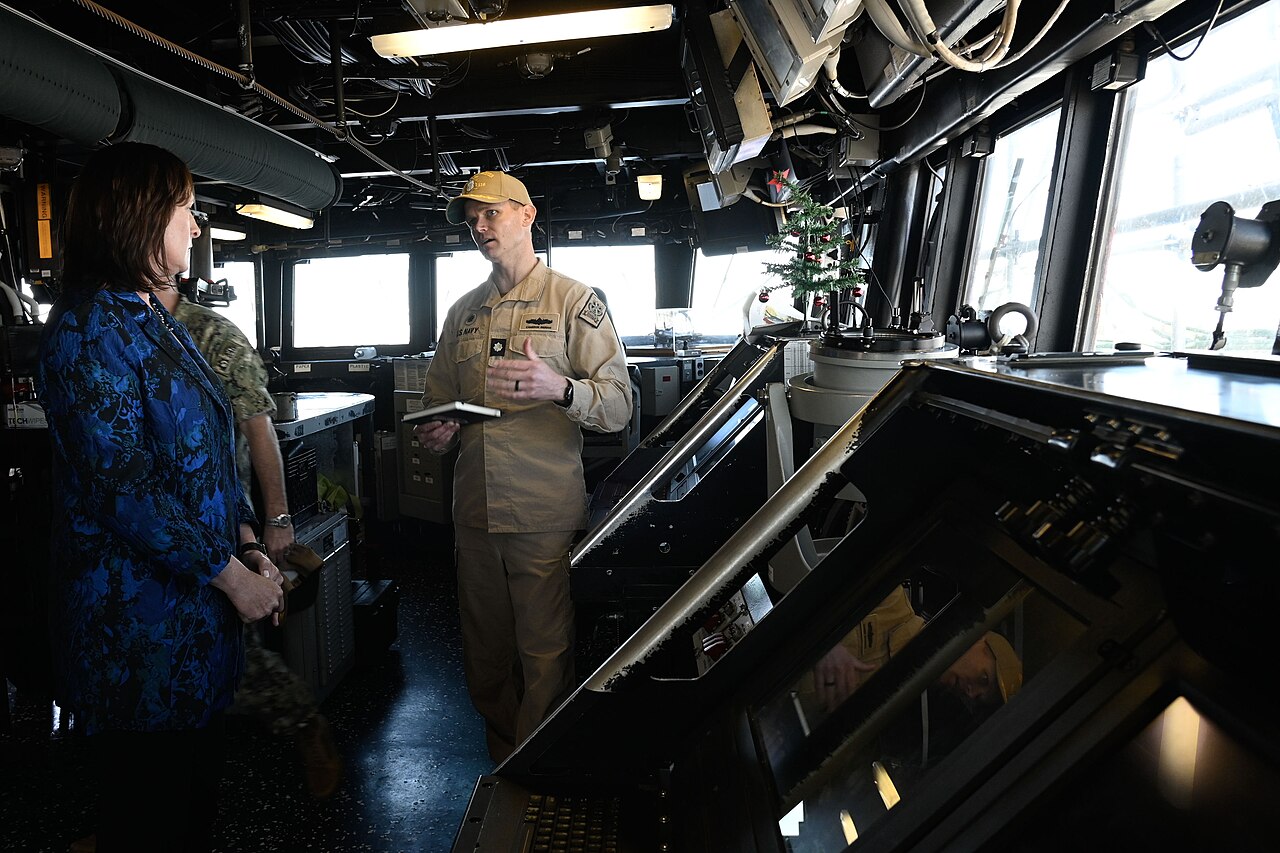
IPS runs on Applied Intuition's Acuity perception platform. According to the press release, the system "performs real-time detection, tracking and classification using shipboard cameras and infrared sensors, presents operators with visual overlays and automated alerts for vessels on dangerous trajectories, and continues collecting operational data to improve model performance."
Breaking Defense described the core problem IPS addresses: many of the cameras and infrared sensors it pulls from "were never designed to work together," and the system synthesizes them into a single picture for sailors in near real time. The outlet tied the collision-alert feature to the 2017 collisions involving the USS Fitzgerald and McCain, which killed 17 sailors and severely damaged both ships.
The company says IPS presents an integrated display of detected vessels, their classifications and predicted trajectories to both the bridge and the combat information center. It also creates persistent, machine-readable records of surface contacts for pattern-of-life analysis and fleet-wide intelligence sharing. Those records replace what the release describes as "manual transcription from paper logs."
Peter Ludwig, Applied Intuition's co-founder and chief technology officer, framed the award around that manual baseline. "Today’s surface warfare picture depends on brittle manual processes, and data is siloed across networks and paper logs," Ludwig said in the release. "IPS is the first capability sailors will see, built on an underlying platform that lets the Navy move at software speed."
Why Over-the-Air Updates at Sea Change the Upgrade Cycle
The second job IPS performs matters as much as the first. The system records sensor data aboard ship and, when bandwidth is available and security conditions permit, transmits it back to shore, Breaking Defense reported. A land-based component then analyzes the collected data and uses it to train improved AI models for both manned and unmanned vessels. The press release adds that IPS "manages limited satellite bandwidth for data sharing."
Updated models then flow back to the ships. "Over-the-air software updates enable deployed AI models to evolve continuously without requiring ships to return to port," the company said. Breaking Defense noted that this approach could allow multiple refresh cycles within a single deployment, instead of waiting for a maintenance and modernization period pierside.
The release presents IPS as the first application on reusable infrastructure. The company says onboard compute, sensor integration, data pipelines and over-the-air mechanisms "are reusable across any perception or detection model," which would turn future AI deployments into software updates rather than new integration projects. Ludwig called the company's Data Engine "an operating system for AI on warships."
From the DECK Prototype to a Production Award
The production contract follows the Data Edge Collection Kit (DECK) prototyping program. According to Applied Intuition, DECK "established the Navy’s first large-scale computer vision data collection infrastructure" and collected "thousands of hours of useful data for model training." Breaking Defense reported that DECK was tested on at least one Navy vessel earlier this year.
Jason Brown, a general manager at Applied Intuition, told Breaking Defense that "DECK was massively successful." He added: "It collected data, transported it — all with commercial technology — and did it securely and within Navy operational constraints."
The company describes the move from DECK to IPS as a template for how the Navy's Warfighting Data Ecosystem can go from collecting data to fielding operational capability. DECK showed that ships can collect training data; IPS puts production AI models aboard destroyers.
A Self-Driving Car Supplier Moves Into Shipboard AI
Applied Intuition started in self-driving cars, which Breaking Defense says is still a major part of its business before it branched into defense. The company, founded in 2017 and based in Sunnyvale, California, lists automotive, defense, trucking, construction, mining and agriculture as its markets.
Brown told Breaking Defense the Navy problem resembles the driverless-car problem. "The amount of data the Navy collects, and the operating environments it is constantly engaged in, [are] very similar to what we do gathering data to develop driverless cars," he said. "We built those data engines for our commercial business and applied the same technical approach to naval operations."
Breaking Defense placed the award alongside Defense Secretary Pete Hegseth's push for rapid upgrades and the Pentagon's interest in building on commercial technology rather than waiting for bespoke military developments. The press release makes the same case in its own terms, stating that its Data Engine solution "is adapted to the Navy’s unique requirements from commercial, production autonomy technology."
What It Means for Contractors
The award shows a prototype-to-production path that other AI and autonomy vendors can study. Applied Intuition used a data-collection prototype to build a training corpus on Navy ships, then turned that into a production deployment of trained models on five destroyers. Companies with commercial perception or autonomy products should note that the Navy bought the infrastructure, meaning onboard compute, data pipelines and over-the-air update mechanisms, along with the first application.
That structure matters for anyone hoping to sell a future perception or detection model to the surface fleet. If the Navy treats Applied Intuition's onboard stack as reusable plumbing, as the company describes it, later capabilities may need to run on that infrastructure, which makes integration and data-format compatibility a practical requirement for new entrants.
Several details remain undisclosed in the public sources: the contract vehicle, period of performance, option structure and the specific destroyers involved. The company's release does not state a dollar value; the $25 million figure comes from Breaking Defense. Firms tracking surface-fleet AI work should watch for expansion beyond the initial five Arleigh Burke-class ships, which the company said could extend "across the fleet," and for any follow-on solicitations under the PAE Mission Systems and DPRM Robotic and Autonomous Systems portfolios.
Suppliers of shipboard cameras, infrared sensors and satellite communications should also take note. IPS fuses sensors that were not designed to work together and depends on limited satellite bandwidth to move data ashore, so sensor interoperability and bandwidth management are now part of how the Navy fields AI at sea.
