
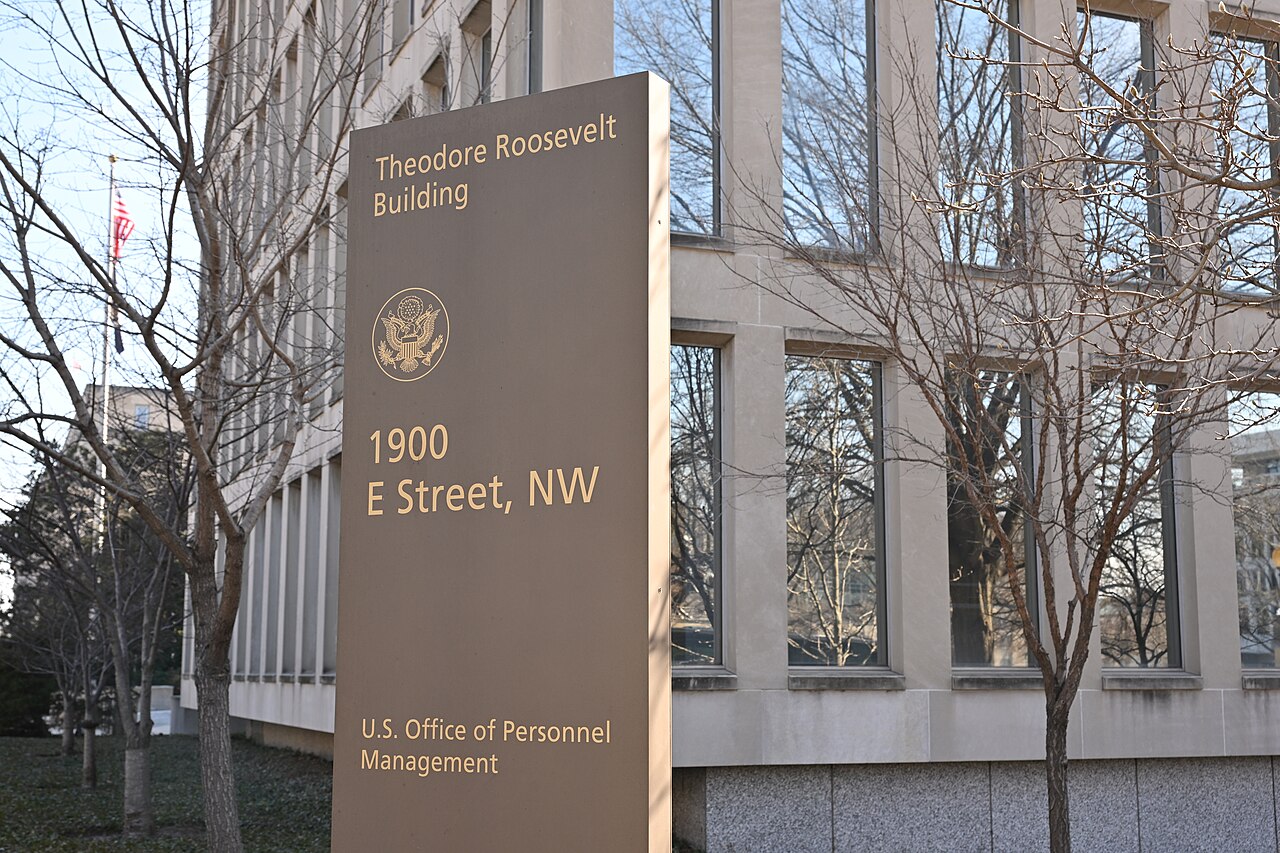
Federal employees in General Schedule jobs will no longer have to sit out a full year in grade before they can be considered for a promotion. In a final rule published in the Federal Register on Oct. 19, the Office of Personnel Management eliminated the 52-week time-in-grade (TIG) restriction for competitive-service GS positions, effective Jan. 19, 2027. Agencies that want to keep a waiting period can still impose one, but they will now have to justify it in their own merit promotion plans.
Under the old rule, an employee generally could not advance to a covered position at GS-6 or above without completing 52 weeks in a position no more than one grade lower, or two grades lower for certain two-grade-interval lines of work. "This final rule removes that requirement," OPM wrote. The rule, RIN 3206-AP05 under docket OPM-2026-0067, removes and reserves subpart F of 5 CFR part 300 and makes conforming changes to parts 315, 316, 352 and 410.
Why OPM Says Removing the 52-Week Bar Is Not a Promotion Guarantee
OPM spent much of the final rule explaining what the rule does not do. Employees still have to meet OPM qualification standards, specialized-experience and education requirements, classification requirements and their agency's merit promotion procedures. "This rule does not create an entitlement to promotion, does not waive specialized-experience or education requirements, and does not alter statutory qualification, classification, or competition requirements under 5 U.S.C. chapter 33, 5 CFR part 335, or OPM's qualification standards," the agency wrote in its executive summary.
The agency framed the change as one of eligibility rather than outcome: eliminating TIG "creates eligibility for consideration," and it does not require agencies to act on promotion requests on demand or change their discretion over classification, funding or whether higher-level work exists. The rule also leaves untouched within-grade increases, Quality Step Increase authority, veterans' preference and the Veterans Employment Opportunities Act, collective-bargaining obligations under 5 U.S.C. chapter 71, and the merit system principles and prohibited personnel practices in 5 U.S.C. 2301 and 2302.
Agencies may still set job-related prerequisites, including a specified time in grade, demonstrated competencies, required training or certifications, and documentation, as long as those conditions are consistently applied and written into the agency's merit promotion plan under 5 CFR 335.103. OPM told agencies that currently rely on the soon-to-be-removed section 300.606 for agency-specific service requirements to confirm those requirements are documented in their merit promotion plans before the effective date.
How 75 Comments Shaped a Rule OPM Barely Changed
OPM first floated the change in a May 28 proposed rule. "The Office of Personnel Management (OPM) proposes eliminating the Time-in-Grade (TIG) restriction on advancement to competitive service positions in the General Schedule," that notice began. The comment period ran through July 27.
OPM received 75 comments, and 41 of them supported eliminating TIG. The final rule's tally of the rest is not internally consistent: its executive summary counts 22 comments proposing conditions or safeguards and 11 opposing elimination, while the digest of public comments counts 23 and 12. Either way, OPM said it is finalizing the rule "substantially as proposed."
Supportive commenters described employees who had already been assigned higher-graded work, and in some cases received Quality Step Increases and special contribution awards, while remaining ineligible for promotion solely because of the calendar. Opponents argued that TIG was an objective, easy-to-administer check on rapid promotion and favoritism.
Several commenters asked OPM to replace TIG with governmentwide standards, review boards or reporting mandates for accelerated promotions. One proposed keeping the 52-week baseline with a 26-week waiver for top-rated employees, an OPM-certified assessment and independent review board approval, phased in over 24 months. OPM declined all of those, saying the rules for how agencies evaluate, rank and select candidates live in 5 CFR part 335 and any change there would require separate rulemaking. On reporting, the agency wrote that "A new, standing governmentwide reporting requirement tied specifically to promotions completed before 52 weeks would itself function as an administrative burden similar in kind to the TIG-related tracking and approval processes this rule removes."
OPM also rejected a mandatory 24-month phased implementation and other delayed or conditional effective dates, choosing an effective date 90 days after publication. It said it will issue implementation guidance covering, among other things, the disposition of existing training agreements, since the rule removes the requirement for OPM approval of agreements that provide for consecutive accelerated promotions. The agency defended the prospect of differing rules across agencies, writing that "Variation across agencies that reflects genuine differences in occupations and missions is a feature of a merit promotion system administered by agencies subject to governmentwide standards, not a defect in it."
What the $3.1 Million Price Tag Covers
OPM estimates each agency will spend about 250 hours updating its merit promotion plan in the first year, at a loaded labor cost of $156.30 per hour, or roughly $39,075 per agency and about $3,126,000 governmentwide. One commenter argued the figure understates costs for large departments with multiple components and bargaining units. OPM acknowledged those departments may spend more than the average but kept the estimate.
The rule was designated a significant regulatory action under Executive Order 12866 and reviewed by the Office of Management and Budget. "This rule is considered an Executive Order 14192 deregulatory action," OPM wrote. The OPM director certified that the rule will not have a significant impact on a substantial number of small entities "because it applies only to Federal agencies and employees."
What It Means for Contractors
The rule amends only OPM's personnel regulations in 5 CFR and imposes no obligations on contractors. Its effect on industry is indirect and runs through the federal workforce that buys from and oversees contractors.
Starting Jan. 19, 2027, agencies will be able to promote GS employees as soon as they meet qualification standards and their agency's written promotion criteria, rather than after a fixed 52 weeks. How quickly that happens depends on each agency, because OPM left agencies free to keep time-based prerequisites in their merit promotion plans. Companies that track customer organizations should expect agencies to revise those plans, and to handle any collective-bargaining obligations, before the effective date, with promotion practices that may diverge from one department to the next.
