
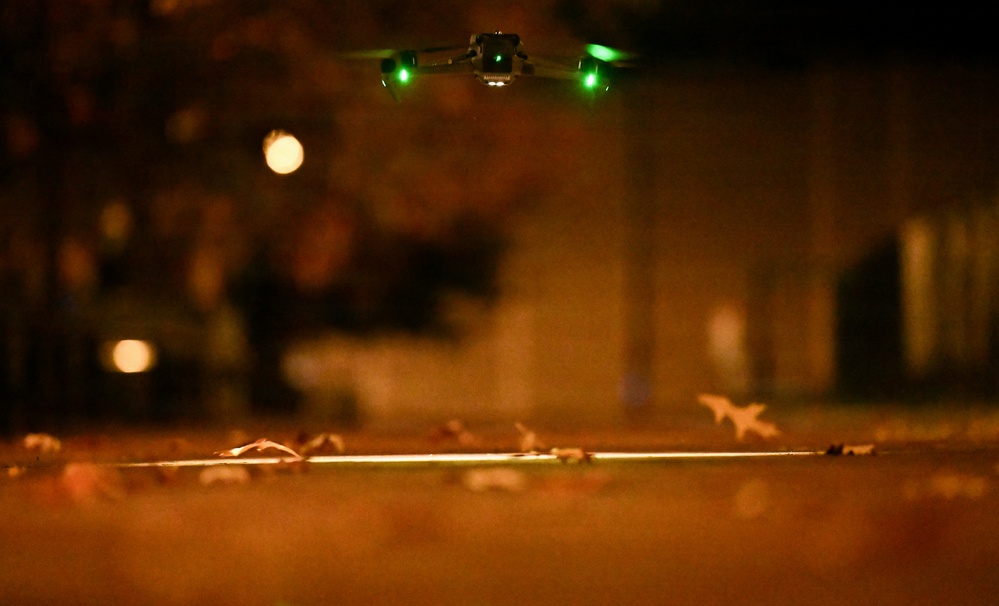
Pentagon Chief Technology Officer Emil Michael warned in a public address at the Hudson Institute in June 2026 that the Department of Defense will cut traditional high-cost weapons programs — what he characterized as "exquisite" systems — and redirect funding toward drone and autonomous systems production if Congress's reconciliation bill does not provide sufficient additional defense funding, according to Breaking Defense coverage of the remarks. Michael's statements represent the most direct public articulation of the senior DoD leadership's intention to prioritize unmanned and autonomous systems over legacy high-cost platforms as a deliberate investment strategy, and signal that this prioritization may result in program cancellations or significant reductions for traditional manned systems that have dominated defense budgets for decades.
The remarks come as Congress is debating a large reconciliation package that includes substantial defense spending above the levels provided in the regular appropriations process. DoD has been explicit that the additional reconciliation funding — estimated at $150 billion or more in some versions of the legislation — is essential to achieving the pace of defense investment the department views as necessary given the current threat environment, particularly the growth of Chinese and Russian military capabilities. If the reconciliation package passes at the levels DoD has requested, the additional funding would enable continued investment in both traditional platforms and the new drone and autonomous systems priorities. If it fails or is significantly reduced, Michael's warning suggests DoD will make hard choices that favor the emerging technology priorities over legacy systems.
The Pentagon's Drone and Autonomous Systems Strategy
The Pentagon's emphasis on drones and autonomous systems reflects a fundamental reassessment of what military capability the United States needs to compete effectively against near-peer adversaries, particularly in the context of potential conflict with China in the Pacific. High-end manned platforms — fifth-generation fighters, nuclear-powered submarines, aircraft carriers, large surface combatants — are extraordinarily capable but also extraordinarily expensive, difficult to produce rapidly in quantity, and difficult to replace when lost in combat. A small number of losses of multi-billion-dollar platforms could significantly degrade military capability in ways that take years and billions of dollars to reconstitute.
Drone and autonomous systems offer a different force structure calculus. Lower unit costs enable larger numbers, distributed operations, and an acceptance that individual platforms may be attrited in ways that are unacceptable for high-cost manned systems. Mass, when combined with precision and connectivity, can compensate for individual platform capability limitations. The conflict in Ukraine has provided powerful evidence of this dynamic, with both sides deploying drones in numbers and at rates that would have seemed implausible before the conflict began, and with the effective use of relatively inexpensive systems to achieve results that previously required expensive precision weapons or direct human presence.
DoD's Replicator initiative — launched in 2023 to field thousands of autonomous systems across multiple domains — represents the most concrete expression of this strategy to date. Replicator has faced funding and program execution challenges, and Michael's remarks at the Hudson Institute appear partly intended to signal that the department's commitment to this direction is firm regardless of Replicator's specific execution challenges, and that the reconciliation funding debate has raised the stakes for the strategy's implementation timeline.
Traditional Programs at Risk
Michael's warning that DoD will cut "exquisite" traditional programs if reconciliation funding is insufficient has obvious implications for the defense industrial base. The programs most vulnerable to reductions in this scenario are expensive, slow-to-produce platforms that do not contribute to the autonomous systems strategy — large manned aircraft, high-end surface ships, and certain ground systems where the capability premium of expensive platforms is not viewed as essential to the pacing threat scenarios DoD is prioritizing. Programs that have already faced cost growth, schedule delays, or performance shortfalls are most vulnerable, as those issues reduce their political and operational defensibility against a straight budget trade-off with drone programs that are politically popular and aligned with the current strategic narrative.
The specific programs that would be candidates for reduction or cancellation if reconciliation fails have not been publicly identified, and Michael's remarks stopped short of naming them. However, the Pentagon's recently released National Defense Strategy's emphasis on the China pacing threat, the Indo-Pacific theater, and long-range precision effects provides a framework for inferring which programs align most closely with current priorities and which may be viewed as less essential when hard trade-offs must be made. Programs designed for European theater scenarios, close-range ground combat, or platform types that are not contributing to the autonomous systems strategy are likely to be examined first.
What It Means for Contractors
For defense contractors, Michael's Hudson Institute remarks are an important strategic signal that should inform long-term positioning and investment decisions. The senior DoD leadership has now stated publicly that a fundamental shift in defense investment priorities — away from traditional high-cost exquisite platforms and toward affordable, producible drone and autonomous systems — is their intent, and that this shift may accelerate if reconciliation funding falls short. Contractors who have built their businesses around traditional platform programs need to assess the vulnerability of those programs to the stated priority shift and develop diversification strategies that position them for the growing drone and autonomous systems market.
For contractors already active in drone and autonomous systems — propulsion, airframes, sensors, communications, software and autonomy, and logistics — Michael's remarks signal continued and potentially increased investment. The key competitive differentiators in this market are not just technical capability but the ability to produce at scale, at affordable cost, and with supply chain resilience that can sustain production rate increases on short notice. Traditional defense industrial base practices — small production runs, high-cost manufacturing, lengthy qualification processes — are poorly aligned with the scale and speed requirements of DoD's autonomous systems ambitions.
The reconciliation funding outcome will be a critical near-term signal for the entire defense industrial base. If the full funding passes, it may relieve the immediate pressure for hard choices between traditional and emerging systems. If it is reduced or fails, the trade-off choices Michael warned about may materialize quickly, reshaping program priorities and funding allocations in ways that could significantly affect existing program of record investments. Monitoring the legislation's progress and developing scenarios for both outcomes is prudent planning for any firm with significant defense revenue tied to specific platform programs.
