
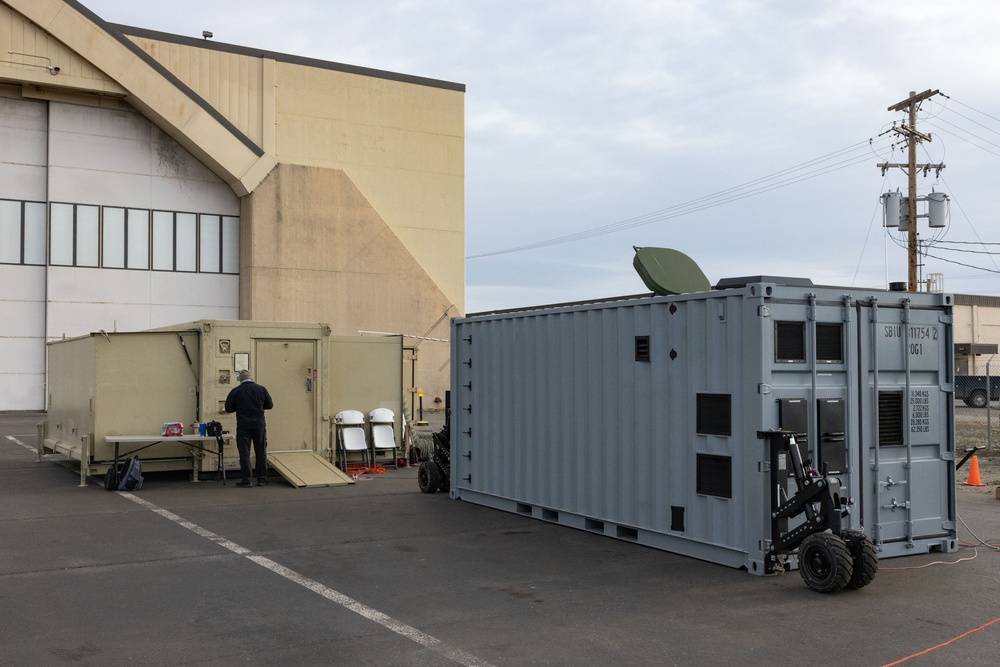
The Pentagon wants to stop losing capable suppliers at the door of the classified world. On Sept. 3, the Department of War announced the Secure Space Network, a program to design, produce and deploy roughly 50 mobile Sensitive Compartmented Information Facilities, plus the related information systems inside them, at locations around the country. The goal is to let small and nontraditional companies compete for classified development, collaboration and production work without first spending years and millions of dollars building an accredited room of their own.
The Office of Industrial Base Growth, inside the Office of the Under Secretary of War for Acquisition and Sustainment, leads the effort. The Space Development Agency is a partner, and the department frames the program as part of its broader Acquisition Transformation push.
Why the Pentagon Is Buying 50 Mobile SCIFs
The department's own release lays out the problem bluntly. "Many companies with technologies relevant to national security do not have ready access to accredited facilities where classified information can be discussed, developed and integrated," it states. "For emerging and non-traditional suppliers seeking to work with the Department, establishing fixed classified infrastructure can require significant time and investment, creating a barrier to entry and business expansion."
That barrier has a price tag. Federal News Network, citing the SCIF provider Secom, reported that construction of a fixed facility "may top $3 million." Mobile alternatives are cheaper by roughly an order of magnitude: FNN cited Universal Modular's figures of "$310,000 for a microfacility to $500,000 for a 40-foot container."
James R. Mismash, Deputy Assistant Secretary of War for Industrial Base Growth and Director of the Office of Small Business Programs, put the rationale in terms of competition. "We must make it easier for capable companies to contribute at every level of the mission. Industry has identified access to classified environments as a major barrier, and the Secure Space Network directly addresses that challenge by opening the door to classified work for more companies," he said in the release.
He added: "With strong partnership across the agency and support from Congress, this effort will strengthen our supplier base and help deliver the capabilities our warfighters need faster and at greater scale."
Where the Units Will Go and Who Can Use Them
The mobile facilities will be positioned at military installations, at what the release calls "industry-focused sites such as APEX Accelerators," and at other mission-relevant locations. APEX Accelerators, the department-funded counseling network formerly known as Procurement Technical Assistance Centers, already serve as the first stop for many small firms trying to navigate defense contracting.
The mobile units are not meant to stand alone. According to the release, "Mobile secure facilities can be rapidly deployed, while fixed facilities can provide enduring secure collaboration capacity. Together, these capabilities will drastically expand where government and authorized industry partners can conduct classified work."
The department has not published the dimensions of the units, the categories of work they will support, the program's funding or a fielding timeline. FNN noted that "It's unclear how large the SCIFs might be or what work they'll be able to accommodate."
A mobile SCIF also does not change who is allowed inside. Users still need the appropriate clearance, a completed background investigation and a need-to-know for the specific program. The Secure Space Network addresses the facility problem, not the personnel-security problem, and firms without cleared staff will still have work to do before the door opens.
Surge Capacity Beyond the First 50
The number 50 is a starting point rather than a ceiling. The release says the program "will also establish scalable production capacity for the mobile units, providing the Department with a surge-capable pathway for rapidly increasing accredited secure workspace capacity across the defense industrial base." In other words, the department is buying not just a fleet but a production line, so that additional units can follow when a new program or a new regional cluster of suppliers needs them.
The release ties that structure to the Space Development Agency's involvement. It says the program "advances Acquisition Transformation by using an agile, iterative approach to reduce risk and accelerate delivery, in partnership with Space Development Agency." The release does not spell out SDA's exact role, but the language of iteration and rapid delivery aligns with the incremental, cadence-driven approach SDA is known for in its satellite programs, and it signals that the department intends to field units in rounds rather than wait for a single finished design.
How This Fits With the Bridge Program's Fixed Facilities
The mobile SCIF program is the second classified-access announcement in as many months. FNN reported that last month the department "announced it will build four shared classified facilities for commercial vendors, including one in Pittsburgh, as part of its new Bridge Program," and that the same initiative "is also pursuing nine privately owned classified facilities in Austin, San Francisco, Boston, Charleston, Chicago, Cleveland, Louisville and New York."
Taken together, the two efforts describe a layered approach: fixed shared facilities in major technology hubs, privately owned facilities in additional cities, and a mobile fleet that can fill the gaps in between or move to where a specific program needs it. The release describes the intended result as "a larger and more capable supplier base with greater opportunities to move from unclassified engagement into classified development and production, increasing competition across the industrial base."
What It Means for Contractors
For small and nontraditional suppliers, the near-term change is a lower cost of entry into classified work. A company that has been performing unclassified prototyping or component work can now plan for a path into classified development without budgeting for its own SCIF construction. Firms near APEX Accelerator sites and installations that receive units will benefit first, and companies should ask their regional APEX counselor whether a unit is slated for their area.
The clearance bottleneck remains. A mobile SCIF is useless to a firm with no cleared employees, so companies eyeing classified work should start facility-clearance sponsorship conversations with their contracting officers or prime partners now rather than waiting for a unit to arrive. Access rules, scheduling and accreditation timelines are also still unpublished, so the practical availability of the units remains an open question.
For the SCIF-building industry, the program is a direct opportunity. The department intends to establish repeatable production capacity for the mobile units, which means a manufacturing and sustainment pipeline beyond the initial 50. Modular-construction firms, secure-communications integrators and accreditation-support contractors should watch SAM.gov for solicitations from the Office of Industrial Base Growth and SDA.
Sources
- Department of War Launches Secure Space Network to Break Down Barriers to Classified Defense Work
- Pentagon plans fleet of portable SCIFs (Federal News Network)
- Pentagon kicks off pursuit of mobile SCIFs to aid defense companies (DefenseScoop)
- You get a SCIF, you get a SCIF: Pentagon unveils 'Secure Space Network' (Breaking Defense)
