
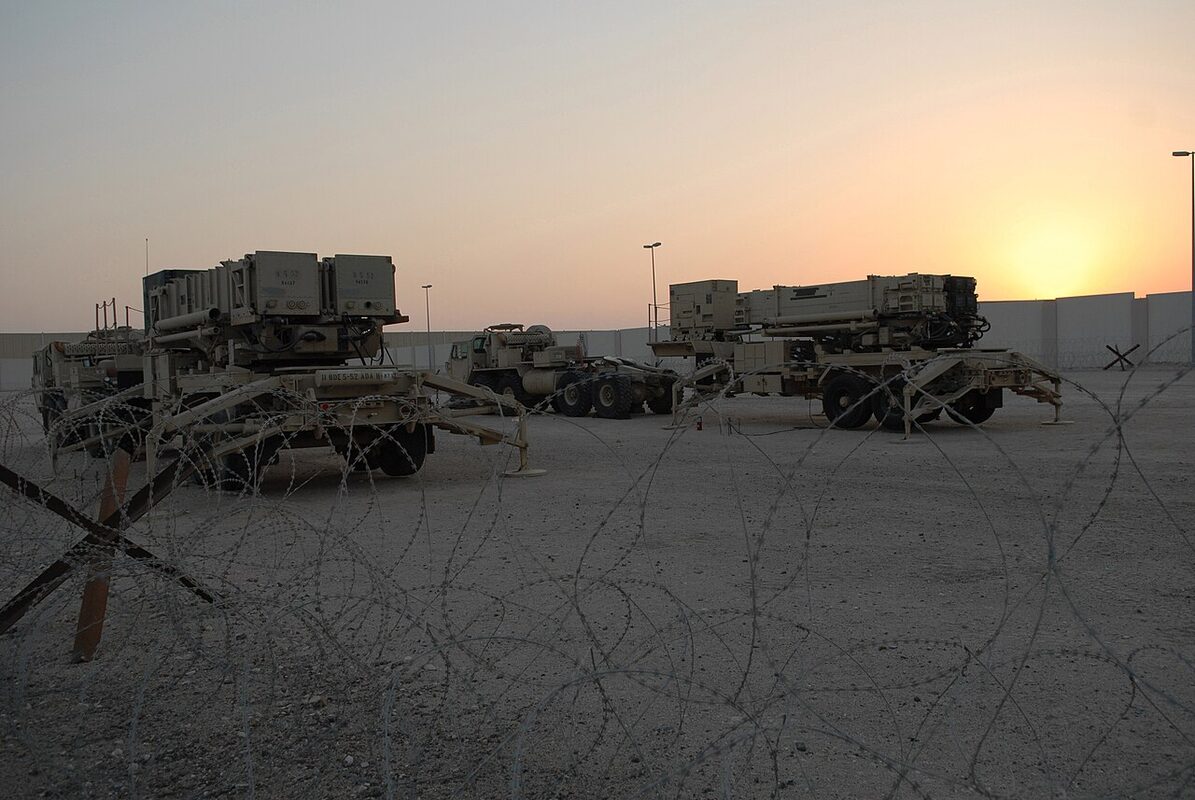
NATO's eastern flank is getting its own repair shop for the Patriot system's most capable interceptor: the Pentagon has picked Poland to host a new European maintenance, repair and overhaul center for Lockheed Martin's PAC-3 missiles, Defense News reported. The decision gives Warsaw a sustainment role it competed hard for and hands Germany, the Netherlands and Sweden the job of feeding the site with parts. The Defense Department announced the selection on Oct. 27, 2026, during NATO's Conference of National Armaments Directors.
The announcement came through a statement attributed to Michael Duffey, the undersecretary of defense for acquisition and sustainment. It did not name a contract value, a specific Polish location or an opening date, and none of those details appear in the published coverage.
What the Polish PAC-3 Hub Will and Will Not Do
The facility is a sustainment site, not a factory. According to Breaking Defense, the Pentagon announcement said the center will provide maintenance, repair and overhaul for PAC-3 missiles in a way that will "dramatically shorten turnaround times and further secure critical supply lines." The same outlet reported that the Poland facility "will not be responsible for manufacturing PAC-3 missiles."
The department framed the hub in readiness terms. "The regional hub will significantly enhance operational readiness across Allied air and missile defense forces, ensuring rapid surge capacity during crisis and reinforcing credible collective deterrence along NATO's Eastern Front," the announcement read, as quoted by Breaking Defense.
Duffey cast the decision as a signal of allied commitment. "By investing national resources to establish this critical sustainment capability on NATO's Eastern Front, Allies are sending a clear message: the Alliance is united, serious about deterrence, and ready to back our words with action," he said in the statement, as quoted by Defense News.
The phrase "investing national resources" suggests Poland and its partners will carry a share of the cost, though neither outlet reported how the bill will be split between Warsaw, the participating allies and the United States.
Why Germany, the Netherlands and Sweden Run the Supply Chain
The Pentagon built the hub around a multinational parts network rather than a single host-nation operation. Defense News reported that the regional hub "will rely on transatlantic industrial cooperation, with critical supply chain integration to be led by Germany, the Netherlands and Sweden." Breaking Defense described the arrangement as a partnership among the United States, Lockheed Martin, Poland, Germany, the Netherlands and Sweden.
That division of labor puts the repair bench in Poland while spreading component flows across three other European industrial bases. "Fusing Allied investment with world-class American defense technology directly translates transatlantic industrial capacity into combat power — keeping launchers loaded, sustaining critical operations, and ensuring NATO Allies are prepared to fight tonight," the Pentagon wrote in its announcement, according to Breaking Defense.
How Poland Beat Other Bidders for the Site
Warsaw treated the hub as a prize. "Poland has sought very hard to have these competencies and infrastructure in Poland. We were contending against several ambitious competitors," Polish Prime Minister Donald Tusk said on Tuesday, according to Defense News. Neither outlet identified the competing countries.
The selection did not come out of nowhere. Breaking Defense reported that Polish Defense Minister Władysław Kosiniak-Kamysz said in a July social media post that Poland would be part of an agreement to bring a PAC-3 servicing facility to Europe. At that point, the location had not been settled.
Poland's own Patriot buildup gives it a direct stake in local sustainment. In March 2018, Poland signed a contract worth around $4.75 billion for two Configuration 3+ batteries, Defense News reported. The country launched the program's second phase in May 2022, asking the United States to deliver six more Patriot batteries with related equipment. In December 2025, the Polish government said the first two batteries had reached full operational readiness.
A Second Patriot Industrial Site in Europe, After Germany's PAC-2 Plant
The Polish hub joins existing Patriot industrial work on the continent. Breaking Defense reported that construction began in late 2024 on a facility in southern Germany that plans to produce more than 1,000 PAC-2 interceptors for NATO allies. Germany, the Netherlands and Spain established that plant in a deal worth nearly $6 billion.
The bigger question for European capitals is production of the newest interceptor. Defense News reported that European allies are advancing talks with Washington on enabling local production of PAC-3 MSE interceptors to address supply chain shortfalls, and that Germany, Poland and Ukraine, among others, have lobbied for the right to build the missiles at domestic facilities. German and U.S. defense leaders have also signed an agreement positioning Germany as an additional production hub for scarce American defense equipment, the outlet reported.
Breaking Defense noted that the maintenance announcement follows earlier remarks from Pentagon officials that they are looking at options for licensing production of Patriot interceptors to Ukraine amid its war with Russia. The Poland decision does not settle any of those production questions, but it moves a piece of the PAC-3 lifecycle onto European soil.
What It Means for Contractors
For Lockheed Martin, the hub extends the PAC-3 franchise into a European sustainment line that sits closer to the European armies that field the system. The Pentagon's emphasis on "rapid surge capacity" signals that turnaround time, not just production rate, is now a metric the department wants to move.
For U.S. suppliers further down the chain, the role assigned to Germany, the Netherlands and Sweden matters. Component makers that support PAC-3 overhaul may find European partners taking a share of spares and subassembly work feeding the Polish site, though no source says how work will be allocated, and should watch for teaming or licensing arrangements with firms in those three countries.
Several things remain unannounced: the site's exact location in Poland, its cost, its operator structure, its workload and its schedule. Contractors tracking the program should watch for follow-on contract actions, foreign military sales notifications or Polish procurement announcements that define those terms. They should also watch the parallel PAC-3 MSE production talks, which could shift far more industrial work to Europe than a maintenance hub alone.
Firms pursuing integrated air and missile defense work should note that the department now pairs allied investment with American technology and frames the result as "combat power." The Poland model may be a template for future European sustainment arrangements, with allied investment and multinational supply roles attached, though no source says so.
