
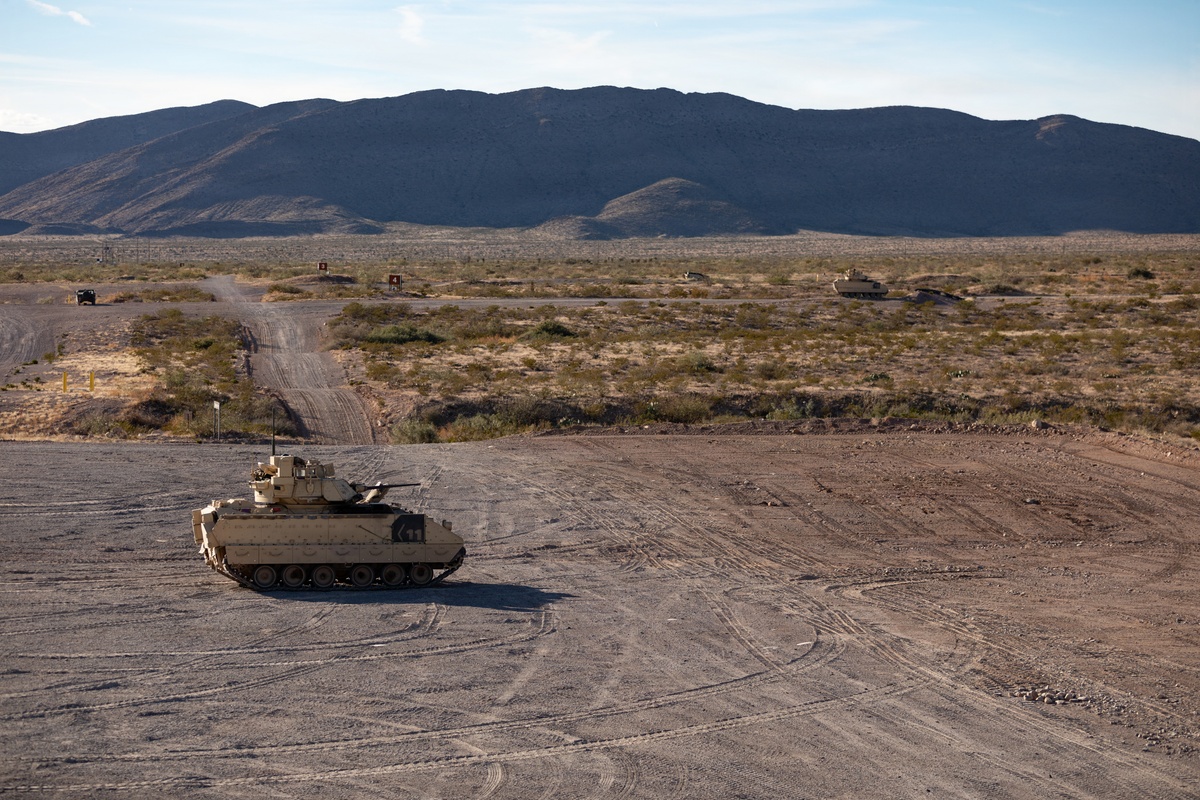
The U.S. Army has committed up to $691,258,891 to keep the gearboxes inside its medium tracked combat fleet in production, awarding RENK America a five-year contract for the hydro-mechanically propelled transmissions that move the Bradley Fighting Vehicle and the Armored Multi-Purpose Vehicle. The Pentagon disclosed the deal in its contracts announcement for June 25, 2026, listing Army Contracting Command at Detroit Arsenal as the awarding activity. The order, dated June 12, runs through December 31, 2030, and marks the fourth consecutive multi-year award RENK has captured in the same transmission line.
Background
RENK America LLC, based in Muskegon, Michigan, is the U.S. arm of German defense supplier RENK Group AG. The company builds the HMPT 800 series transmission, a hydro-mechanical drive that has powered the Bradley since the vehicle entered service and now also sits inside the AMPV, the Army's newer medium tracked personnel carrier. RENK America has delivered more than 4,500 of these transmissions across earlier production runs, and the new contract continues an unbroken chain of multi-year sustainment work rather than opening a fresh competition.
That continuity matters because there is no domestically competitive alternative at this weight class. The HMPT 800 is engineered to the specific torque, cooling, and packaging demands of medium tracked combat vehicles, and qualifying a second source would require years of testing against an installed base of thousands of fielded units. The Army has instead leaned on the incumbent, structuring the buy as an indefinite-delivery, indefinite-quantity vehicle so it can place orders for new, remanufactured, and upgraded units as fleet needs shift over the life of the contract.
Key Details
The contract carries a ceiling value of $691,258,891 and covers production of HMPT 800 series transmissions plus ancillary hardware. Work spans three categories: newly manufactured units for vehicles coming off production and modernization lines, remanufactured transmissions pulled from fielded vehicles and rebuilt to standard, and upgraded units that fold in engineering changes. Army Contracting Command, Detroit Arsenal, is the contracting activity, and performance extends through the end of 2030. The award drew bids solicited over the internet with a single offer received, underscoring the sole-source nature of the line.
The award lands as the Army works through competing demands on its tracked fleet. The Bradley remains in service across armored brigade combat teams even as the service pursues its eventual replacement, and every Bradley in the inventory needs a drivetrain that can be sustained. The AMPV, the Army's newest tracked platform, is still ramping toward full fielding, and it carries the same family of transmission. Both programs feed demand into RENK's Muskegon line, and the IDIQ structure lets the Army adjust order quantities year to year without renegotiating the underlying contract.
Calling this the fourth straight multi-year award in the series underscores how the Army has chosen to manage the risk. Rather than let the transmission supply lapse between production lots, it has kept RENK under contract continuously, preserving the workforce, tooling, and supplier base that a hot production line depends on. For a component with a single qualified source, a cold line is the larger threat: restarting transmission production after a gap can stretch lead times and inflate unit costs at exactly the moment a deployed fleet needs spares. The pattern also gives the Army predictable pricing data across lots, since each new award builds on cost history from the last rather than starting from a blank competition.
What It Means for Contractors
The RENK award is a clear read on how the Army handles sole-source sustainment for mature combat systems. When a single supplier holds the only qualified design for a critical drivetrain component, the service is willing to write a near-$700 million ceiling and a five-year runway to keep that line warm. Contractors holding similar incumbent positions on legacy platforms should expect the same logic to work in their favor, provided they can demonstrate uninterrupted delivery performance and the ability to absorb remanufacturing and upgrade work alongside new production.
The structure of the deal is equally instructive. An IDIQ with a high ceiling and a long period of performance gives the Army flexibility to flex order quantities against shifting fleet plans, while giving the contractor enough visibility to invest in tooling and retain skilled labor. Suppliers pursuing sustainment work on armored vehicles, rotary-wing platforms, or other long-lived systems should frame their proposals around that mutual benefit, stressing supply-chain stability and surge capacity rather than unit price alone.
The foreign-ownership angle is worth weighing too. RENK America operates as the U.S. subsidiary of a German parent, yet it holds the franchise on a transmission that the Army cannot readily source elsewhere. That arrangement shows the Pentagon will sustain a foreign-owned but domestically operating supplier when the alternative is no qualified source at all, an important data point for international defense firms structuring U.S. operations. The practical requirement is a credible domestic manufacturing footprint, security arrangements that satisfy the government, and a demonstrated delivery record, the same standards RENK America has met across four consecutive awards.
For subcontractors and component suppliers, the contract signals steady demand through 2030 for parts that feed the HMPT 800 line, from castings and gears to control electronics. Firms that can qualify into that supply chain gain exposure to a program with a long horizon and a defined customer. And for any contractor watching the broader tracked-vehicle market, the award is a reminder that sustainment dollars on existing fleets remain substantial even as the Army funds next-generation programs; the installed base of Bradleys and AMPVs will need drivetrains for years regardless of what eventually replaces them.
The award also reflects how Detroit Arsenal manages its industrial base for ground combat systems. By keeping the transmission line under continuous contract, Army Contracting Command protects readiness for two of its highest-volume tracked platforms while avoiding the cost and schedule penalties of a production restart. Contractors who can position themselves as the stabilizing force in a critical supply chain, rather than simply the low bidder, are best placed to win the long-running sustainment awards that follow. That distinction, between a vendor that simply fills orders and one that anchors a fragile single-source supply chain, increasingly drives how the Army scopes its largest sustainment buys.
