
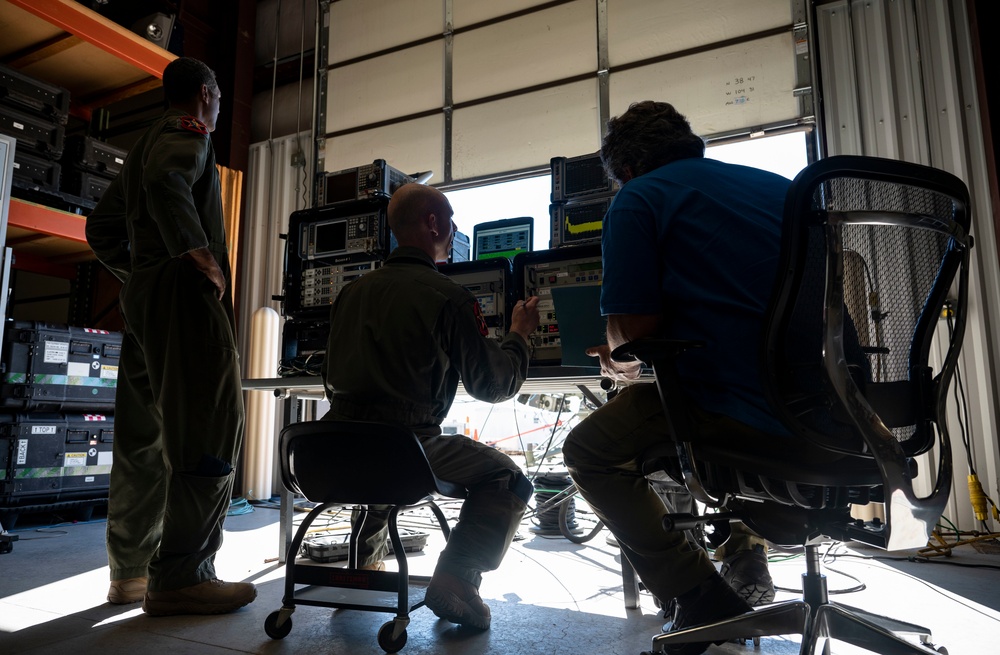
The Space Force has awarded 15 companies spots on a contract vehicle worth up to $981 million to build a live training range for orbital warfare, according to a Space Systems Command announcement. The deal, known as NITE-STAR, was issued by System Delta 81 on July 31, 2026, and is meant to close a training gap that Lt. Gen. Greg Gagnon, head of Space Force's Combat Forces Command, has described as severe.
Background
Space Systems Command built the National Space Test and Training Complex Innovative Technology & Engineering – Space Test and Range program, shortened to NITE-STAR, to give Guardians a realistic environment for practicing orbital combat before they face it for real. The Space Force has spent the past several years warning that its training infrastructure has not kept pace with the threats it expects to fight. Gagnon has described the service's simulator inventory in report-card terms, mission area by mission area, and has said missile-warning and missile-tracking training already rates a "green checkmark" while orbital-warfare training is still "on the glide path" toward that mark rather than fielded today. Gagnon has also said the need for simulators is particularly acute because, absent them, the Space Force has had to take active systems such as GPS satellites and space-tracking radars offline just to create training opportunities. NITE-STAR is System Delta 81's answer: a multiple-award indefinite-delivery/indefinite-quantity contract that lets the government order task orders from a pre-vetted pool of contractors as specific training and testing capabilities are defined, rather than negotiating a single monolithic build. That structure mirrors how the Air Force and Army have historically built out large simulator and range networks, awarding a broad IDIQ pool first and then layering individual task orders on top as budgets and requirements firm up over a period of years.
Key Details
The NITE-STAR Capability Development IDIQ carries a ceiling of up to $981 million spread across two five-year ordering periods, for a total performance window of roughly a decade of possible task order activity, according to DefenseScoop's account of the award. SpaceNews described the structure somewhat differently, reporting a five-year base period plus a one-year option, putting task-order eligibility through July 2032, roughly six years of active ordering; the two outlets' figures do not fully reconcile, and Space Systems Command's own announcement does not spell out the ordering-period breakdown. Fifteen companies won positions on the vehicle: Amentum Technology, BAE Systems, CACI, Firefly Aerospace, L3Harris Technologies, Lockheed Martin Space, Northrop Grumman, Pacific Crest Alliance, Parsons Government Services, Redwire Space Missions, Rocket Lab USA, Sierra Space Corporation, Boeing, Viasat, and York Space Systems. The roster spans the largest legacy primes alongside newer space companies, giving Space Systems Command a wide bench of hardware, software, and integration expertise to draw from as it defines individual orders.
Winning a spot on NITE-STAR does not guarantee any of the 15 companies actual funded work. As with most multiple-award IDIQs, the government will compete individual task orders among the awardees as specific requirements are identified, and companies will need to bid and win each order separately. The contract's stated purpose is to build what the Space Force calls a "live, virtual, constructive" training environment, one that links real spacecraft and ground systems with computer simulations and generated adversary threats. That means Guardians training against digitally represented aggressor satellites, electronic jamming, and simulated cyberattacks in a setting realistic enough to substitute for the operational systems currently being pulled offline for exercises.
Col. Craig Hackbarth, program director for Space Systems Command's Operational Test and Tracking Infrastructure effort, framed the award as a foundation-setting move rather than a finished capability. "This effort sets the foundation for rapidly advancing and integrating the test and training tools needed to effectively train Space Force Guardians," Hackbarth said. That framing matches the IDIQ structure itself: NITE-STAR is designed to let the range grow incrementally through task orders as the Space Force works out exactly which simulators, threat-representation tools, and integration pieces it needs most urgently, rather than locking in a fixed build plan up front.
What It Means for Contractors
For the 15 awardees, the immediate prize is eligibility, not revenue. Getting on the NITE-STAR vehicle puts each company in position to bid on task orders as Space Systems Command defines them, but none of the $981 million ceiling is obligated at award. Companies that want actual dollars will need to build proposals for specific orders and beat other pool members on cost, technical approach, and past performance, the same competitive dynamic that plays out across most Space Force and Air Force IDIQs of this size.
The mix of awardees is worth noting for smaller and mid-tier firms watching the space-training market. Alongside Boeing, Lockheed Martin, Northrop Grumman, and L3Harris, the pool includes newer entrants like Firefly Aerospace, Rocket Lab USA, Redwire Space Missions, Sierra Space Corporation, and York Space Systems, companies that built their businesses on launch vehicles and satellite buses rather than training infrastructure. Their inclusion suggests Space Systems Command is open to sourcing simulation and range-building work from companies whose core expertise is building and flying spacecraft rather than legacy training-systems integration, a path that other space-hardware companies without a NITE-STAR slot may want to track for future increments or teaming opportunities.
The underlying demand signal is also worth watching for anyone selling simulation, digital-twin, or adversary-representation technology into the national security space market. Gagnon's public acknowledgment that operational systems are being taken offline for lack of simulators points to sustained near-term demand for orbital-warfare training tools specifically, not just range hardware in general. Companies with mature threat-representation software, jamming simulation, or cyber-effects modeling that can plug into a live-virtual-constructive architecture look well positioned for early task orders, given that closing the orbital-warfare simulator gap appears to be the Space Force's near-term priority. Firms without a NITE-STAR prime slot should watch for subcontracting and teaming opportunities with the 15 awardees as early task orders take shape, particularly around adversary satellite modeling and electronic-warfare simulation, capability areas the reporting on this award calls out as underdeveloped relative to missile-warning and missile-tracking simulation.
Sources
- Space Force fosters development for next-generation test and training technology
- Space Force establishes $981M contract vehicle to develop testing, training infrastructure
- Facing a lack of kit, Space Force creates $981M pool to buy training capabilities
- Space Force picks 15 companies for $981 million training range contract
