
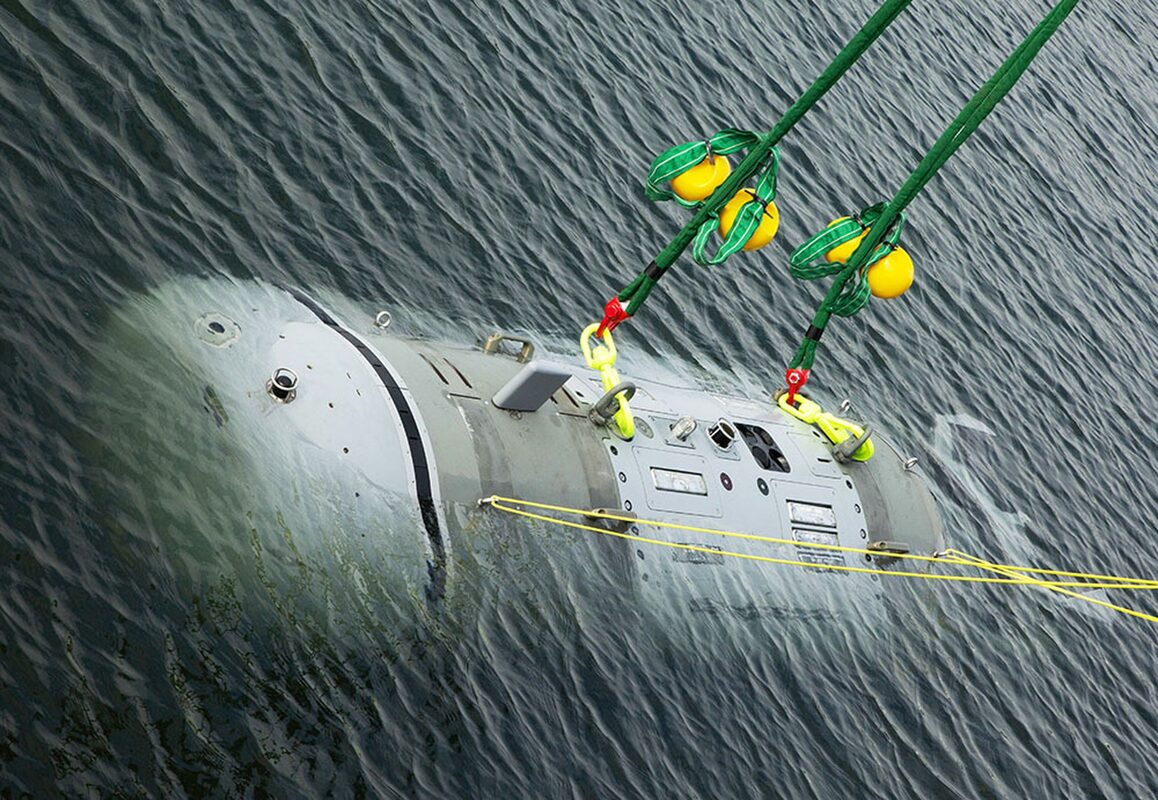
Some makers of mid-size uncrewed underwater vehicles are about to see International Traffic in Arms Regulations (ITAR) coverage lifted from part of their fleet. In an interim final rule published Sept. 18, 2026 at 91 FR 59063, the State Department removed certain uncrewed underwater vehicles (UUVs) from the U.S. Munitions List (USML). The rule takes effect Oct. 19, 2026.
State amended USML Category XX(a) under RIN 1400-AG35 (Public Notice 13120). Thomas G. DiNanno, Under Secretary for Arms Control and International Security, signed it. Removed vessels that no other entry describes become subject to the Export Administration Regulations (EAR), which the Commerce Department's Bureau of Industry and Security administers.
What Stays on the Munitions List After the UUV Rule
Before the change, USML Category XX(a)(10) covered uncrewed, untethered vessels with a gross weight rating above 3,000 pounds that were designed to operate without human interaction for longer than 24 hours or more than 70 nautical miles. The rule splits the category by weight and capability:
- Above 3,000 lb and up to 8,000 lb (XX(a)(10)): Under this entry, a vessel stays on the USML only if it is specially designed to do both of two things. It must operate without human interaction for longer than 24 hours or more than 70 nautical miles. It must also have capabilities for deviating from, determining, or planning a navigation route, other than following pre-planned fixed-waypoint routes, station-keeping, or collision avoidance that adheres to see-and-avoid principles.
- Above 8,000 lb (new XX(a)(11)): A vessel stays controlled if it is specially designed to operate without human interaction for longer than 24 hours or more than 70 nautical miles. No navigation test applies.
- Anti-recovery vessels (XX(a)(9)): State made conforming changes to the entry for uncrewed, untethered vessels with an anti-recovery feature, such as a scuttle or self-destruct mechanism.
A new Note 1 gives an example of what counts as see-and-avoid principles: regulations that implement relevant sections of the International Regulations for Preventing Collisions at Sea (COLREGs), such as Rules 5 (look-out), 8 (action to avoid collision), and 13 through 18. Read against the rule text, a 5,000-pound vehicle that follows a preprogrammed fixed-waypoint route and avoids traffic under those rules would fall outside XX(a)(10), and would leave the USML if no other entry describes it.
Why State Says 8,000-Pound Vehicles No Longer Warrant ITAR Control
State grounds the change in its standing USML test: whether an item provides a critical military or intelligence advantage. It says the articles the rule removes "no longer warrant ITAR control." The rule states:
"The Department, with the concurrence of the Department of Defense, now assesses that vessels described in USML Category XX(a)(10) with a gross weight rating up to 8,000 pounds only provide a critical military or intelligence advantage when they are described elsewhere on the USML or when they are specially designed to possess certain navigation capabilities." (U.S. Department of State, 91 FR 59063)
The statutory hook is a periodic-review mandate. State cites section 38(f) of the Arms Export Control Act (22 U.S.C. 2778(f)) and section 1345 of the National Defense Authorization Act for Fiscal Year 2024. It says the revisions are also informed by confidential industry requests for commodity jurisdiction determinations and advisory opinions.
The rule follows a short regulatory sequence. A Jan. 17, 2025 interim final rule added XX(a)(10) at the 3,000-pound threshold, according to the 2025 final rule and a K&L Gates analysis. The Aug. 27, 2025 final rule, effective Sept. 15, 2025, adopted it with changes and created a license exemption at ITAR Section 126.9(u). State described the exempted vehicles as ones that "provide a critical military or intelligence advantage such that they warrant description on the USML," but that it assessed were "also highly suitable for scientific research and specific commercial operations." The 2026 rule narrows the pool of vehicles described in XX(a)(10) rather than changing the exemption.
What Happens to the Section 126.9(u) Research Exemption?
State left it alone. The rule says it "does not modify the license exemption at Sec. 126.9(u)" and that the exemption's provisions "remain available for vessels described in USML Category XX(a)(10)." The 2025 rule set the exemption's size limit at 8,000 pounds and confined it to listed civil purposes: scientific research or natural resource exploration, commercial or civil infrastructure maintenance, installation or repair, and search and rescue.
State also asks the public whether other navigation capabilities should refine the new XX(a)(10) criteria, and what challenges, if any, operators have met in using the exemption, including whether more activities belong on the authorized-purposes list at Section 126.9(u)(2)(iii). State adds that it intends "to review the ITAR controls on autonomous capabilities, including the maritime navigation systems described in USML Category VI."
What It Means for Contractors
The rule is exempt from Administrative Procedure Act rulemaking requirements because it involves a military or foreign affairs function, but State says it "seeks public comments." Comments are due Oct. 19, 2026, the same day the rule takes effect, in docket DOS-2026-0958 at Regulations.gov or by email citing RIN 1400-AG35.
- Classify each vehicle by weight and autonomy. A vessel between 3,000 and 8,000 pounds stays under XX(a)(10) only if it meets both the endurance and navigation tests.
- Check for another USML entry. The move to the EAR covers only vessels "not described elsewhere on the USML." A vehicle with an anti-recovery feature, for example, would still fall within XX(a)(9), which has no weight threshold.
- Plan for a jurisdiction change. A vehicle that leaves the USML moves from ITAR licensing to the EAR. The rule names no Commerce Control List entry for the removed vessels, so exporters must classify them.
- Use the comment window. State wants operators to describe any exemption challenges and say which navigation capabilities should count.
State assesses that the change will produce "a net reduction of the burden on the regulated community." It also says quantitative analyses "cannot be usefully estimated and are not available." The Office of Management and Budget deemed the rule a "significant regulatory action" under Executive Order 12866. The Office of Information and Regulatory Affairs found it is not a major rule under the Congressional Review Act.
Sources
- International Traffic in Arms Regulations: Modification of U.S. Munitions List Category XX(a), 91 FR 59063 (Sept. 18, 2026), via GovInfo
- International Traffic in Arms Regulations: U.S. Munitions List Targeted Revisions, 90 FR 41778 (Aug. 27, 2025), via GovInfo
- K&L Gates HUB: ITAR Final Rule Revises the USML and Adds New License Exemption for Covered Activities Involving Unmanned Underwater Vehicles (Sept. 10, 2025)
