
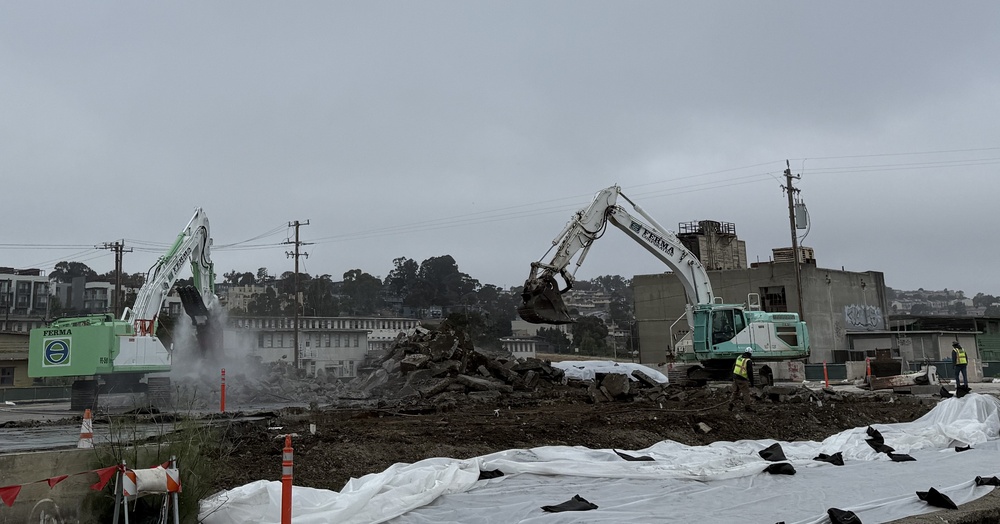
U.S. District Judge James Donato of the Northern District of California approved a $57 million False Claims Act settlement between the federal government and Tetra Tech EC, Inc., a wholly owned subsidiary of Tetra Tech, Inc., calling the deal "fair, adequate, and reasonable" in an order issued Wednesday, August 12, 2026. The ruling closes out a 13-year fraud fight over falsified radiation testing at the Hunters Point Naval Shipyard, a 400-acre former Navy base in San Francisco slated for more than 10,000 homes.
Background
The case began as a qui tam lawsuit filed in 2013 by four whistleblowers — Elbert Bowers, Arthur Jahr III, Archie Jackson, and Susan Andrews — who alleged that Tetra Tech EC falsified soil-test and building-scan results meant to certify that radiological contamination at Hunters Point had been cleaned up. The relators claimed a Tetra Tech manager ordered workers to destroy lab results showing the highest radioactive readings ever recorded at the site and told crews to steer sampling away from known "hot spots" rather than test them accurately.
The government intervened in the suit in 2018 and, in a later amended complaint, added common-law fraud claims and a cost-recovery action under the Comprehensive Environmental Response, Compensation and Liability Act (CERCLA). The fraud allegations were not merely civil in nature: two former Tetra Tech employees who supervised soil testing at the shipyard pleaded guilty in 2017 to falsifying reports and were each sentenced to eight months in federal prison. A December 2017 EPA audit of the site found that 90 to 97 percent of soil samples in two site areas were potentially compromised or falsified, undercutting years of Navy assurances that the land was safe to redevelop.
Tetra Tech held the Hunters Point remediation contract from 2006 to 2012 and was paid more than $250 million by the Navy over that span, according to the Navy's own figures. The Navy has spent roughly $1 billion on the shipyard's overall remediation, encompassing work well beyond Tetra Tech's original contract. The planned redevelopment — more than 10,000 housing units on a peninsula in San Francisco Bay — is part of what drove scrutiny of the original test data, since residual contamination would affect future residents rather than stay confined to a fenced federal site.
Key Details
Under a settlement agreement Tetra Tech disclosed in a January 17, 2025 SEC Form 8-K, TtEC agreed to pay $57 million to resolve the False Claims Act allegations — an amount court filings show was split into $51.87 million tied to the "Soil Fraud Allegations" and $5.13 million tied to the "Building Scan Fraud Allegations." That FCA payment is distinct from a $40 million CERCLA settlement, which the government said it reached with the company in July 2025 to cover cost-recovery claims tied to the same contamination.
Donato's August 12 order approves only the $57 million FCA settlement and sets the whistleblowers' share at 21 percent of that amount. The relators had objected to the settlement structure, arguing they were also entitled to a cut of the $40 million CERCLA payment, but Donato rejected that argument, siding with the government's position that the relators' statutory share applies only to the FCA settlement. The court's "fair, adequate, and reasonable" finding is the legal standard required before a qui tam settlement can be finalized under the False Claims Act.
Combined, the two settlements total $97 million in payments from Tetra Tech tied to the Hunters Point cleanup — a fraction of the roughly $1 billion the Navy has spent remediating the shipyard overall. The FCA settlement resolves civil liability only; it does not reopen the 2017 criminal convictions of the two former supervisors, which were handled as separate proceedings years earlier.
What It Means for Contractors
The Hunters Point case is a reminder that False Claims Act exposure on environmental remediation contracts does not expire when the contract does. Tetra Tech's work at the shipyard ended in 2012; the qui tam suit followed in 2013, criminal convictions landed in 2017, the government intervened in 2018, and final settlement approval did not arrive until August 2026 — a 14-year tail from performance to resolution. Contractors performing radiological or other certification-based remediation work should treat testing and reporting data as a permanent liability record, not a closeout deliverable, because DOJ and relators' counsel can reconstruct sampling histories more than a decade later.
The case also underscores how much leverage individual employees hold as potential whistleblowers on sites where test results directly gate redevelopment or reuse decisions. The original relators were workers with firsthand knowledge of sampling procedures, and their allegations were corroborated independently by an EPA audit and by criminal prosecutions of two site supervisors. Contractors on BRAC (Base Realignment and Closure) and Superfund-adjacent cleanup work should expect that chain-of-custody gaps, sampling shortcuts, or pressure to avoid "hot spot" testing carry both civil FCA risk and individual criminal exposure for supervisors who order shortcuts, as the 2017 guilty pleas demonstrate.
For firms with active or pending federal environmental remediation contracts, the allocation breakdown in the settlement — separating "soil fraud" and "building scan fraud" into distinct dollar figures — signals that DOJ is prepared to itemize damages by category of falsified data rather than negotiate a single lump sum, which can complicate settlement talks and extend timelines when multiple categories of testing are in dispute. Companies bidding on or performing similar decontamination and reuse-certification work at former military installations should ensure QA/QC documentation, lab chain-of-custody records, and internal reporting channels are robust enough to survive scrutiny that can arrive well over a decade after work is performed.
The relator-share dispute Donato resolved is also instructive for how contractors should model whistleblower risk. The four original relators pursued their claims for over a decade before seeing any payout, and even after the government secured two related settlements, the court limited their statutory cut to the FCA portion alone rather than the combined $97 million. That distinction matters for contractors evaluating exposure: settlements structured across multiple legal theories, such as FCA claims paired with CERCLA cost recovery, can change how liability is apportioned between the government, the company, and the individuals who reported the conduct. Firms performing federally funded environmental testing should assume any dispute over certification data carries FCA-level financial exposure, independent of whether the work also triggers CERCLA cleanup-cost liability.
