
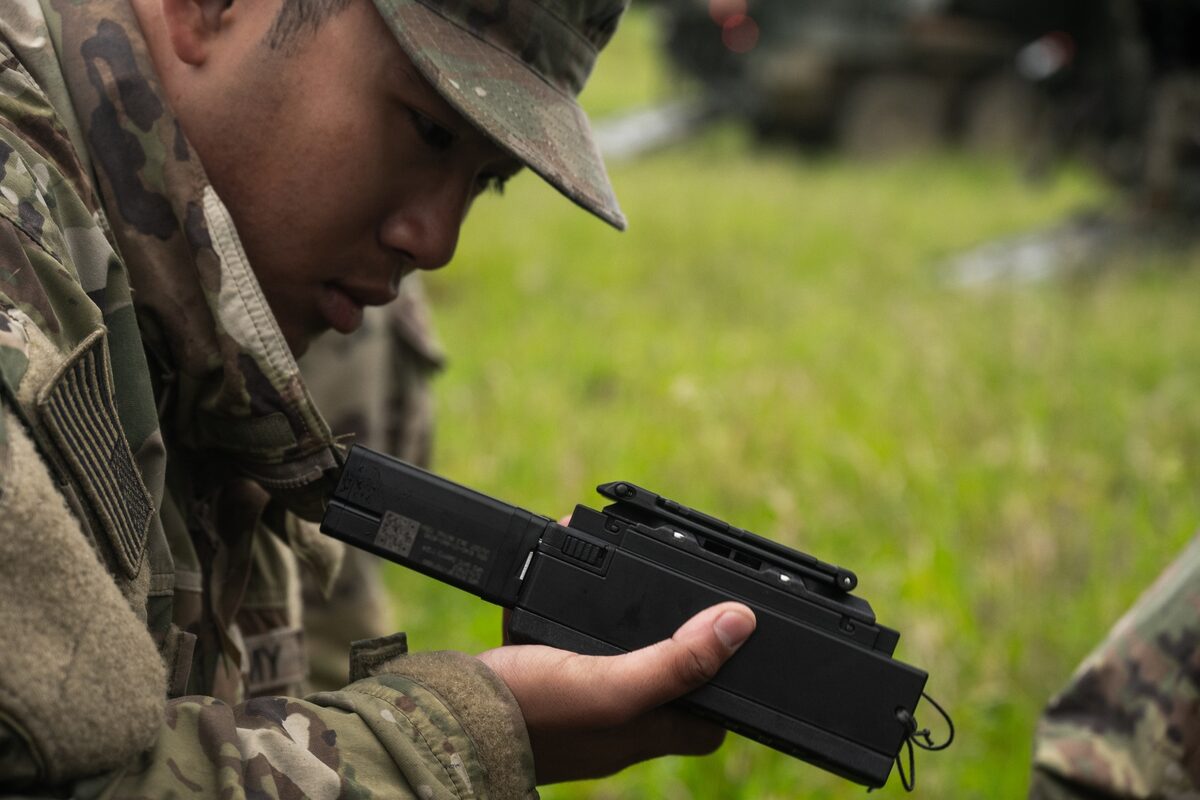
The Army has locked in a five-figure fleet of drone hunters. According to the Department of War's contract announcement for July 1, 2026, Army Contracting Command-Detroit Arsenal awarded AeroVironment Inc. a $500,000,000 firm-fixed-price indefinite-delivery/indefinite-quantity contract for commercial counter-unmanned aerial systems and counter-small-unmanned aerial systems.
Background
Counter-drone spending has climbed steadily as cheap commercial quadcopters and fixed-wing systems have become a persistent threat on modern battlefields and, increasingly, near domestic installations. The Army has responded by building out a layered detect-track-defeat architecture rather than betting on a single interceptor system, spreading contracts across sensor makers, jamming vendors, and kinetic defeat providers. AeroVironment, based in Simi Valley, California, has built a two-decade relationship with the Army as a supplier of small unmanned aircraft like the Raven and Switchblade loitering munitions, and it has expanded that footprint into counter-drone detection and defeat hardware in recent years. The new IDIQ extends that relationship into a dedicated, large-scale vehicle for buying C-UAS and C-sUAS capability on an as-needed basis through task and delivery orders.
Army Contracting Command-Detroit Arsenal manages a wide portfolio of ground-vehicle and counter-threat procurement for the service, and it has increasingly served as the contracting hub for programs that touch force protection against aerial threats. Routing a $500,000,000 counter-drone vehicle through that office rather than through a program-specific acquisition shop reflects how the Army has organized its counter-UAS buying: as a capability area managed centrally, with individual units and installations drawing from established vehicles rather than each standing up its own solicitation. That structure lets the service move faster when a new threat profile emerges, since units can issue a task order against an existing ceiling instead of running a fresh competition from scratch.
Key Details
The contract, numbered W912CH-26-D-A073, runs through an estimated completion date of June 29, 2029. Army Contracting Command-Detroit Arsenal is the awarding office, and the contract is structured as a firm-fixed-price IDIQ, meaning the $500,000,000 ceiling represents the maximum value available across individual task and delivery orders rather than money obligated up front. Work location and specific funding will be determined as those individual orders are issued.
The scope covers systems intended to detect, track, and defeat a range of unmanned aerial threats, from larger fixed-wing and rotary-wing UAS down to commercial quadcopters flown off the shelf. That breadth matches how the Army has described its counter-drone requirement in prior solicitations: forces need to identify and neutralize both purpose-built military drones and inexpensive commercial platforms that adversaries have adapted for surveillance or attack.
ClearanceJobs' coverage of the award reproduced the Department of War's contract notice, corroborating the contract number, the $500,000,000 ceiling, the Detroit Arsenal awarding office, and the June 29, 2029 completion date. GovConWire likewise reported the award as a firm-fixed-price contract running through June 2029, consistent with the Department of War's notice. Under an IDIQ vehicle of this kind, individual task orders typically get issued as Army units identify specific counter-drone needs rather than as a single lump-sum delivery up front.
The July 1 contract notice did not specify a small business set-aside status, number of offers received, or whether the award followed full and open competition, a level of detail the Department of War's daily contract announcements sometimes omit for awards structured this way. The notice also did not name a specific program office beneath Army Contracting Command-Detroit Arsenal, leaving open which end users will draw first on the vehicle.
The three-year performance window, from award through June 29, 2029, gives the Army room to issue orders as threat assessments evolve rather than locking in a fixed equipment buy today. Because the vehicle is firm-fixed-price at the IDIQ level, individual task orders will still need their own pricing and statement of work, a structure that lets contracting officers negotiate unit costs order by order rather than committing to a blanket rate across the full ceiling. That approach is standard for large counter-drone vehicles, where the mix of hardware, software, and integration work needed can vary significantly from one installation or unit to the next.
What It Means for Contractors
A $500,000,000 ceiling IDIQ for C-UAS work signals that the Army intends to keep buying counter-drone capability at volume for the rest of the decade, with the June 2029 completion date giving AeroVironment a multi-year runway to compete for individual task orders as they come up. For competitors in the counter-drone space, the award is a reminder that the Army continues to run parallel vehicles rather than consolidating C-UAS buys under one supplier, since AeroVironment's win does not preclude other companies from holding their own IDIQs or single-award contracts for adjacent detect-and-defeat technology.
Subcontractors and component suppliers in radar, radio-frequency detection, and electronic-warfare payloads should watch for individual task order solicitations under W912CH-26-D-A073, since IDIQ ceilings of this size typically generate a steady cadence of smaller order competitions rather than a single lump-sum delivery. Companies that already hold GSA schedule contracts or other government-wide vehicles for sensor or jamming hardware may find opportunities to team with AeroVironment on specific orders where its own product line does not cover the full detect-track-defeat chain required.
Contractors positioning for future counter-drone work, whether at the Army, Navy, or Air Force, should expect continued high-dollar IDIQ awards in this category as the Department of War treats drone defense as a standing procurement priority rather than a one-time buy tied to a single conflict or threat assessment. The scale of this award, on its own, underscores how much budget authority the service is willing to commit to a single vendor's counter-drone product line while still leaving room for others to compete at the order level.
Companies pursuing task orders under this vehicle should also monitor whether the Army later amends the IDIQ to add additional awardees, a common pattern for large counter-drone vehicles where the government wants to preserve competition at the order level even after naming an initial contract holder. Firms that missed this award round can still position for future increments by tracking solicitation notices tied to the Detroit Arsenal contracting office and by building past-performance references in detection, tracking, and defeat subsystems that align with the stated scope.
