
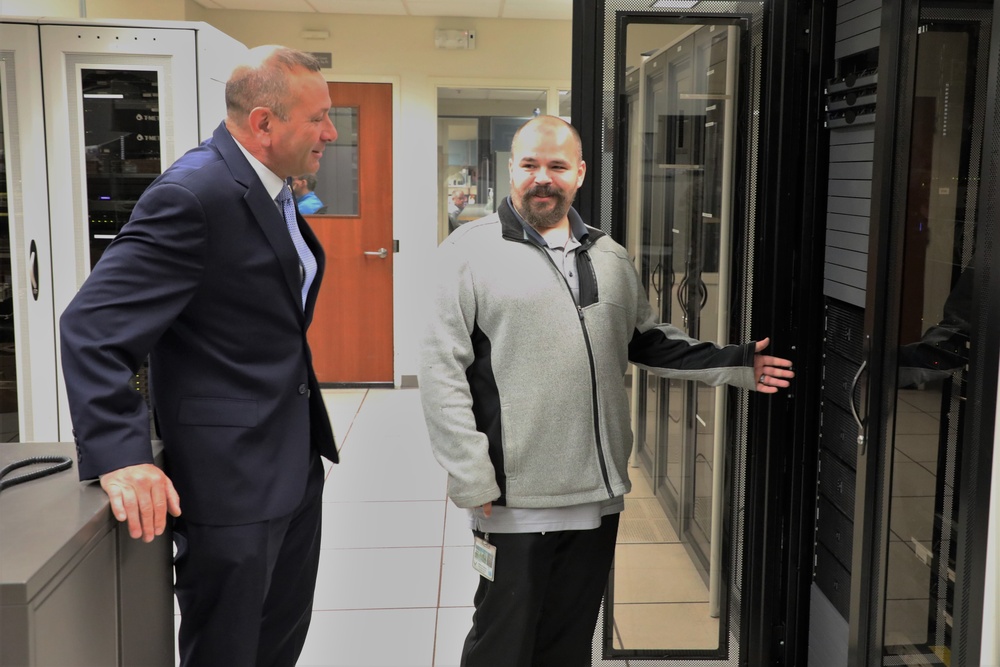
A Beltsville, Maryland, data center operator and its former chief executive are paying $1.8 million to settle federal claims that they lied about meeting the reliability standards the SEC paid for. The Justice Department announced August 24 that AiNET Corp. and former CEO Deepak Jain agreed to pay $1,800,000 to resolve False Claims Act allegations tied to a data center services contract with the U.S. Securities and Exchange Commission.
The settlement resolves allegations that AiNET and Jain fraudulently induced the SEC to enter the contract by falsely certifying that the AiNET facility met at least Tier III standards under the Telecommunications Industry Association’s TIA 942 Standards for Data Centers, as the contract required. The government alleged the data center did not actually meet Tier III — a classification that generally signals a facility can undergo maintenance without shutting down and maintains redundant power and cooling systems to prevent outages. For an agency like the SEC, whose operations depend on continuous system uptime, that redundancy is not a paperwork formality; it is the operational guarantee the contract was written to buy.
How AiNET Allegedly Used a Fake Inspector to Claim Tier IV
The case did not stop at a single false certification. DOJ alleged that AiNET and Jain went further, telling the SEC that experts from an entity called “UpTime Council” had inspected the AiNET data center and found it met Tier IV standards under TIA 942 — the highest reliability tier, reserved for facilities designed to be fault-tolerant with no single point of failure. According to the department, that certification was fabricated from the ground up: “UpTime Council was not an operating company and never inspected the AiNET data center,” the government alleged, meaning the SEC was told a credentialing body had blessed the facility when no such inspection ever took place.
Tier ratings under the TIA 942 framework are not cosmetic. Federal agencies that house sensitive data and mission-critical systems write minimum tier requirements into data center contracts specifically so they know what level of uptime, redundancy, and failover protection they are paying for. A facility that fails to meet Tier III but is certified as Tier IV represents a gap between what the contract required and what the SEC allegedly received — and, according to DOJ, that gap was covered up by inventing the name of an outside inspector rather than disclosing it.
Why the Case Landed With DOJ's Fraud Section
The matter was handled by the Justice Department’s Civil Division, Commercial Litigation Branch, Fraud Section, with Senior Trial Attorney Greg Pearson handling the case, in coordination with the SEC’s Office of Inspector General. That pairing — DOJ’s civil fraud lawyers working alongside the SEC’s own inspector general — reflects the coordinated effort DOJ credited with producing the settlement.
Assistant Attorney General Brett A. Shumate framed the settlement as a warning to other government contractors who might be tempted to shortcut certification requirements. “Those who do business with the government must do so fairly and honestly,” Shumate said. “We will continue to pursue contractors that knowingly fail to provide required services to federal agencies.”
SEC Inspector General Kevin Muhlendorf credited his office’s investigators for catching the discrepancy between what AiNET certified and what its facility actually delivered. “Protecting taxpayer dollars is an OIG priority,” Muhlendorf said. “The SEC OIG’s dedicated team of investigators and auditors works tirelessly to hold contractors accountable, and we appreciate our continued partnership with the Department of Justice in that shared endeavor.”
A Test Case for DOJ's New Anti-Fraud Task Force
DOJ tied the settlement to its broader enforcement build-out this year, noting that the Administration launched the Task Force to Eliminate Fraud and the National Fraud Enforcement Division to enhance the federal government's broader effort against fraud, waste, and abuse in federal programs. The department said its Civil Division’s False Claims Act enforcement “will continue to be on the forefront of the battle against fraud” and will support that task force’s mission going forward — language that signals more certification-fraud cases like this one are likely as the new enforcement apparatus ramps up.
As is standard in False Claims Act settlements, DOJ noted that the claims resolved are allegations only, with no determination of liability made against AiNET or Jain. The $1.8 million recovery does not include any separate criminal charges, and the press release does not indicate whether AiNET retains its SEC contract going forward.
What It Means for Contractors
The AiNET settlement is a reminder that infrastructure certifications submitted to satisfy a contract’s technical requirements carry the same False Claims Act exposure as invoices or deliverables. Contracting officers write tier ratings and third-party inspection results into solicitations because they cannot verify every physical facility themselves — they rely on the contractor’s certification being true. When a company self-certifies compliance with an industry standard like TIA 942, or claims a named body performed an inspection, government lawyers now treat that certification as a discrete, actionable representation, not boilerplate buried in a proposal appendix.
For data center operators and other infrastructure contractors serving federal agencies, the case underscores two distinct exposures: overstating the tier classification of a physical facility, and citing outside certifying organizations that do not actually exist as operating entities capable of performing the inspection claimed. Both were false statements the government could tie directly to inducement of a contract award, and both fed into a False Claims Act theory even though the underlying dispute was ultimately about data center engineering standards rather than pricing or billing practices. With DOJ’s new fraud task force and National Fraud Enforcement Division explicitly built to expand this kind of scrutiny, contractors relying on third-party certifications should expect the government to independently verify that the certifying body exists, is an operating entity, and actually performed the inspection or audit claimed — before, not after, a contract is awarded.
