
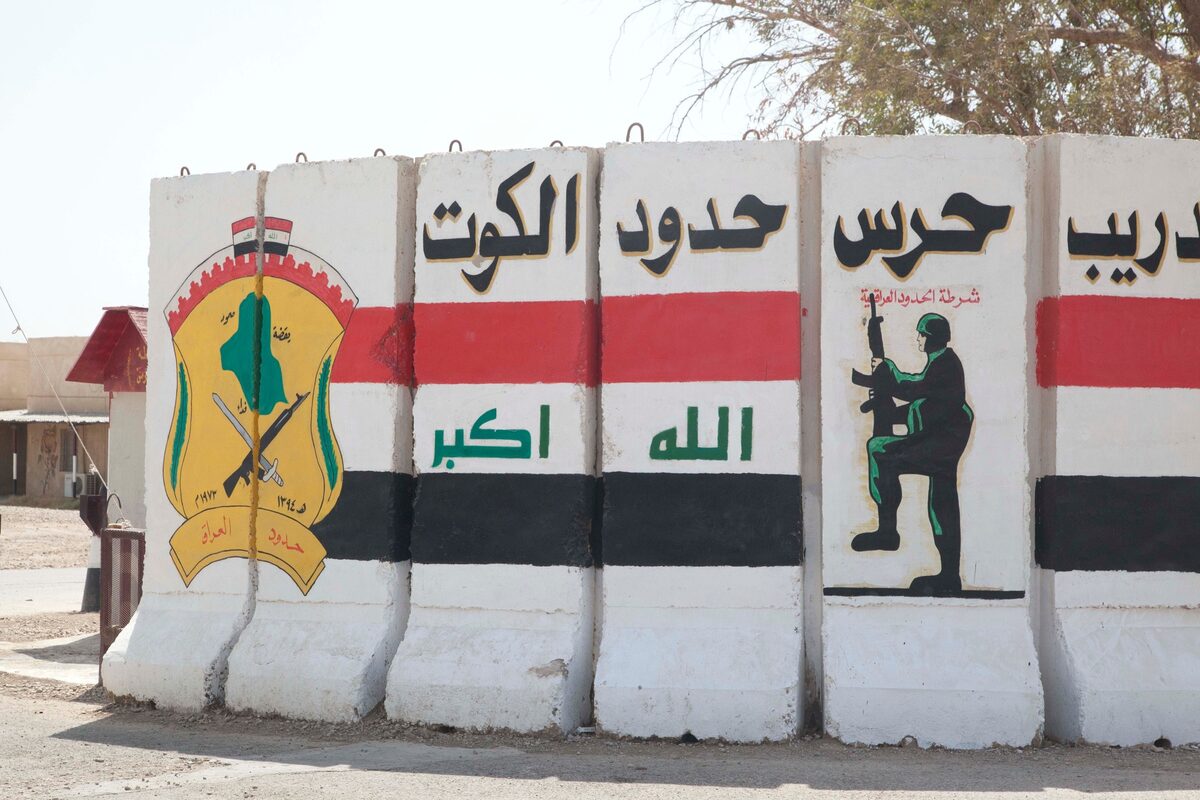
The U.S. Court of Federal Claims has upheld the Air Force's decision to hand base operations, life support and security work at an Iraqi air base to Vectrus Systems LLC without competition, rejecting the incumbent's argument that bribery allegations tied to the deal should have forced the service to open the requirement. Judge Thompson M. Dietz's opinion and order in Sallyport Global Services, Ltd. v. United States, No. 25-1128 was filed under seal on May 22, 2026 and reissued for publication on July 22, 2026. The court denied motions to dismiss, holding Sallyport had standing, then granted judgment on the administrative record to the government and Vectrus.
Background
Sallyport had performed base operations support, base life support and security services — the contract calls the bundle "BBS" — at Martyr Brigadier General Ali Flaih Air Base in Iraq on a sole-source basis since 2014, with a follow-on in 2022. The work runs through the Foreign Military Sales program and is funded entirely by the Iraqi government: the Air Force contracts for the services, but Iraq's Ministry of Defense pays and names the vendor it wants.
In February 2024, Iraq's MoD sent a Letter of Request naming a different vendor for the follow-on, identified in the opinion as "Contractor A." Three months later, Sallyport told the Air Force of an alleged bribery and kickback scheme involving Iraqi officials and a firm the opinion calls "Subcontractor A," which Sallyport alleged was connected to Iranian-backed militias. By June 10, 2024, an Air Force Materiel Command Law Office fraud attorney had been assigned to the matter and referred it to the Air Force Office of Special Investigations.
The referral had consequences. On January 31, 2025, the contracting officer determined Subcontractor A was "not a responsible subcontractor." Contractor A withdrew on February 5, 2025, and Iraq's MoD issued a new Letter of Request on February 26, 2025 naming Vectrus. Vectrus initially listed Subcontractor A among its own subcontractors and dropped it after the Air Force disclosed the non-responsibility finding. The Letter of Offer and Acceptance was executed May 22, 2025, and the Air Force awarded the contract to Vectrus on June 25, 2025 under the Competition in Contracting Act's international-agreement exception, 10 U.S.C. § 3204(a)(4), implemented at FAR 6.302-4.
Key Details
The standing fight came first, and the government lost it. The United States and Vectrus argued that reviewing Sallyport's claims would mean second-guessing a foreign sovereign's procurement choice, since the Letter of Offer and Acceptance embodied Iraq's decision. Dietz disagreed, finding Sallyport had both Article III and Tucker Act standing because its claims exist independently of the LOA. An FMS sole-source award, in other words, is not immune from protest review simply because a foreign purchaser asked for it.
On the merits, the central question was what the Security Assistance Management Manual demands of an agency that hears fraud allegations about an FMS sole-source request. SAMM § C6.3.4.3 directs agencies to defer to a foreign purchaser's sole-source request absent indications of a violation of U.S. law or ethical business practices, and to "consult with its counsel" where the facts indicate a possible violation. Sallyport argued the Air Force's consultation fell short. The court read the provision narrowly. As the opinion puts it, "The SAMM does not specify the nature or extent of such consultation, nor does it necessitate what, if any, type of documentation must result from such consultation." Involving counsel throughout the process was enough, and the court applied the Bowman Transportation standard that an agency's path may reasonably be discerned.
Sallyport also attacked the responsibility determination. The court held that FAR Subpart 9.1 runs to the prime contractor, not to subcontractors, and that FAR 9.104-4(b) makes direct subcontractor responsibility determinations discretionary rather than mandatory. The CO's determination on Vectrus drew on SAM FAR and DFARS reports, a cybersecurity compliance assessment, a supplier performance risk report and past performance, a record the court left undisturbed.
The Never Contract With the Enemy provisions of the FY2015 NDAA, §§ 841-843, produced the opinion's most striking rejections of government arguments. The government and Vectrus contended that because Iraq funds the contract, its value falls below the $50,000 covered-contract threshold. The court refused that reading: the statute speaks to contract value, not funding source. It also questioned the argument that the work does not support a contingency operation, pointing to Lead Inspector General reporting that Operation Inherent Resolve formally concluded in Iraq in July 2025 and that DoD planned to continue Syria operations supported from Iraq through at least September 2026.
Sallyport still lost the point. The Air Force omitted DFARS 252.225-7993, the prohibition on providing funds to the enemy, and DFARS 252.225-7975 from the solicitation and the Vectrus contract. The court found the omission non-prejudicial because both clauses operate after award and grant authority the government need not exercise. The court also found the Air Force complied with U.S. Central Command's Vendor Threat Mitigation program under CCR 715-2 § 3.1(b): Vectrus was vetted through the Joint Contingency Contracting System before award and carried a VTM risk rating of "Acceptable Without Mitigation," and derogatory information about subcontractors went to the VTM support cell. Wiley Rein LLP represented Sallyport, Hogan Lovells represented Vectrus, and the Justice Department's Civil Division appeared for the United States.
What It Means for Contractors
For firms working FMS-funded services, the practical lesson is that reporting fraud does not buy you a competition. Sallyport's disclosure triggered a real response — a fraud attorney, an AFOSI referral, and a non-responsibility finding that knocked one competitor out of the running — and the incumbent still lost the follow-on to a different vendor the customer named. The deference the court read into SAMM § C6.3.4.3 gives agencies wide latitude on what "consult with its counsel" means, with no documentation trail required. Protesters should not expect to win by arguing the consultation was too thin.
Two findings cut the other way and are worth banking. Standing survives the foreign-sovereign argument, so FMS sole-source awards remain protestable at the Court of Federal Claims. And the court declined to accept that foreign funding shrinks a contract out of Never Contract With the Enemy coverage, or that post-Inherent Resolve work in Iraq sits categorically outside contingency operations. Companies competing for this work should assume the enemy-funding regime applies and press agencies to include the DFARS clauses up front — the missing clauses were harmless here only because they operate post-award.
