
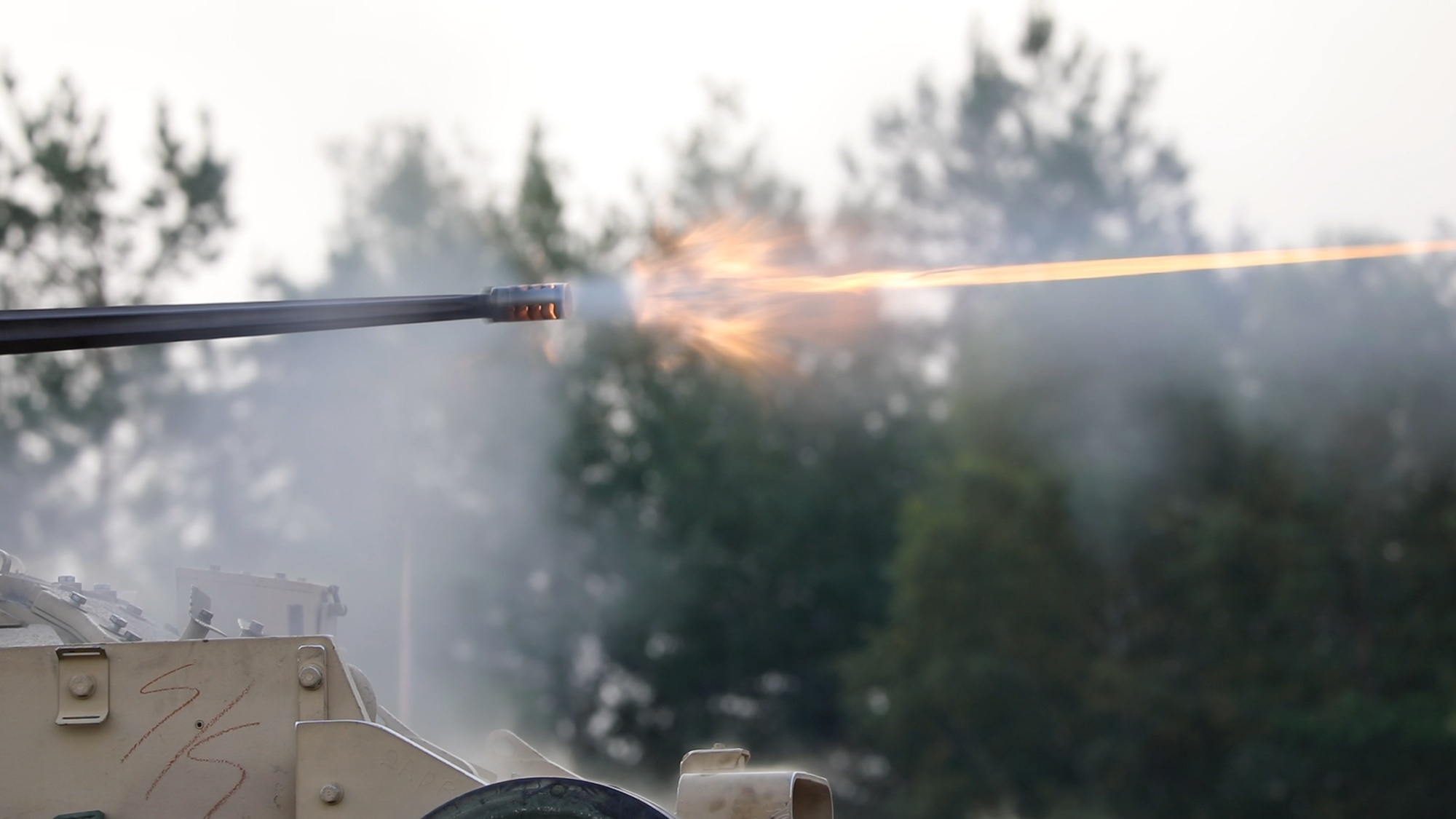
The Army has awarded DRS Network & Imaging Systems LLC a $55,714,779 contract for engineering services supporting the Improved Bradley Acquisition Subsystem, adding a new line of work to the company's growing Bradley Fighting Vehicle modernization portfolio.
Background
DRS Network & Imaging Systems, a Melbourne, Florida-based subsidiary of Leonardo DRS, builds the Improved Bradley Acquisition Subsystem, or IBAS, the target-acquisition and missile-control package fielded on Bradley Fighting Vehicles. The current version, IBAS Block 2, keeps the existing FLIR sensor, TOW tracker, dual target tracker and dual-axis stabilized head mirror assembly while layering in high-definition color imagery and an eyesafe laser rangefinder, giving Bradley crews sharper target identification and more precise ranging in a single upgraded sight package.
Leonardo DRS has built a steady pipeline of IBAS work over the past year. The company recently picked up two delivery orders from the Defense Logistics Agency worth up to $234.08 million combined, issued under a nine-year basic ordering agreement that covers continued production and fielding of IBAS components. The new engineering-services contract does not replace that production pipeline; it funds the design, integration and technical support work that keeps the underlying system current as the Army continues to field and sustain Bradleys equipped with the upgraded sight.
The Bradley Fighting Vehicle remains a core part of the Army's armored formations even as the service works through the long-running replacement effort for the M2/M3 fleet. Sustaining and upgrading the targeting systems on vehicles still in service, rather than waiting for a full replacement program to mature, has kept contractors like Leonardo DRS busy with incremental improvement work funded through engineering-services vehicles like this one.
IBAS itself has a long service history on the Bradley line, dating back to earlier upgrade increments that first added second-generation FLIR imaging to the platform's turret. Block 2 represents the latest iteration of that lineage, and engineering-services contracts of this kind typically fund the less visible work behind a fielded upgrade: obsolescence management for components that go out of production, integration testing as new subassemblies are qualified, technical data package updates, and support to depot-level maintenance activities that keep fielded units running. That work rarely generates headlines on its own, but it is what allows a decades-old combat vehicle program to keep pace with sensor technology without a full recapitalization effort.
Key Details
The contract, valued at $55,714,779, was awarded July 6, 2026, and published in the Department of War's July 8 daily contracts bulletin. It is structured as a hybrid vehicle combining cost-no-fee, cost-plus-fixed-fee and firm-fixed-price line items, a common approach for engineering-services awards that mix pure technical labor with deliverable-based tasks.
Work will be performed at DRS Network & Imaging Systems' facility in Melbourne, Florida, with an estimated completion date of September 30, 2029, giving the contract roughly a three-year performance window. The Department of War's notice states the contract was solicited and received as a sole bid via the internet, meaning the Army posted the requirement publicly but received only one proposal in response.
Notably, the bulletin lists no funds obligated at the time of award. That is not unusual for hybrid engineering-services contracts, where the government establishes the contract vehicle and ceiling first and then obligates funding incrementally against individual task or delivery orders as work is authorized. Contractors on this type of award typically see revenue recognized order by order rather than as a lump sum at signing.
Army Contracting Command at Redstone Arsenal, Alabama, is the contracting activity for the award, tracked under contract number W31P4Q-26-C-0018. Redstone Arsenal is the Army's hub for aviation and missile program management, and Bradley fire-control and targeting work has historically routed through contracting offices tied to that installation given the overlap with missile-guidance and sensor technology used across the Army's combat vehicle fleet.
What It Means for Contractors
The award underscores how the Army continues to fund Bradley sustainment and upgrade work through a mix of contract types rather than a single production contract. Companies pursuing similar legacy-platform sustainment opportunities should note the layered structure here: a basic ordering agreement handles hardware production and delivery, while a separate engineering-services contract funds the technical work needed to keep the system's design current, troubleshoot fielded units and support future upgrades. Teams bidding on Army combat-vehicle sustainment work should expect this kind of split and structure proposals accordingly, since engineering-services vehicles often carry different profit margins and risk profiles than production delivery orders.
The sole-bid outcome is also worth flagging for market-entry planning. When the Army posts a requirement publicly but receives only one proposal, it typically signals a narrow, specialized competitive base — in this case, a reflection of DRS Network & Imaging Systems' incumbency on the IBAS product line and the high barrier to entry for firms without an existing qualified design for a fielded weapon system's fire-control sight. Firms considering a play in combat-vehicle sensor or targeting subsystems should weigh whether they can compete against an incumbent with this level of platform-specific engineering history, or whether teaming with the incumbent or pursuing adjacent subsystem work is the more realistic path.
The no-funds-obligated-at-award structure also matters for cash-flow and subcontractor planning. Prime contractors managing similar hybrid, multi-year engineering-services awards need to track task-order-level funding closely rather than assuming the full ceiling value translates into near-term revenue. Subcontractors and suppliers feeding into Bradley sight-system work should likewise expect staged, order-driven demand rather than a single large procurement event, and should plan capacity accordingly through the contract's 2029 completion window.
Finally, the contract adds to a broader pattern worth tracking: incremental, engineering-focused funding for legacy platforms that remain central to Army formations while newer replacement programs continue to mature. Contractors positioned on existing armored-vehicle sensor and fire-control systems are likely to see continued demand for engineering support, technical refresh work and component upgrades even without major new production buys, making these smaller sustainment-focused awards a steady, if less headline-grabbing, revenue stream compared to full-rate production contracts.
