
The Army is now handing its theater commanders, not its acquisition bureaucracy, the deciding vote on which new battlefield technology gets bought, and vendors who want in will have to prove they can change a product in 45 days. Col. Christopher Hill Sr., director of the Army's Global-Tactical Edge Acquisition Directorate (G-TEAD), walked reporters through the process, called the Accelerated Capability Event (ACE), at the Association of the U.S. Army conference on Oct. 14, DefenseScoop reported. The next day, U.S. Army Southern European Task Force, Africa (SETAF-AF) announced that its first ACE will run in Morocco in spring 2027.
"We call them ACEs, which allow us to identify, test, and provide contracting mechanisms to prototype solutions at operational speed," Hill said at an AUSA media roundtable.
How an ACE Narrows 250 Responses to Five Contracts
The process starts with a "problem set" from a commanding general that lays out that command's priorities. G-TEAD first checks whether portfolio acquisition executives or other parts of the acquisition enterprise already have a capability that fits. Only when they don't does the directorate go to industry.
The funnel is steep. "We normally get somewhere between 150 to 250 responses. We will downselect those to 15. Fifteen vendors are then invited to come out to a soldier-led demonstration. … At the end of the demonstration, five of those 15 will be awarded contracts," Hill told reporters, according to DefenseScoop.
Those five awardees then get two sets of feedback: what soldiers said at the demonstration, and technical findings from Army Test and Evaluation Command. They have 45 days to act on both before an operational assessment. Hill said the interval mirrors the battlefield, where conditions change and companies must show they can change with them. "So, when you show up at the operational assessment, if your system looks the same, you've proven to us that you're not an agile company," he said. The systems assessed typically combine hardware and software.
Why the Commander Gets 51% of the Vote
After the assessment, G-TEAD hands the data to the requesting commander, and the purchase decision belongs to that commander. "It is his decision [about which vendor capabilities to select], not the acquisition enterprise. Our mantra is: warfighting command gets 51% of the vote," Hill said. G-TEAD then puts its own dollars toward the selected companies. "So, that's the first time we actually buy kit," he said.
Purchase is not the end point. G-TEAD works with the office of the Army's acquisition, technology and logistics chief and with Army Transformation and Training Command to decide whether a technology should move to a portfolio acquisition executive. "If the answer is yes, that's when the scaling comes in," Hill said.
The directorate wants to run ACEs quarterly. It holds enterprise synchronization forums with Army service component commands (ASCCs) to look six months out at the events planned worldwide, and requests for information will drop that far ahead so vendors have time to form teams.
The DVIDS account puts the shift in budget terms. "ASCCs always had priorities, they've always had capability gaps, but the two things they've never had is acquisition authority and research, development, test and evaluation dollars," Hill said in the SETAF-AF release. Operating under the Army Pathway for Innovation and Technology, G-TEAD embeds staff inside those commands, and its teams already work within U.S. Army Europe and Africa, U.S. Army Pacific and U.S. Army Central.
What the Tan-Tan Counter-Drone ACE Will Test
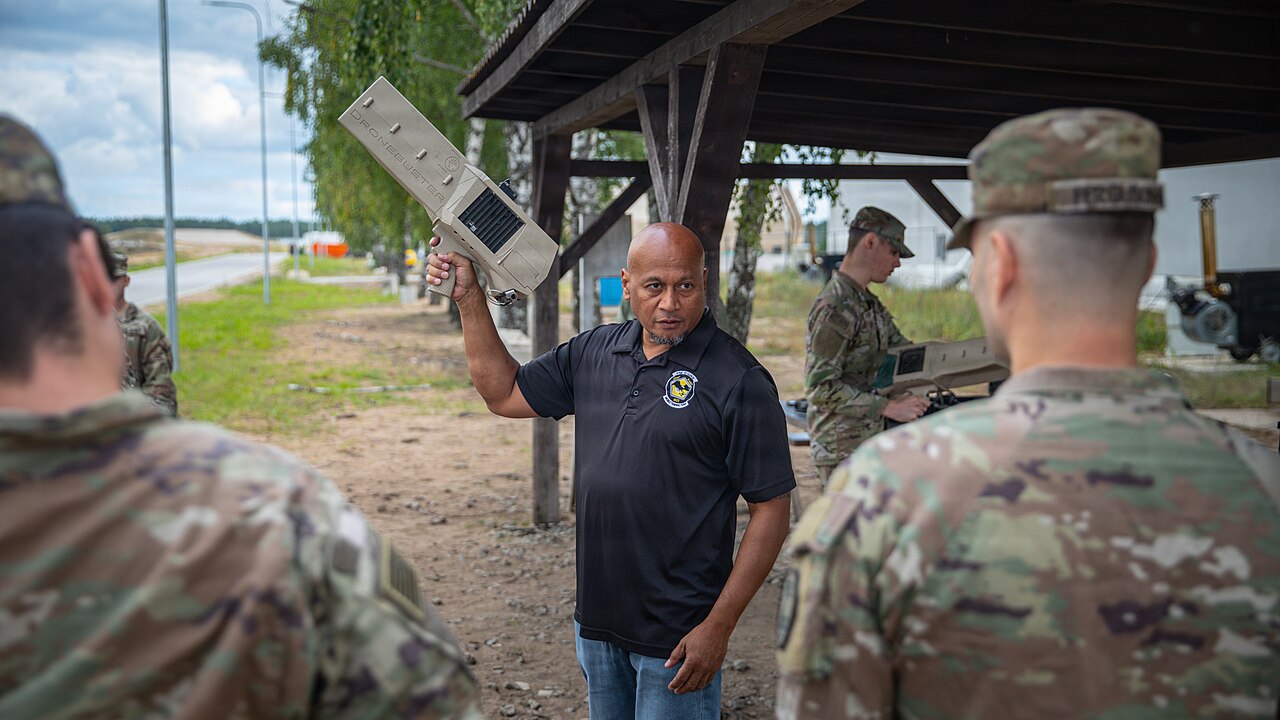
SETAF-AF says it is partnering with G-TEAD to test emerging systems in Africa and deliver them to soldiers within 180 days. Its first ACE, set for spring 2027 in Tan-Tan, Morocco, targets counter-unmanned aircraft systems and force protection, specifically gaps in protecting early-entry command posts and operating locations against Group 1–3 small UAS.
The schedule follows Hill's template. A soldier-led demonstration runs in February and March 2027 in Tan-Tan, followed by an operational assessment in April and May during African Lion 2027, U.S. Africa Command's largest joint exercise on the continent. G-TEAD will validate up to 15 solutions, with PAE Fires as the transition partner.
"The ACE is structured around five capability categories," said Maj. Katlin VanWye, a G-TEAD representative embedded with SETAF-AF. Those are an integrated fly-away kit plus four subcategories: sUAS detection, kinetic defeat, nonkinetic defeat and passive protection. Solutions must integrate into the Integrated Battle Command System-Maneuver, the Army's counter-UAS command-and-control system.
Merops: The 142-Day Case G-TEAD Points To
Hill's evidence that the model can move quickly is the Merops interceptor drone, which the Army turned into a formal program in 142 days, TWZ reported. Hill called it "an example of how we can move fast when we need to."
The timeline was not perfect. A commander asked for the capability in partner hands within 14 days; the Army got it to NATO partners in about 21 or 22 days. The effort then grew: the Joint Interagency Task Force procured 13,000 interceptors. In congressional testimony, former Army Secretary Daniel Driscoll put the cost at about $15,000 per interceptor, with the potential to fall below $10,000 as production scales, according to TWZ.
What It Means for Contractors
The ACE model rewards firms built for fast iteration over firms built for long proposal cycles. Several practical points follow from Hill's description:
- Odds are long at the front end. With 150 to 250 responses cut to 15 and then five, a submission has to answer the commander's stated problem set directly, not pitch a general product line.
- The 45-day window is the real test. Hill said plainly that an unchanged system at assessment counts against a vendor. Companies should plan engineering capacity to absorb soldier and ATEC feedback before they bid.
- Watch the six-month horizon. RFIs will arrive roughly six months ahead of each event, which gives time to form teams. Firms with partial solutions, such as a detection sensor without a defeat layer, should use that window to find partners.
- Know the end customer. The commander holds the 51% vote, so operational relevance to that command matters more than enterprise-wide fit. Scaling still runs through a portfolio acquisition executive, and in the Tan-Tan event that means PAE Fires and integration with IBCS-M.
- Counter-UAS vendors have a date. The Morocco demonstration starts in February 2027, across five categories, with up to 15 solutions validated.
