
A domestic manufacturer that wants to block a Buy America waiver now has to show it already makes the product in the United States. A promise to build it before the project needs it is not enough. That is the holding of a D.C. Circuit decision that Haynes Boone partner Dan Ramish walked through on Federal News Network's Federal Drive on October 15. The court decided Alstom Transportation, Inc. v. Federal Railroad Administration, No. 25-5456, on September 25, 2026, after argument on April 27. It let the Federal Railroad Administration (FRA) waiver stand, so Brightline West could buy high-speed trains from Siemens Mobility, Inc. instead of from Alstom.
The panel held that Alstom could bring the case at all, which lowers a barrier for sole domestic producers. On the merits it ruled against the company. In the words of the opinion: "We hold that Alstom has standing to do so, but its claims fail on the merits."
Why the FRA Waived Buy America for the Las Vegas Line
The project is a high-speed passenger line from Rancho Cucamonga, California, to Las Vegas. Ramish put the total cost at $12 billion, with $3 billion in federal funds coming through the FRA. That federal money triggered the agency's Buy America statute, which requires goods used in the project to be produced in the United States unless a waiver applies.
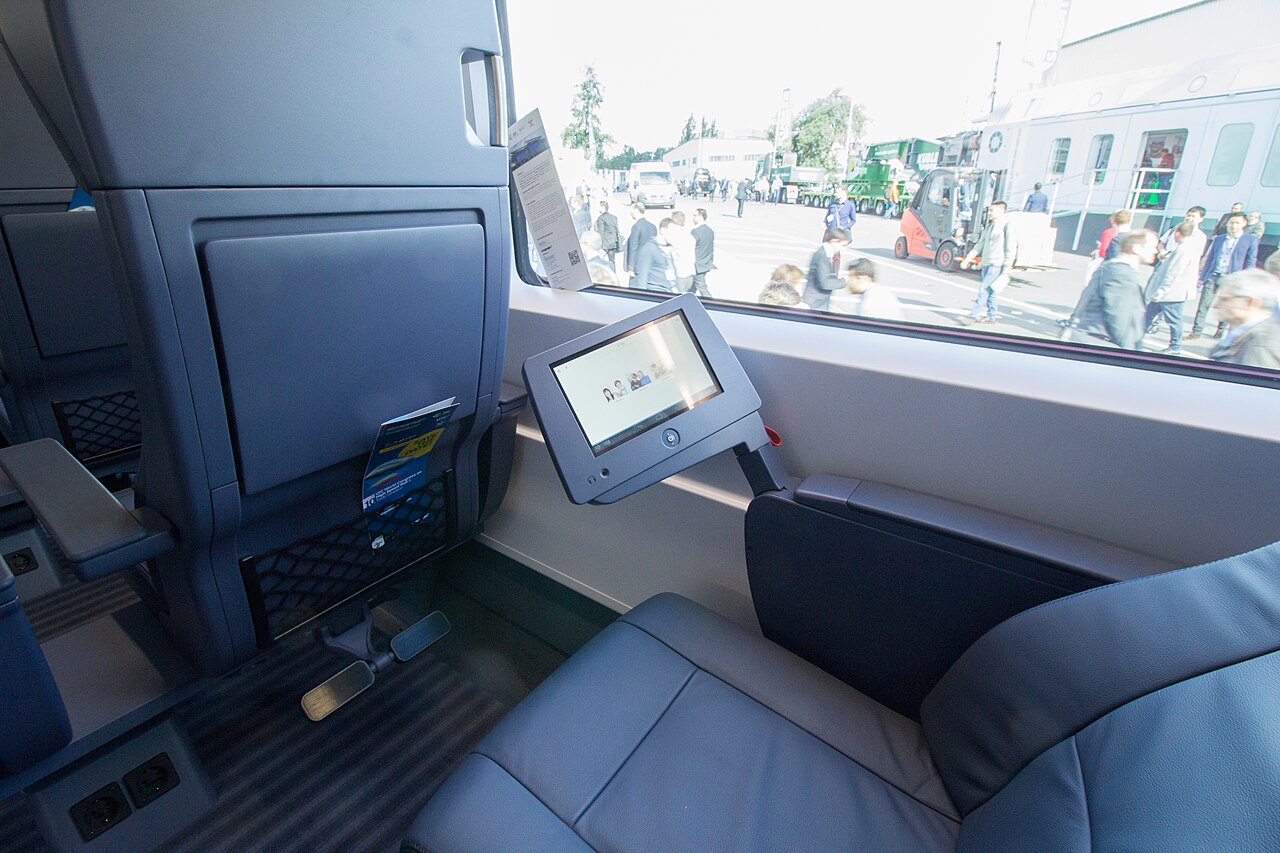
The project called for 10 trains able to exceed 186 mph. Ramish said Siemens already ran trains in Europe that could reach 220 mph, while Alstom's trains topped out around 160 mph. The FRA first published a proposed waiver that would have covered either bidder. It finalized the waiver after Brightline picked Siemens as its preferred bidder.
Ramish described the final waiver as narrow. Siemens would build the first two trains in Europe while training American workers, then build the remaining eight in the United States. "So a pretty tailored, narrow waiver specific to the project," he said. Brightline then awarded the contract to Siemens, and Alstom sued under the Administrative Procedure Act in federal district court in Washington.
How Alstom Won on Standing and Lost on the Merits
The district court threw out the case on standing, finding Alstom had not shown the waiver cost it the work or that Brightline would pick it if the waiver were revoked. The appeals panel of Circuit Judges Katsas, Walker and Garcia disagreed, though not unanimously. Judge Katsas wrote for the court. Judge Walker filed an opinion dissenting in part.
Ramish said the two-judge majority found it was not credible that Brightline would give up $3 billion in federal funding to avoid the domestic-content rule. Because Alstom was the only offeror that could build the trains in the United States, Brightline would be forced to use Alstom if the waiver fell. The dissent pointed to other options. Ramish said the dissenting judge suggested Brightline could have reworked its arrangement with Siemens or ordered only eight trains, which made the outcome too uncertain to support standing.
Alstom's argument on the merits was about time. The waiver provision applies when goods "are not produced" in the United States in sufficient quantity or satisfactory quality. Alstom argued that the agency had to consider whether the goods would be produced domestically in time for the project. The company said it could deliver compliant trains on schedule even though it did not yet make a 186-mph model.
The court rejected that reading. "But verb tense matters in statutory construction," Judge Katsas wrote, adding that in the waiver provision Congress chose the "present tense to frame a question whether the relevant goods “are” produced domestically at the time of the waiver decision." Alstom also cited the underlying Buy America requirement. The court found nothing there that supports reading "are … produced" in the waiver provision to mean "will be … produced."
What the Ruling Means for Sole Domestic Producers
Ramish summed up the merits holding plainly: "In order to object to a waiver to allow foreign products, a domestic manufacturer has to be able to demonstrate that they’re already producing the product in the United States when the waiver is being considered. And future production capability isn’t enough to object to a waiver."
He said the standing holding helps the other side. "On the other hand, the panel majority’s ruling on standing is helpful to U.S. companies…when they’re the only domestic manufacturer of a product," Ramish said, because the majority found it sufficiently predictable that Brightline would have had to use the compliant bidder without the waiver. That reasoning makes it easier for a sole U.S. producer to get into court.
How FAR Part 25 Brings Waiver Posting to Federal Contracts
Alstom involved a grant-funded infrastructure project, not a FAR contract. Ramish said procurement is moving toward the same kind of transparency. The FAR Council has not yet issued a proposed rule, but it has released model deviation text for FAR Part 25, the part that covers foreign acquisition.
Under the Part 25 model deviation, "Contracting officers must submit a proposed individual nonavailability waiver for review and posting to MadeinAmerica.gov using the digital waiver portal by the MIAO, unless an exception applies." MIAO is the Office of Management and Budget's Made in America Office. The contracting officer may not make award until MIAO confirms it has finished its review, MIAO waives the review, or a posting exception applies. The text adds that "Agencies will issue final waivers only after completing coordination with the Office of Management and Budget (OMB)."
The deviation also includes a carve-out. It says a nonavailability determination "is not required before January 1, 2030, if there is an offer for a foreign end product that exceeds 55 percent domestic content."
Ramish said public posting would make it easier for domestic manufacturers and other interested parties to spot and challenge questionable nonavailability determinations. "So I think it’s harder and harder to obtain a waiver," he said. "Waivers are more likely to withstand scrutiny if they’re narrowly tailored. But we may see more clashes over the legality of waivers after this decision."
What It Means for Contractors
Domestic manufacturers: An objection to a waiver has to rest on products you make in the United States today. Plans, expansions and on-time delivery pledges will not defeat a nonavailability finding under the court's present-tense reading. If you are the only compliant domestic offeror, though, the majority's standing analysis gives you a clearer route into court.
Foreign-sourcing offerors and primes: The Siemens waiver was tailored, with two trains built abroad and eight built domestically, and Ramish's advice is that narrow waivers hold up better under scrutiny.
Contracting officers: Once agencies adopt the Part 25 deviation, a proposed individual nonavailability waiver goes to MadeinAmerica.gov through MIAO's portal before award, and a posted waiver gives competitors a document to challenge. Base the record on domestic production as it stands when the waiver is decided.
