
The Army has moved its autonomy acquisition office to a new home within its still-settling portfolio structure, relocating Capability Program Executive (CPE) Mission Autonomy from Portfolio Acquisition Executive (PAE) Maneuver Air to PAE Layered Protection and Integration in the latest round of changes to a framework the service stood up just eight months ago.
Background
In November 2025, the Army rolled out a sweeping acquisition overhaul that consolidated 12 Program Executive Offices into six Portfolio Acquisition Executives, or PAEs, and renamed the former PEOs as Capability Program Executives, or CPEs. Army Secretary Daniel Driscoll framed the reorganization as a fix for a system whose "risk aversion slowed the delivery of tools to soldiers."
The overhaul was never presented as a one-time fix. Army acquisition-reform spokesperson Ashley John said the service has spent the six months since the initial rollout adjusting the framework and intends to keep iterating, describing the guiding principle as "keep what is working and change what is not." The latest round of changes, announced around July 6-7, 2026, is the clearest evidence yet that the November structure remains a work in progress rather than a finished design. The reorganization was intended to flatten decision-making layers that had built up over years of incremental additions to the Army's acquisition bureaucracy, and the service has treated the six-month mark as a checkpoint for correcting assignments that did not hold up once offices began operating under the new lines.
Key Details
The most significant change is the relocation of CPE Mission Autonomy, the Army's autonomy acquisition office, from PAE Maneuver Air to PAE Layered Protection and Integration. The Army said the move is meant to "better nest cross-disciplinary functions across all PAEs." The realignment predates and is separate from the Pentagon's newly created Direct Reporting Portfolio Manager for autonomy, known as DRPM-UxS, meaning the Army is adjusting its internal reporting lines independent of the department-level autonomy structure being built above it.
The Army also formalized a change made earlier in the year: a new CPE Special Programs Air was established under PAE Maneuver Air in early May 2026 to align Special Operations Aviation programs with conventional Army aviation efforts, bringing those two acquisition tracks under a common reporting structure.
Not every planned consolidation survived contact with implementation. The Army had originally intended to merge CPE Ground Combat Platforms and CPE Soldier Systems into a single office but abandoned that plan. Both offices remain separate under PAE Maneuver, with officials citing a desire to preserve efficiencies that already existed under the split structure rather than force a merger that would have disrupted them.
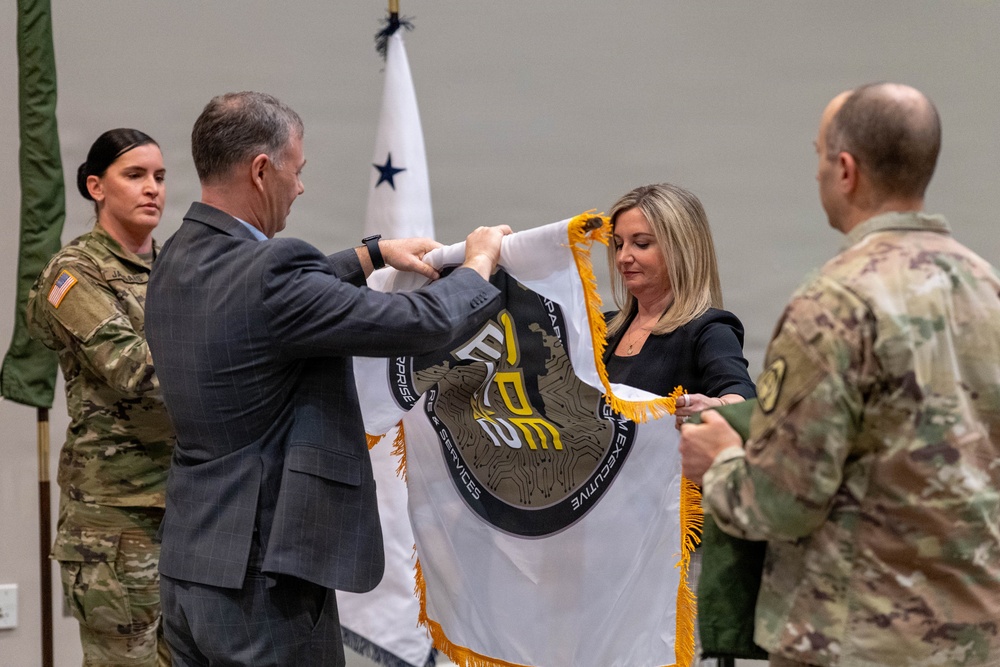
Separately, the former PEO Enterprise has been renamed Capability Program Executive Enterprise Software and Services, or ES2. Rather than folding into one of the six PAEs or reporting to the Army's chief information officer, ES2 operates alongside the PAEs as what the Army calls a "critical enabler," a role comparable to the Army's Pathway for Innovation and Technology, or PIT. ES2 is now counted among the Army's 13 newly designated capability program executives.
What It Means for Contractors
Contractors working autonomy programs need to update their internal org charts and points of contact now that CPE Mission Autonomy sits under PAE Layered Protection and Integration rather than PAE Maneuver Air. Companies pursuing unmanned ground vehicles, robotic wingmen, or autonomous logistics platforms should expect their program offices to increasingly coordinate with air-defense and protection portfolios, a signal that the Army sees autonomy as a cross-cutting capability rather than one tied primarily to aviation. Firms should also track how this internal realignment interacts with the Pentagon's new DRPM-UxS structure, since the two changes were made independently and companies may need to navigate both an Army-level and a department-level chain for autonomy programs.
For companies in special operations aviation, the formal stand-up of CPE Special Programs Air under PAE Maneuver Air clarifies where those programs sit relative to conventional Army aviation efforts, which should help contractors serving both markets align proposal and sustainment strategies across previously separate offices.
The abandoned merger of Ground Combat Platforms and Soldier Systems is arguably the more important signal for the broader contractor base. It shows the Army is willing to reverse elements of its own reorganization plan when a change would disrupt working relationships rather than improve them, and it suggests companies should not assume every consolidation announced last November will ultimately take effect. Contractors tracking program office contacts, points of entry for market research, and small business set-aside coordination should verify current organizational charts directly rather than relying on the November 2025 announcement, since the structure has already shifted at least twice since then.
The ES2 rename and its positioning outside the PAE structure matters most for IT and software-services contractors. By keeping enterprise software and services as a standalone "critical enabler" rather than subordinating it to the CIO or folding it into a PAE, the Army has preserved a distinct acquisition channel for enterprise IT work, similar in structure to the Pathway for Innovation and Technology. Companies bidding software and digital-services task orders should treat ES2 as a continuing, separately governed customer rather than expecting IT acquisition authority to consolidate under the CIO's office.
More broadly, spokesperson Ashley John's characterization of the reform as an ongoing, iterative process means contractors should expect further tweaks to portfolio boundaries, reporting lines, and office names in the coming months. Business development teams should build a standing practice of confirming program office alignment before major proposal submissions, rather than treating the November 2025 restructuring as a fixed reference point. Companies that adapt quickly to each realignment may see faster contracting cycles, but only if their capture teams are tracking the moving organizational chart in real time. Contractors with existing relationships across PAE Maneuver Air, PAE Layered Protection and Integration, or PAE Maneuver should also flag the changes to program managers and contracting officer representatives on active task orders, since misdirected correspondence or proposal routing during a transition period can slow modifications, options exercises, and follow-on solicitations even when the underlying program itself is unaffected by the reshuffle.
