
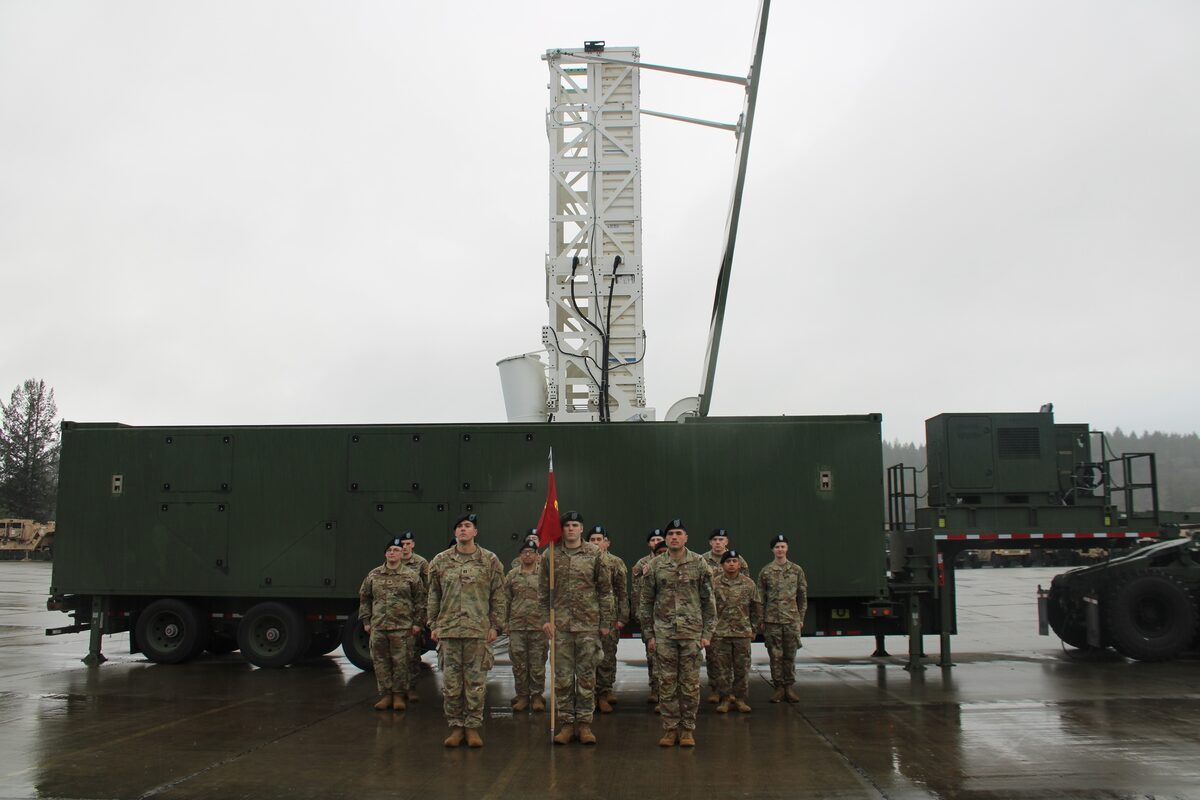
The Army just handed Georgia Tech the job of stitching together a new family of launchers that officials hope will finally fix the mobility problem that has dogged the service's ground-based missile program. Under an Other Transaction Agreement announced by the Army, the Georgia Tech Research Institute (GTRI) will serve as Weapon Systems Integrator for the Common Autonomous Multi-Domain Launcher, or CAML, a prototype effort meant to give ground commanders a fires system that can actually keep up on the battlefield.
The award carries a maximum potential value of $33,399,920 and runs for an estimated 36 months. GTRI, the applied-research arm of the Georgia Institute of Technology in Atlanta, will handle systems engineering, interface integration, modeling and simulation, and integrated testing as the Army works toward fielding an autonomous, optionally-crewed, air-transportable launcher that can operate across the multi-domain battlefield.
CAML is designed to replace the Typhon Mid-Range Capability launcher, the truck-mounted system the Army built to fire SM-6 and Tomahawk missiles from the ground. Typhon proved the concept but also proved too large to operate on the battlefield, prompting the service to start over with a smaller, more deployable design. The Army wants CAML to be optionally crewed — able to fire with a soldier aboard or operate autonomously — and air transportable, so units can reposition a launcher between missions instead of leaving a single large system exposed in one location.
The Army disclosed the award in a service release on Monday, August 31, 2026. A program industry day for CAML follows just a day later, on September 2 — a session the service scheduled after acknowledging that multiple, overlapping solicitations had "caused confusion among industry partners" about how the acquisition will actually run.
Why the Army Split CAML Into a "Teams of Teams" Buy
Rather than award one contractor the whole launcher, the Army is executing what it calls a modular acquisition strategy: an autonomous mobility platform, modular munitions pallets, and the systems-integration work now going to GTRI. Officials say that structure lets specialists handle the parts they are best at instead of forcing a single prime to cover ground vehicles, munitions handling and integration all at once.
"We are really serious about bringing the team together so that it looks and feels like Legos, where the best athlete is doing the thing they're really good at," Army Chief Technology Officer Alex Miller told Breaking Defense earlier this year, describing the restructured approach that led to this week's award.
The Army expects to make additional awards in the coming months, including a separate contract for the Autonomous Mobility Platform that will physically carry CAML's munitions. GTRI's role is to make sure those independently developed pieces — the mobility platform and the munitions pallets — actually work together as one weapon system once they arrive.
Lt. Gen. Frank Lozano, the Army's Portfolio Acquisition Executive for Fires, framed the approach as a way to move faster without locking in a design too early. "The Army is moving with urgency to deliver adaptable, survivable, and scalable Fires capabilities to Soldiers," Lozano said. "CAML gives us a pathway to experiment with modular launcher concepts, learn quickly, and make informed decisions at the speed of relevance."
What GTRI Will Build Over the Next 36 Months
The Other Transaction Agreement puts GTRI at the center of the prototyping effort rather than handing it a single deliverable. Over the roughly three-year period of performance, the institute is responsible for the systems engineering work that defines how CAML's components talk to each other, the interface integration needed to bring outside vendors' hardware into a common architecture, modeling and simulation to test design choices before hardware is built, and integrated testing once prototype units come together.
That scope makes GTRI less a builder of the launcher itself and more the referee and glue for a program that depends on multiple vendors delivering compatible parts on overlapping timelines. The Army has scheduled its industry day for September 2, 2026, to clear up confusion among industry partners about how the multi-part CAML acquisition will actually run, before formal solicitations for the mobility platform and munitions pallets go out.
Using an Other Transaction Agreement instead of a traditional Federal Acquisition Regulation contract gives the Army more flexibility to bring in nontraditional defense contractors and academic research centers like GTRI, and to adjust scope as the prototype effort matures — a tool the service has leaned on increasingly for fast-moving modernization programs where the requirements are still being worked out in parallel with the engineering.
What It Means for Contractors
The GTRI award is the opening move in what the Army has signaled will be a multi-vendor competition, not a closed shop. Companies that build autonomous ground vehicles, munitions handling systems, or fire-control software should expect the Autonomous Mobility Platform solicitation and related munitions-pallet opportunities to follow in the coming months, with GTRI acting as the technical authority those vendors will have to integrate against rather than compete with.
That structure changes the calculus for smaller and mid-tier firms that might not have been able to compete for a monolithic launcher contract but can credibly bid on a mobility platform or a munitions pallet as a component supplier. It also raises the stakes on interface compliance: because GTRI is setting and enforcing the integration standards, vendors that build to a different architecture risk losing compatibility with the broader CAML ecosystem regardless of how strong their individual product is.
For prime contractors watching the program from outside the systems-integrator role, the near-term opportunity shifts to the mobility platform and pallet competitions the Army says are coming next. The September 2 industry day is the first concrete chance for those companies to hear directly from the program office about how the multi-vendor acquisition will actually run, after the Army acknowledged that overlapping solicitations had left some industry partners confused about the process.
The broader signal for the industrial base is that the Army is treating fires modernization as a modular, iterative build rather than a single high-stakes down-select. Companies that can plug a capability into someone else's architecture — instead of insisting on owning the whole stack — are better positioned for where this program, and likely others that follow its "teams of teams" model, are headed.
